This essay first appeared in Turkish. The English version is my own. Lacan’s seminars and the Écrits are cited in the French originals, with English translations given where one exists; where I translate a passage myself, I say so. Freud’s works are cited by their titles in the Standard Edition (SE), with volume numbers.
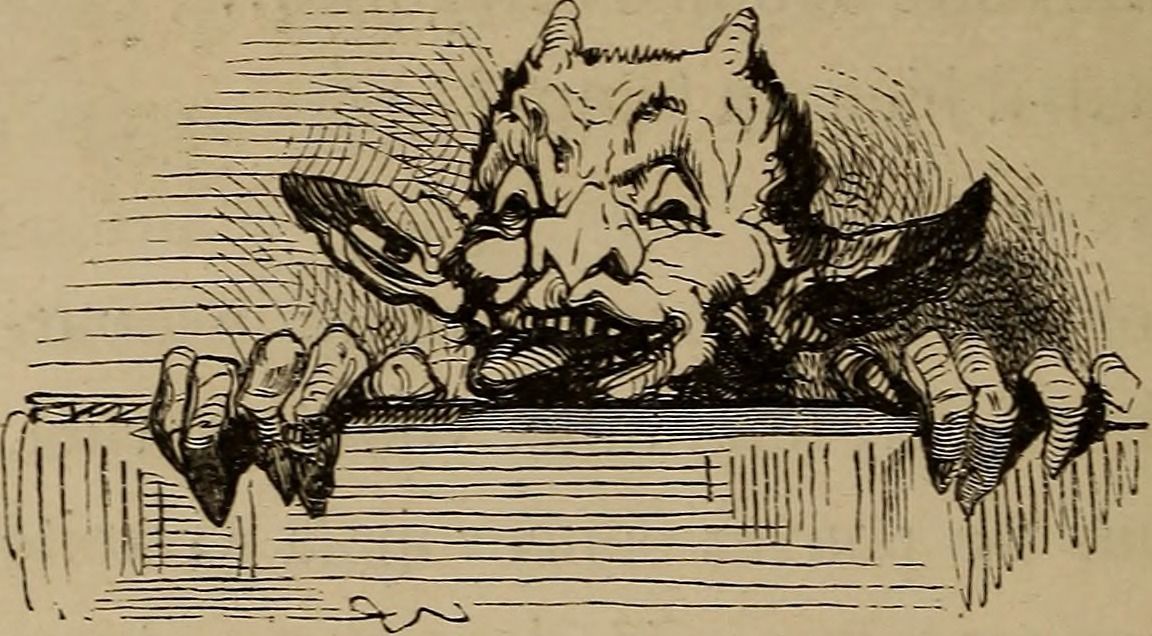

Che vuoi?
Jacques Cazotte, Le Diable amoureux (1772)
What do you want?
Le désir de l’homme est le désir de l’Autre.
Jacques Lacan
Man’s desire is the desire of the Other.
I
If the concept of the Big Other has a birthplace, it is a small lecture room of the École Pratique des Hautes Études in the Paris of the 1930s. From 1933 to 1939 the Russian-born philosopher Alexandre Kojève gave lectures there on Hegel’s Phenomenology of Spirit, and among his listeners were names that would later shape twentieth-century French thought: Georges Bataille, Raymond Queneau, Maurice Merleau-Ponty, Raymond Aron and a young psychiatrist, Jacques Lacan. At the centre of Kojève’s reading of Hegel stand the dialectic of master and slave and one thesis: human desire, unlike animal need, is directed not at an object but at another desire; man desires the desire of the other, that is, he desires to be recognised.1
Lacan never abandoned this thesis; but he transformed it at the root. In Kojève, recognition is played out between two consciousnesses, in an encounter that can go as far as a struggle to the death. From the early 1950s on, Lacan tries to show that this encounter between two subjects always takes place within a third place: language and the law. Two people can address each other only within a language, and that language was there before both of them and lies outside both. The Big Other is the name of this third place.
The concept has another, older root in Freud himself. In The Interpretation of Dreams Freud quotes an idea from Gustav Theodor Fechner, the founder of nineteenth-century psychophysics: the scene of action of dreams is different from that of waking ideational life. For Fechner the strangeness of dreams cannot be explained as merely a weakened form of waking thought; the dream is played out in another place, by other rules.2 Freud uses this “other scene”, in German andere Schauplatz, for the place of the unconscious. Lacan often invokes the phrase when speaking of the Big Other: beside the subject’s conscious speech, the unconscious is another scene on which the subject speaks without knowing it. Every sentence the subject utters is played out on two scenes at once: on one it tells something; on the other, unknown to the subject, it says something quite different. A slip, a forgetting, a dream, a single word that for a moment shifts out of place, are the moments at which the two scenes touch.
II
The first step in understanding the concept is a distinction Lacan drew explicitly around 1955. The little other, in French autre, written a for short, is the other person whom the subject sees as like himself, derived from the mirror image. This relation belongs to the Imaginary order: admiration, identification, jealousy and rivalry work along this axis. In the mirror stage the child recognises its own image in the body of another, and this recognition is at the same time an alienation. The Big Other, Autre, written A for short, is not a semblable; it does not enter into a symmetrical relation with the subject. It is the order of language and law in which the subject finds himself, which existed before him and determines him. Before it is born the child has been named, spoken about, placed in a genealogy, a family story, a desire. This order is Symbolic, and the Big Other is the face of this order that turns towards the subject.
The first Big Other the subject meets is a concrete person: the one who looks after the infant, hears its cry and gives it a meaning, most often the mother. The infant’s cry says nothing on its own; it is not clear whether it is hunger, pain or loneliness. When the mother answers the cry she interprets it as a demand: “Are you hungry?”, “Are you cold?”, “Do you want me?” The infant’s voice acquires a meaning retroactively, with the mother’s answer. Lacan expresses this structure in a formula he says he took from a conversation with Lévi-Strauss: the sender receives his own message from the receiver in inverted form.3 The one who speaks learns what he has said only from the reply that comes back from his interlocutor. This holds not only for infancy. In analysis too the analysand hears the meaning of his own words for the first time through the analyst repeating a word, through a punctuation, through a silence.
Lacan formulates this distinction in his second seminar, in 1954–1955, with a diagram called the L schema. At the four corners of the schema stand the subject, the ego, the semblable who is the ego’s image, and the Big Other. The axis between the ego and its semblable shows the Imaginary relation; the axis running from the Big Other to the subject is the axis of the unconscious, of the speech about himself that the subject does not know. What the schema teaches is that speech coming from the Big Other does not reach the subject directly; it is cut across and deflected by the Imaginary axis.4 The images in which the ego recognises itself both carry and veil the subject’s truth. The formula Lacan repeats often in this period is the essence of the schema: the unconscious is the discourse of the Other. The unconscious is not an essence hidden inside the individual; it comes from outside the subject, from the speech of language and of family history. A mourning that parents have not put into words, a secret passed down from generation to generation in a family, an expectation loaded onto a child’s name, are examples of the discourse of the Other that shapes the subject’s unconscious.
The function of the Big Other within speech is shown by Lacan, in his seminar a year later, with a subtle grammatical difference French offers. He compares two sentences: Tu es celui qui me suivras and Tu es celui qui me suivra. Both mean “You are the one who will follow me”; but in the first the verb is conjugated in the second person singular, in the second in the third. The second sentence is a statement, perhaps a prophecy: the speaker knows, or guesses, that the other will follow him. The first is a summons, an assignment, a pledge: the verb addresses the other directly and invites him to accept or refuse this word.5 English cannot draw the difference in this way, but the intuition is familiar. A woman who says “You are my husband” does not transmit information; she places the other somewhere, and by this placing binds herself somewhere too. For Lacan such words take effect not between the two persons but in a third place both call as witness: the Big Other. An oath, a marriage, a promise, even if made between two people alone, are addressed to a witness, to a law, to a language.
This place of the Big Other in speech also appears in an old logical riddle Lacan took up in his seminar of 1964: the liar paradox. Is someone who says “I am lying” telling the truth, or lying? If he is telling the truth, he is lying; if he is lying, he is telling the truth. For Lacan the paradox arises only if we confuse two levels: the subject of the sentence uttered and the subject who utters it, the levels of the statement and of the enunciation. The person who says “I am lying” appears, within what he says, as someone who lies; but at the level of the enunciation he conveys a truth to us.6 Lacan thinks this distinction in the clinic through a moment when an analysand says “I am deceiving you”. The analyst hears the sentence not at the level of the content said but at that of the saying, and can give him back his message inverted: in telling me that you are deceiving me, you are telling me the truth. The Big Other is the place where these two levels part, where the sense of the sentence that the speaker does not know can be heard.
III
To show how the Big Other works, Lacan, unexpectedly, turns to a detective story. In Edgar Allan Poe’s The Purloined Letter, published in 1844, the queen is reading in the royal boudoir a letter the king must not know about when the king walks in. Instead of hiding the letter she leaves it open on the table, since trying to hide it would draw attention. The minister who enters at that moment grasps the situation at a glance, takes from his pocket a similar letter and swaps it for hers, and carries the letter away before the queen’s eyes, knowing she can do nothing because of the king’s presence. The police search the minister’s house for months, inch by inch, but cannot find the letter. The detective Dupin finds it on his first visit, in a card rack, in the most conspicuous place, crumpled and turned inside out; on his next visit he replaces it with a facsimile of his own making.
The police’s failure is the first clue to Lacan’s interpretation. The police look for the letter as an object: they hollow out the legs of tables, strip the bindings from books, examine the gaps in the floor with a microscope. For the police, something hidden is something put in a place in space, concealed in a sheath, in a cavity. Lacan shows the blind spot of this logic with a library analogy: when a book is lost in a library, the catalogue card notes that it is “not in its place”; yet the book may be on the next shelf. For Lacan, only what is missing from its place can be hidden.7 The letter is not an object but a signifier; and a signifier can remain hidden even in the most conspicuous place. Dupin’s success comes from thinking not about where the letter is hidden but about what circulation it is caught up in.
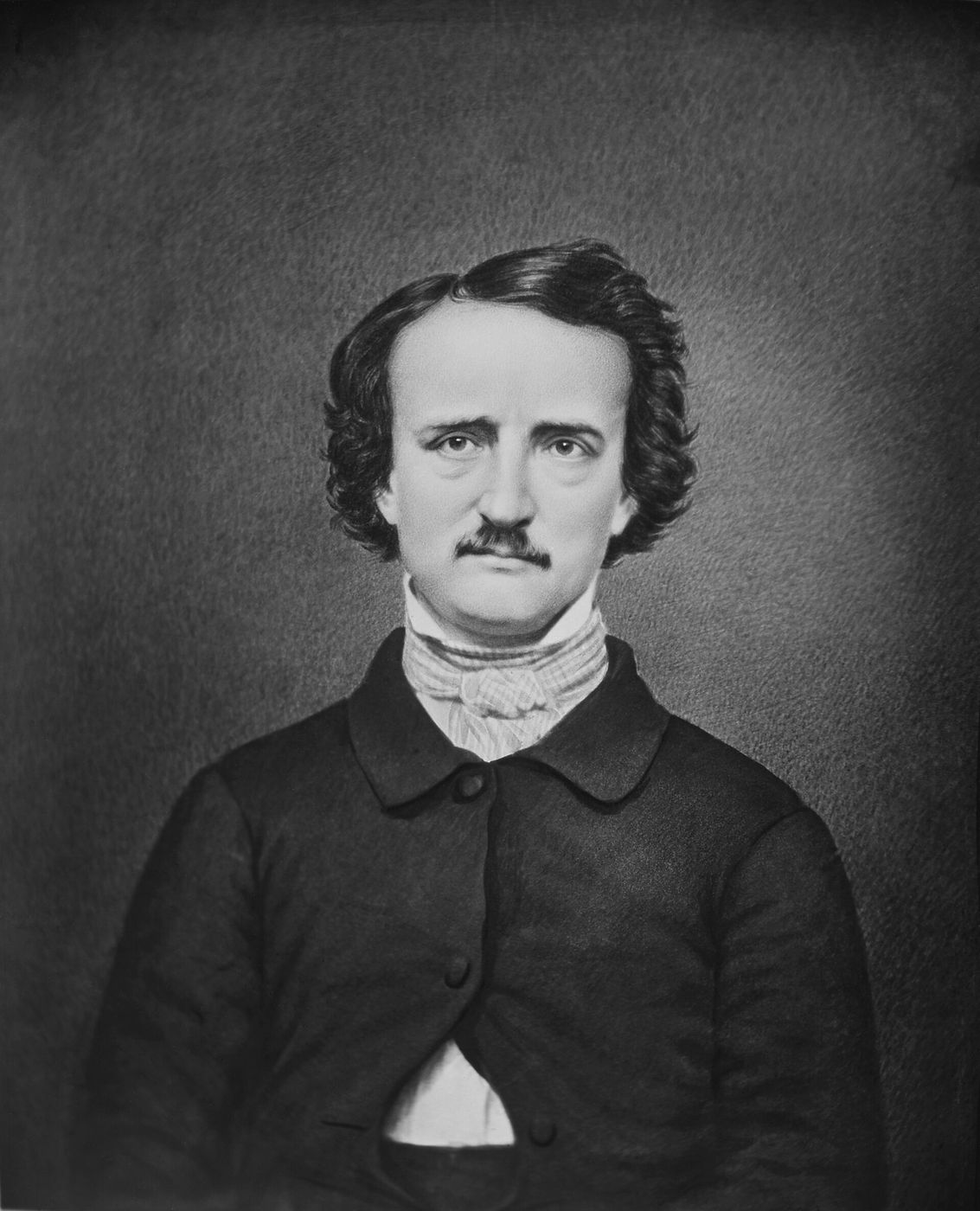

In the seminar he gave on this story in 1955, Lacan arrives at an interpretation that would become the opening text of the Écrits: the real subject of the story is the letter itself. The reader never learns the letter’s contents; but as the letter changes hands it determines the position of whoever holds it. Whoever has the letter falls into the queen’s position, that is, the position of one who sees without being seen but does not see that she is seen; the minister, and then Dupin, settle into the same structure the moment they seize it.8 What Lacan shows is that the signifier, the smallest unit of language, can determine the place, the action and the fate of subjects independently of their will. The Big Other is the place where this circulation takes place. The last sentence of the text would become one of Lacan’s most quoted: a letter always arrives at its destination.
The end of the story holds a place of its own in Lacan’s reading. In the forged letter he leaves in place of the one he took from the minister’s house, Dupin writes something he knows the minister will recognise in his handwriting: two lines from Crébillon’s tragedy Atrée et Thyeste, by the French dramatist of the eighteenth century. Un dessein si funeste, / S’il n’est digne d’Atrée, est digne de Thyeste: a scheme so deadly, if it is not worthy of Atreus, is worthy of Thyestes.9 Dupin thinks he has seized the letter as a cool-headed detective; yet at the very moment he puts the substitute in its place he leaves a signature of vengeance, betraying his anger. Lacan reads this as the final proof that the letter’s circulation draws whoever holds it into its structure. Whoever holds the letter, however intelligent, takes over the letter’s position, that of the bearer of a secret, a passion, a debt. Dupin leaves the story not as the one who ends it but as the letter’s next stop.
IV
The formula Lacan took over from Kojève acquires a new meaning in his hands: man’s desire is the desire of the Other. The ambiguity of the French genitive is a richness here, and the sentence must be read in at least two ways. First, the subject desires what the Other desires: the objects of our desire are the objects that our surroundings, our culture, our family value and desire. Second, and more fundamentally, the subject desires to be desired by the Other: he wishes to be the object of the Other’s desire, to be something for him.
This confronts the subject with an unavoidable question, and to it Lacan gives, in his text The Subversion of the Subject and the Dialectic of Desire in the Freudian Unconscious presented at Royaumont in 1960, a name borrowed from the eighteenth century. In Jacques Cazotte’s fantastic novel Le Diable amoureux, published in 1772, the young Spanish officer Alvare, at the instigation of a friend, summons the devil in the ruins of Portici near Naples. In a window appears a monstrous camel’s head with huge ears, and in a voice like thunder it asks a single question: Che vuoi?, “What do you want?”10 In Lacan’s graph of desire this question comes back to the subject from the place where he awaits an answer from the Other, and shows him the way to his own desire.11 The question is in fact heard as: What do you want from me? What am I for you?
The most intense form of this question in literature is a short parable Franz Kafka published in 1915, “Before the Law”. A man from the country wants to enter the Law; but a doorkeeper stands before the door and tells him he cannot enter now. The door is open, the doorkeeper steps aside, the man peers in. The doorkeeper laughs: if you want it so much, try to enter in spite of my prohibition; but I am powerful, and I am only the lowest doorkeeper; inside, from hall to hall, there are doorkeepers more powerful than I. The man decides to wait. For years he sits before the door, begs the doorkeeper, bribes him, and even entreats the fleas in the doorkeeper’s fur collar to help him. On his deathbed he asks one last question: since everyone strives to reach the Law, how is it that in all these years no one but me has come seeking admittance? The doorkeeper, seeing that the man’s end is near, roars into his failing ear: no one else could ever be admitted here, since this entrance was meant only for you. I am now going to shut it.12 The uncanniness of the parable lies in the fact that what the Law, that is, the Big Other, wants of the man is never said. The door is open, the prohibition is less a law than a deferral, and what is behind the doorkeeper is not known. The man spends his whole life trying to decipher the Other’s desire, waiting for his permission. That the door was made only for him, that the most singular question of desire was precisely his own, is heard only at the end, as the door closes.
The subject’s fantasy is an unconscious answer to this question. The fantasy builds a scenario about what the Other wants and what the subject stands for in his desire, and so throws a bridge over the abyss the question opens. Where the question remains unanswered and the fantasy ceases to work, anxiety appears. That in the tenth seminar Lacan relates anxiety to the uncertainty experienced before the Other’s desire is a direct consequence of this structure.
V
For a time Lacan tried to ground the consistency of the Other in a signifier. In the long text on the treatment of psychosis he wrote in 1958, he defined the Name-of-the-Father as the signifier of the place of the signifier in the Other, the signifier that points to the Other as the place of the law.13 The Name-of-the-Father was, in this sense, the signifier that gave language, within language, a law, a ground, a guarantee. Psychosis was the structure in which this signifier was foreclosed, language left without guarantee, meaning sliding without its quilting points. But this solution did not last long. The turning point of Lacan’s teaching in the late 1950s is the discovery that the Big Other itself is lacking. If the Big Other were the guarantor of meaning, another Other would be needed to guarantee it, and another to guarantee that one. In The Subversion of the Subject Lacan cuts this infinite regress with a single principle: there is no Other of the Other. Language cannot ground itself; outside every discourse there is no final word that would guarantee that discourse’s truth. At the top level of the graph of desire Lacan writes this lack with a barred letter: the signifier of the lack in the Other. The subject’s division corresponds to this lack in the Other.
The counterpart of this thesis in the history of philosophy is Descartes’s non-deceiving God. In the Meditations, published in 1641, Descartes goes as far as a point at which he can doubt everything; perhaps a malicious demon is continually deceiving him. From this doubt he emerges with the certainty of his own existence as a thinking thing; but to guarantee the truth of the external world and of clear and distinct ideas he needs a God, a God who, being perfect, does not deceive.14 In Lacan’s eyes this God is the purest form of the Big Other in philosophy: the guarantor of truth, the last word. Another sentence Lacan often recalls expresses the same guarantee for science. Einstein said that God is subtle but not malicious: nature does not give up her secrets easily, but she does not deceive us on purpose. The discovery of psychoanalysis is that the Other facing the subject can never fully provide such a guarantee. The Other is not malicious; but it is lacking, inconsistent, and does not know its own truth.
This finding has not only a theoretical but also a deep ethical consequence. The subject cannot escape responsibility for his own desire by leaning on a complete Other, an all-knowing authority, a flawless parent, an ultimate truth. The formula Lacan would sharpen in later years, “the Other does not exist”, is where this thought arrives.15 This does not mean that language and law have disappeared; it means that they can never complete themselves, that they always carry a lack.
VI
The clinical structures can be read as different forms of the subject’s relation to the Big Other. In obsessional neurosis the subject tries to ignore the desire of the Other or to keep it under control; behind the rules, lists and rituals lies the anxiety of meeting the desire of the Other. In hysteria the subject questions the desire of the Other, provokes its lack, and offers himself as the object that fills it, or flees this position at the last moment. A dream Freud recounts in The Interpretation of Dreams gathers this structure into a small scene. A patient whom Freud calls “the witty butcher’s wife” dreams that she wants to give a dinner party but has nothing in the house but a little smoked salmon, and that she wants to go shopping but all the shops are shut because it is Sunday afternoon. She cannot give the dinner. In Freud’s interpretation the dream frustrates the wish of a friend, a woman her husband admires but who is too thin, to be invited to dinner and put on weight. But the dream has a deeper layer: in real life the patient adores caviar, yet had not asked her husband to buy it for her every day, knowingly leaving this desire unsatisfied.16 In Lacan’s reading the hysterical subject fears that a satisfied desire would also bring the Other’s desire to an end; she wants desire to remain unfulfilled, the lack in the Other to stay open. In psychosis, by contrast, the Other may appear not with its lack but in a threatening fullness: an Other that watches the subject, talks to him, asks something of him, leaves him no distance.
The obsessional neurotic’s relation to the Other appears with extraordinary clarity in the Rat Man case Freud published in 1909. The patient, as Freud writes, is a young man of twenty-nine who has studied law. During military manoeuvres a captain known for his cruelty told him of a punishment said to be practised in the East, and described rats being placed in a pot and entering the prisoner’s body. From that moment the patient began to struggle with the thought that this punishment would be inflicted on the woman he loved and on his father.17 The strange thing is that his father had been dead for years. What is feared is the punishment of a dead father. Obsessive thoughts, elaborate rituals, vows made to himself and the fear of breaking them organise the patient’s life around a debt that cannot be paid.
Lacan rereads this case many times and defines the structure of obsessional neurosis as a devotion to a master, an Other, who is dead or whose death is awaited. To avoid meeting the Other’s desire the obsessional subject tries to monitor it constantly, to set rules in its place, to pay his debt and close the account; but the account is never closed. That the Other is dead does not abolish his desire; on the contrary, it fixes it as a command that can never again be altered. The obsessional’s waiting is, in Lacan’s phrase, a waiting for the master’s death: he thinks that when the master dies he will begin to live, but when he dies he does not begin to live either.
In the analytic situation the analyst is from time to time put in the place of the Big Other for the analysand: someone believed to know, to judge, to expect something. This placing is the basis of transference. But the analyst’s task is not to fill this place; it is to keep it empty, giving the analysand the chance to meet his own question. In the text he wrote in 1958 on the direction of the treatment, Lacan describes the analyst’s position with an analogy from the game of bridge: the analyst should take the place of the “dummy”, who lays his cards face up on the table and leaves the play to his partner. In bridge the dummy is the player who spreads out his hand and leaves the playing to his partner; the analyst too withdraws his own feelings, judgements and preferences from the game, thereby opening a place where the analysand can see his own cards, that is, his own desire.18 The analysand can hear his own desire only if the analyst does not bring his own desire, approvals and advice into this game.
Today, in a world in which traditional authorities have weakened and the grand narratives have lost their credibility, the concept of the Big Other is perhaps more thought-provoking than ever. The title of a seminar given in the mid-1990s by Jacques-Alain Miller and Éric Laurent sums up this situation: The Other who does not exist and his ethics committees. Where the consistency of the Other is no longer believed in, innumerable small authorities, experts, committees and screens appear to fill its place. Slavoj Žižek likes to explain this working of the Big Other in everyday life through the canned laughter of television series. The recorded laughter heard behind a scene laughs in the viewer’s place; even if the viewer does not laugh himself, the scene has been recorded and certified as funny. For Žižek this small device shows the structure of the Big Other flawlessly: a place that believes for us, feels for us, knows for us.19 Today this place is scattered over countless gazes behind a screen. To it has been added a new Other with no name of its own: the recommendation systems that know before us what we will watch, what we will read, what we will buy, whom we will meet. Cazotte’s devil asked “What do you want?”, and the question, however frightening, left the subject the chance to ask himself about his own desire. The new Other does not ask; it gives the answer before the question is asked. The subject, without knowing what he wants, begins to want what is offered to him. The unending gaze of social media is the most familiar form of this new Other: behind every post one hears a digital echo of the question, “What do you want from me? What am I for you?” The answer psychoanalysis proposes to this question has not changed: instead of trying to decipher the Other’s desire, to take on the question of our own.
Notes
- A. Kojève, Introduction à la lecture de Hegel (1947). The book is composed of lecture notes assembled by Raymond Queneau; English: Introduction to the Reading of Hegel, trans. J. H. Nichols Jr. (1969). ↩︎
- S. Freud, The Interpretation of Dreams (1900), SE IV–V (German: Die Traumdeutung, Gesammelte Werke II–III), chapters I and VII. The phrase Freud quotes comes from Fechner’s Elemente der Psychophysik (1860): der Schauplatz der Träume, the scene of dreams, is different from that of waking ideational life. ↩︎
- The formula recurs often in Lacan’s texts of the 1950s; for instance “Fonction et champ de la parole et du langage en psychanalyse” (1953), Écrits, Paris: Seuil, 1966; English: Écrits, trans. B. Fink (2006). In the graph of desire Lacan writes the meaning that comes from the Other as s(A): the signification of the Other. ↩︎
- J. Lacan, Le Séminaire, Livre II: Le moi dans la théorie de Freud et dans la technique de la psychanalyse (1954–1955), Paris: Seuil, 1978; English: The Seminar of Jacques Lacan, Book II, trans. S. Tomaselli (1988). The schema also appears in “Le séminaire sur ‘La Lettre volée’”, Écrits (1966). ↩︎
- J. Lacan, Le Séminaire, Livre III: Les psychoses (1955–1956), Paris: Seuil, 1981; English: The Psychoses, trans. R. Grigg (1993). Lacan uses the difference to open up the notion of “full speech”: the subject’s speech does not merely convey information to the other, it places him in a position and so binds the speaker to a position too. ↩︎
- J. Lacan, Le Séminaire, Livre XI: Les quatre concepts fondamentaux de la psychanalyse (1964), Paris: Seuil, 1973, the chapter “Analyse et vérité”; English: The Four Fundamental Concepts of Psychoanalysis, trans. A. Sheridan (1977). In the same place Lacan takes up the sentence “I am deceiving you” and says that the analyst can hear it from a place that gives the analysand his own message back in its true sense: in saying “I am deceiving you”, what you send me is that you are telling the truth. I paraphrase. ↩︎
- Lacan, “Le séminaire sur ‘La Lettre volée’”, Écrits: « ne peut être caché que ce qui manque à sa place ». With this phrase Lacan distinguishes a real object from a signifier: the real is always in its place, however much you displace it you carry it with you; only a signifier can be missing from its place. The translation is mine. ↩︎
- J. Lacan, “Le séminaire sur ‘La Lettre volée’” (1955), Écrits, pp. 11–61. Jacques Derrida answered this reading in 1975 with a long critique, “Le facteur de la vérité”. ↩︎
- E. A. Poe, “The Purloined Letter” (1844). Dupin explains that he wrote the lines in return for an ill turn the minister once did him in Vienna. Atreus and Thyestes are two brothers who prepare terrible vengeances for one another; Atreus feeds his brother Thyestes the flesh of his own children. ↩︎
- J. Cazotte, Le Diable amoureux (1772); English: The Devil in Love. The devil then turns into a dog, and after that into a young woman named Biondetta. ↩︎
- J. Lacan, “Subversion du sujet et dialectique du désir dans l’inconscient freudien” (1960), Écrits, pp. 793–827. ↩︎
- F. Kafka, “Vor dem Gesetz” (1915), first published in the Prague Jewish weekly Selbstwehr; later included in the collection Ein Landarzt (1919), and retold by a priest in the chapter “In the Cathedral” of the novel Der Process. ↩︎
- J. Lacan, “D’une question préliminaire à tout traitement possible de la psychose” (1958), Écrits, Paris: Seuil, 1966; English in Écrits, trans. B. Fink (2006). In this definition the Name-of-the-Father functions as a kind of master signifier, the Other of the Other, by which language secures itself with the law. ↩︎
- R. Descartes, Meditationes de prima philosophia (1641), the first and third meditations. For Lacan’s relation to Descartes see especially “La science et la vérité” (1965), Écrits, Paris: Seuil, 1966. ↩︎
- Lacan develops his thinking in this direction especially in the seminar D’un Autre à l’autre (1968–1969), through the inconsistency of the Other. The phrase “the Other does not exist” became current in the Lacanian literature largely through the title of the seminar by J.-A. Miller and É. Laurent that I mention below. ↩︎
- S. Freud, The Interpretation of Dreams (1900), SE IV, chapter IV. Lacan rereads the dream at length in “La direction de la cure” (1958), interpreting the patient’s desire for an unsatisfied desire as the hysterical subject’s way of keeping the Other’s desire alive. ↩︎
- S. Freud, “Notes upon a Case of Obsessional Neurosis” (1909), SE X (German: “Bemerkungen über einen Fall von Zwangsneurose”, Gesammelte Werke VII). Part of Freud’s case notes was later found and published; they give a more detailed picture of the course of the treatment than the published text. ↩︎
- J. Lacan, “La direction de la cure et les principes de son pouvoir” (1958), Écrits, pp. 585–645. ↩︎
- S. Žižek, The Plague of Fantasies, London: Verso, 1997; How to Read Lacan, London: Granta, 2006. Žižek relates this structure to the concept of “interpassivity” (Interpassivität) proposed in the 1990s by the Austrian philosopher Robert Pfaller: having another, an object or a device experience a feeling in our name. ↩︎
References
- Cazotte, J. (1772). Le Diable amoureux.
- Derrida, J. (1975). Le facteur de la vérité. Poétique, 21.
- Descartes, R. (1641). Meditationes de prima philosophia. Soly.
- Freud, S. (1900). The interpretation of dreams. SE IV–V.
- Freud, S. (1909). Notes upon a case of obsessional neurosis. SE X.
- Kafka, F. (1919). Vor dem Gesetz (1915). In Ein Landarzt. Kurt Wolff.
- Kojève, A. (1947). Introduction à la lecture de Hegel. Gallimard.
- Lacan, J. (1966). Écrits. Seuil. [“Fonction et champ de la parole et du langage en psychanalyse” (1953); “Le séminaire sur ‘La Lettre volée’” (1955); “D’une question préliminaire à tout traitement possible de la psychose” (1958); “La direction de la cure et les principes de son pouvoir” (1958); “Subversion du sujet et dialectique du désir dans l’inconscient freudien” (1960).]
- Lacan, J. (1973). Le Séminaire, Livre XI: Les quatre concepts fondamentaux de la psychanalyse (1964). Seuil.
- Lacan, J. (1978). Le Séminaire, Livre II (1954–1955). Seuil.
- Lacan, J. (1981). Le Séminaire, Livre III: Les psychoses (1955–1956). Seuil.
- Lacan, J. (2004). Le Séminaire, Livre X: L’angoisse (1962–1963). Seuil.
- Poe, E. A. (1844). The purloined letter. The Gift for 1845. Carey & Hart.
- Žižek, S. (1997). The plague of fantasies. Verso.
- Žižek, S. (2006). How to read Lacan. Granta.