This essay first appeared in Turkish. The English version is my own. Lacan’s texts are cited in the French originals, with English translations given where one exists. Freud’s works are cited by their titles in the Standard Edition (SE), with volume numbers.

Seelenmord.
Daniel Paul Schreber, Denkwürdigkeiten eines Nervenkranken (1903)
Soul murder.
Les non-dupes errent.
Jacques Lacan, title of the seminar of 1973–1974
Those who are not duped err.
I
Lacan first touches on the function of the father before he is known as a psychoanalyst, in a long text of 1938 on the family complexes written for the Encyclopédie française, and makes a striking observation: the image of the father in contemporary Western societies has suffered a social decline, and the form of the neuroses has changed with it.1 The observation shows that from the very beginning Lacan’s thinking about the father was far from a nostalgic praise of authority. What interests Lacan is not the father’s power but his function: what ties the subject to language, to the law and to desire. This function need not be performed by a man, by a biological father, or even by a single person; a mother’s word, a grandmother, a teacher, an institution can carry it too.
The concept’s name in French carries a homophony Lacan often played on: Nom-du-Père, Name-of-the-Father, is heard also as Non-du-Père, the Father’s No. The Name-of-the-Father is also a prohibition: a limit brought to the child’s position as the mother’s sole object of desire. This limit frees the child from the closed, dual relation with the mother’s desire and opens it to a wider world, the world of language and social bond. This is why the father’s “no” is not merely a prohibition but also a gift. A voice that can say “no” to a child tells him at the same time that not everything is possible, and hence that things can be wanted, awaited, looked for one day elsewhere. In a limitless world desire is not born; for where everything is given at once and entire, or nothing is given, lack has no form, no name, no direction. The work Lacan gives to the paternal function is to give this direction: to detach the child’s desire from the mother’s body and turn it towards the world, towards others, towards the future.
II
Freud thought the function of the father through two great myths. In Totem and Taboo of 1913 he imagines, at the beginning of human history, a primal father who keeps all the women for himself and drives out his sons; the sons band together and kill him, devour his body and then, out of guilt, themselves re-establish the dead father’s prohibition. In this myth the law is born from the dead father: the father, once killed, is stronger than he was alive.2 Freud’s last book, Moses and Monotheism, is likewise woven around the idea that the law that founds a people’s identity rests on the murder of a father and on the repression of that murder.
Before the myths, Freud had known the symbolic nature of fatherhood through an old legal saying. In the short paper of 1909 on the family romance of neurotics he describes the fantasies in which children imagine that their parents are not their real parents, that they are in fact the children of someone noble, rich or famous, and observes that in these fantasies the mother is mostly left in place and it is the father who is replaced. The reason lies in the Latin legal principle Freud recalls: Pater semper incertus est, the father is always uncertain; the mother is certain.3 Motherhood is known by the testimony of the senses, of birth, of the body; fatherhood rests on an inference, on a word, on a name.
Thirty years later, in his last book, Freud turned this thought into a thesis about civilisation. In Moses and Monotheism he writes that the turning from mother to father in human history was an advance, a step from sensuality towards intellectuality: motherhood is something the senses prove, whereas fatherhood is a judgement resting on an inference, a supposition.4 Freud builds this thesis together with the idea that belief in an invisible God, of whom no image can be made, was an intellectual triumph. The historical truth of the thesis is debatable; but the intuition Lacan found in it is clear. The father is a function that rests not on perception but on the word. A child’s father is transmitted to him through a name, an utterance, the mother’s word. This is why Lacan uses the word “name” in the concept’s title.
What is transmitted from the father is not only a name; it can also be a debt. In a lecture of 1953, “The Neurotic’s Individual Myth”, Lacan rereads Freud’s Rat Man case from this angle.5 The patient’s father, during his military years, had lost a sum of money at gambling; a friend had paid his debt, but the father never repaid the friend. The same father, in his youth, had left a poor girl he loved to marry a wealthy woman, the patient’s mother. What Lacan shows is that the son’s obsessional drama repeats, step by step, these two unpaid accounts of the father: the son too wrestles with the obsession of being unable to pay a debt, and he too is forced to choose between a poor woman and a wealthy one. What was never symbolically closed in the father’s life returns in the son’s as a symptom. Lacan calls this structure the neurotic’s individual myth: every subject replays, as a myth in his own life, an unspoken chapter of his father’s history.
Lacan rereads these myths in structural terms. What the myths say, for him, is that the function of the father rests not on the power of a real person but on a name, a sign. The symbolic father is the dead father; that is, the father who works as a name alone, independently of his bodily presence. This is why the paternal function can be performed in the absence of the biological father; conversely, a father physically present may not carry it. What is decisive is the place the mother’s discourse reserves for the father: whether she appeals to a law beyond herself, to a third term.
One of the most shattering witnesses to this distinction in literature is the long letter Franz Kafka wrote to his father in November 1919, at the age of thirty-six. Kafka tries to explain why in his father’s eyes he has always remained timid, clumsy, inadequate, and in describing his father’s authority sets out a whole structure in a single sentence: his father had acquired for him that enigmatic quality of all tyrants whose right is founded on their own person and not on reason.6 Hermann Kafka is not the representative of a law; he is himself the law. He rules the world from his armchair, does not obey the rules he sets, and at table does himself what he forbids his children. In Lacan’s terms there is a father here, and in abundance; but this father is there not as the bearer of a name, of a law, but with the weight of his own person, his own pleasure, his own anger. Faced with such a father the child meets not a law but a caprice; and against a caprice one can neither rebel nor learn a limit. Kafka’s novels, with their laws that nobody knows, their endless courts and the castle that can never be reached, take on another meaning when reread in the light of this letter.
III
Lacan writes this operation, in his text On a Question Preliminary to Any Possible Treatment of Psychosis published in 1958, in a formula he calls the paternal metaphor.7 In linguistics a metaphor is the substitution of one sign for another; in the paternal metaphor the Name-of-the-Father takes the place of the signifier Mother’s Desire. For the child the mother’s desire is at first something enigmatic: the experience of her coming and going, of being now here and now elsewhere, gives rise to the question, “What does my mother want?” The paternal metaphor brings an answer to that question: the mother’s desire is directed to something beyond the child, to the phallus. Thus the enigmatic and limitless desire of the mother acquires a meaning and a limit.
In the same year, in his fifth seminar, Lacan lays out this operation step by step as the three times of the Oedipus.8 In the first time the child tries to be the object of the mother’s desire, the thing that completes her lack, the phallus; the world is merely a dual relation between the mother’s gaze and the child’s own image. In the second time the father intervenes as a prohibition: he forbids the mother to take her product, the child, back for herself, and forbids the child to be the mother’s sole object. This father is still one who deprives, takes, limits. In the third time the father appears as the one who is supposed to have what the mother desires, and who therefore can give. The child no longer tries to be the phallus; he begins to look for ways of having it or not having it, of one day receiving it from another or giving it. This third time opens the child, from a position of captivity to the mother’s desire, to a future, to a time of wanting and waiting.
Lacan thinks this operation is the foundation of language’s capacity to produce meaning, and in his third seminar he shows it with a fine example from the history of literature. In the opening scene of Racine’s tragedy Athalie, to the officer Abner shaken by his fear of Queen Athalie, the high priest Joad answers: Je crains Dieu, cher Abner, et n’ai point d’autre crainte, “I fear God, dear Abner, and have no other fear.” For Lacan the phrase “fear of God” suddenly fixes all the slippery, uncertain fears of the scene around a single meaning; he gives this fixing the name of an upholsterer’s button, which stitches the fabric to the cushion: point de capiton, the quilting point.9 The Name-of-the-Father is such a quilting point for the whole of the subject’s world: the point that stops the endless sliding of signifiers around certain meanings and gives the subject the chance to live in a coherent world.
IV
What happens when the paternal metaphor does not work? Lacan takes up this question in the same seminar and translates the term Verwerfung, which Freud used from time to time, into French as forclusion. This term, rendered in English as “foreclosure”, names a mechanism different from repression in neurosis. In repression a signifier is pushed into the unconscious but stays inside the Symbolic order, and returns in symptoms, dreams, slips of the tongue. In foreclosure the signifier has never been inscribed in the Symbolic order at all. In the formula Lacan takes over from Freud, what is excluded from the Symbolic reappears in the Real: what could not be symbolically processed returns as something coming from outside, in the form of a hallucination or a delusion.
Lacan finds the first example of this mechanism in Freud’s Wolf Man case. At the age of five, while cutting the bark of a tree with a pocket-knife in the garden, the child suddenly sees that his little finger has been cut off and hangs by a scrap of skin; he cannot speak, cannot look at his nurse a few steps away, sits down and waits, and after a while notices that his finger is not injured at all.10 For Lacan this hallucination is the return in the Real, as an image, of a threat of castration that had found no inscription in the Symbolic order. The structural condition of psychosis, for Lacan, is the foreclosure of the signifier of the Name-of-the-Father. In that case the quilting point that secures the fixing of meaning is missing; the subject, at a certain encounter, at a moment when the Name-of-the-Father is called but cannot answer, may be faced with the dissolution of language.
Lacan describes the clinical forms of this encounter in the 1958 text through a few short scenes. Psychosis can be triggered at the moment when, in Lacan’s phrase, “a One-father” (Un-père) appears before the subject: a figure who stands symbolically in the father’s place and confronts the subject with a question of fatherhood. Lacan’s examples are plain and shattering: for a woman who has just given birth, the figure of her husband; for someone confessing a sin, the confessor; for a young girl in love, the meeting with the father of the young man she loves.11 What these scenes share is that the balance the subject had maintained until then by leaning on an image, on a dual relation with a semblable, is disturbed by a call connected with a paternal position, a law, a lineage. The call comes; but the signifier that would answer is not in its place. For the clinician the importance of this idea is to see that the moment psychosis breaks out is not accidental, that it may be tied to the moments in the subject’s life when a particular question arises: a question of fatherhood, of birth, of marriage, of appointment.
V
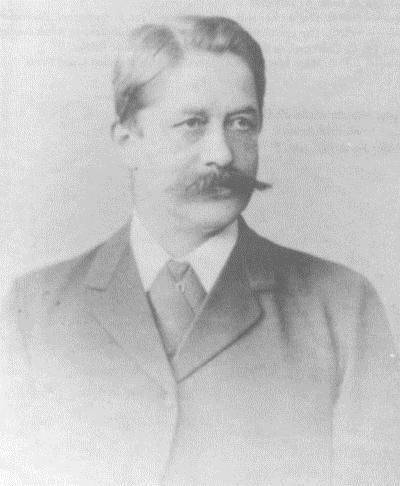
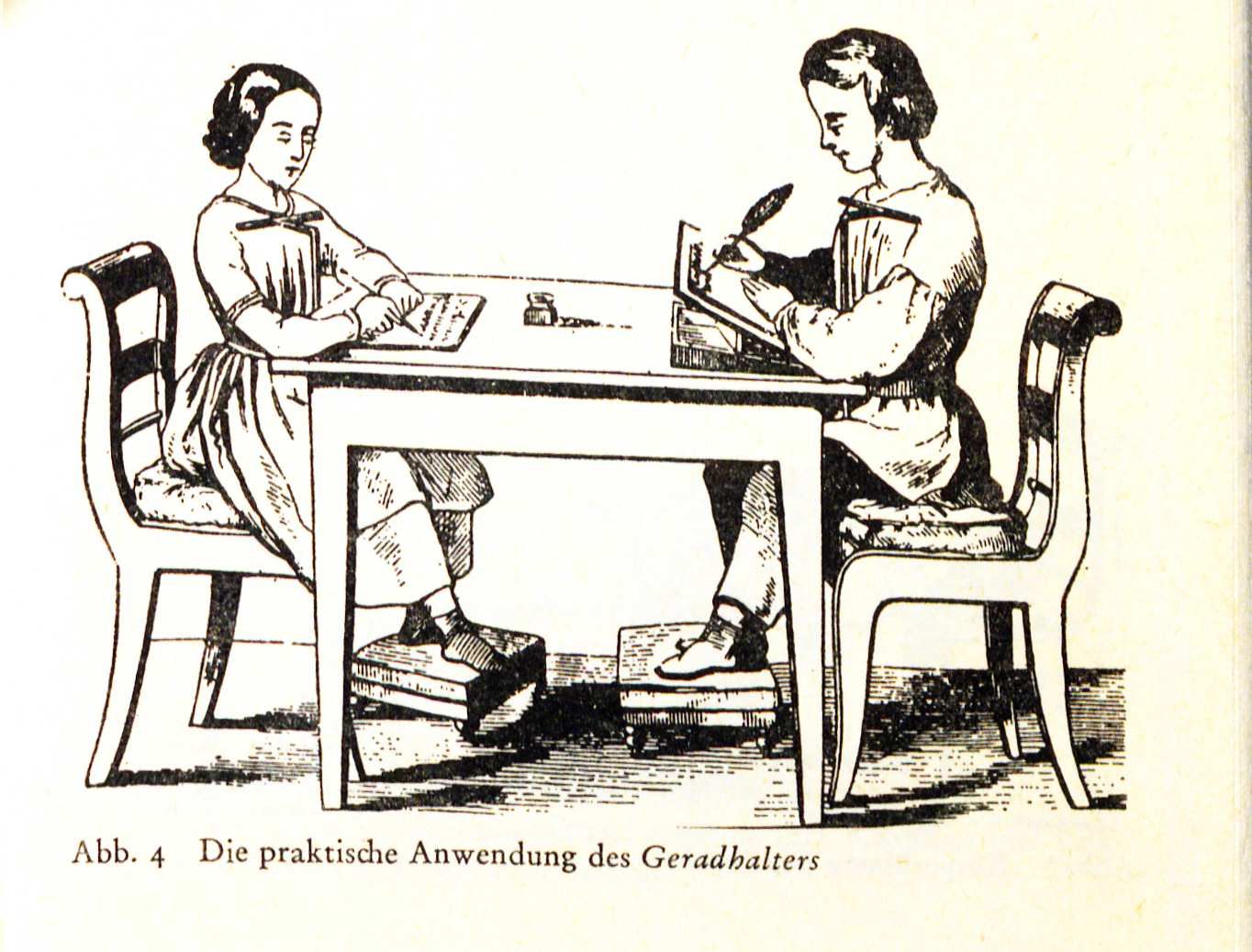
The classic example of this thesis is the German judge Daniel Paul Schreber. Schreber was born in Leipzig in 1842. His father, Moritz Schreber, was one of the best-known physicians and educators of nineteenth-century Germany; his books on child-rearing, physical education and healthy living ran to many editions, and after his death his name was given to the small city gardens of Germany, the Schrebergärten still known today. In the Kallipädie of 1858 Moritz Schreber advocated the early disciplining of children’s bodies and wills, and for this purpose presented apparatus of his own design: a straight-holder bar to keep the child sitting upright at table, straps to keep him on his back as he slept, bands to hold chin and head in place.

Daniel Paul Schreber had a brilliant legal career. He suffered his first mental crisis in 1884, after standing for election to the Reichstag and losing, and recovered in the psychiatric clinic of the University of Leipzig under Professor Paul Flechsig. His second and far graver crisis began in 1893, immediately after his appointment as presiding judge at the Higher Regional Court in Dresden, and lasted about nine years. In the complex delusional system he developed in this period Schreber was in direct relation with God’s rays; for the redemption of the world he had to be transformed into a woman and bear a new human race by God; his doctor Flechsig had committed against him a “soul murder”, Seelenmord. Schreber’s God spoke a language of his own: what Schreber called the “basic language”, in German Grundsprache, a somewhat archaic but forceful German full of euphemisms. The rays whispered unfinished sentences to him, and Schreber had to complete them: for instance finishing a sentence beginning “Now I will...” with “...consent to being a fool”. In his third seminar Lacan separates these two phenomena: the basic language is a disturbance arising at the level of the code, in which words are charged with meaning in themselves; the interrupted sentences are a phenomenon at the level of the message, in which the sentence is cut off at the point where it would take on its full meaning.12 Both are signs of a language in which meaning cannot be fixed, in which the quilting point is missing. In Schreber’s world words are either overfull or break where they should come to their full sense. In 1903, after a lawsuit he brought and won to be freed from guardianship, Schreber published Memoirs of My Nervous Illness, in which he recounted this experience with extraordinary clarity and intelligence.13
Freud, without ever seeing Schreber and relying only on this book, wrote a study in 1911 and interpreted the delusion as the transformation of a repressed homosexual desire directed at Flechsig and, behind him, at the father.14 Lacan devotes a large part of his third seminar to Schreber and draws attention to the moment the crisis broke out: Schreber collapsed when he was appointed presiding judge, that is, when he was called to take on a symbolic fatherly position over his older and more experienced colleagues. For Lacan this call addressed a place in Schreber’s Symbolic order that had no counterpart; in the absence of the signifier that would answer, a hole opened in the Symbolic order, and the delusional system tried to fill it. From this angle the delusion is less a collapse than, as Freud too sensed, an attempt at repair.
Alongside Lacan’s structural reading, Schreber’s family history carries another weight. His father Moritz died in 1861, when Daniel Paul was nineteen. His elder brother Gustav, in 1877, at the age of thirty-eight, himself a judge, shot himself with a pistol. Daniel Paul married Sabine Behr in 1878; the marriage remained childless, his wife having several miscarriages or stillbirths.15 Freud had linked the theme of transformation into a woman and bearing a new lineage from God, in Schreber’s delusion, to this childlessness. In Lacan’s reading these details form a chain: a man who could not beget a son to carry his father’s name, who bore the weight of his father’s name and had lost his brother before this name, collapses at the very moment he is asked to assume the highest symbolic fatherhood. The delusion is, in a way, an attempt to re-found a lineage in which the father’s name could not be passed on: Schreber would himself be transformed into a woman and bear a new humanity from God.
Another reading of the Schreber case came onto the scene from the late 1950s with the researches of the psychoanalyst William Niederland. Niederland compared Moritz Schreber’s books and apparatus with his son’s delusions and proposed that the bodily tortures in the delusions might be an echo of the educational devices the father used. Morton Schatzman, in Soul Murder, published in 1973, carried the idea further and interpreted the father’s pedagogy as a kind of systematic psychic violence.16 These readings complete rather than contradict Lacan’s structural account: the excessive, all-pervading, limitless presence of the real father can be read as a sign of the failure of the symbolic function of the law to take its place, of an apparatus taking the place of a name. In the 1958 text Lacan too draws attention to the devastation that the father figure can cause in cases where the father really stands, or presents himself, in the position of lawgiver.17 A father who takes himself for the law itself, who presents himself as the embodiment of virtue, health, order and rectitude, can paradoxically become an obstacle to the law’s being transmitted as a name. Before the child stands not a father who is himself subject to a law and himself lacking, but an authority that proclaims itself complete. Moritz Schreber’s pedagogy and Hermann Kafka’s armchair are two different faces of this structure: the one speaks in the name of science and health, the other in the name of his own pleasure; but neither acknowledges a law above him.
VI
Lacan’s thinking about the Name-of-the-Father changes radically over time. The seminar he began in the autumn of 1963 under the title The Names-of-the-Father, after the International Psychoanalytical Association struck Lacan from its list of training analysts, remained a single lesson, that of 20 November 1963; Lacan would never again take up the subject under that title. But the plural in the title heralds the later development: the Name-of-the-Father is no longer a single, privileged signifier but one among several functions that can hold the subject’s world together. The title of the seminar of 1973–1974, Les non-dupes errent, “Those who are not duped err”, is a homophone in French of Les Noms du Père; with this play Lacan implies that the subject who thinks he is not duped by the father’s function, who sees every symbolic authority as an illusion, is condemned to lose his way.
Finally, in the seminar Le Sinthome of 1975–1976, Lacan rethinks the Name-of-the-Father as the fourth ring that holds together the Real, the Symbolic and the Imaginary in the Borromean knot, and shows that this function can be taken over by a sinthome that is the subject’s own invention. James Joyce’s writing is such an invention in Lacan’s eyes: a writer whose father had failed in his symbolic function holds together his threatened world by making a name for himself.18
This opening of the late Lacan has had important consequences in contemporary Lacanian clinical work. The clinical meetings organised by Jacques-Alain Miller and his colleagues at Angers in 1996, at Arcachon in 1997 and at Antibes in 1998 culminated, in the last, in a concept that took its name from it: ordinary psychosis.19 The concept makes it possible to think of clinical pictures that show no striking delusion or hallucination but in which the function of the Name-of-the-Father is weak, and the subject maintains his balance with his own solutions, with small and quiet inventions.
When Miller returned to the concept ten years later, he proposed three clues by which ordinary psychosis can be recognised in the clinic, and called them “externalities”.20 Social externality is a break in the subject’s relation to social identity, profession and roles, a feeling of estrangement, or on the contrary an excessive, rigid clinging to a role. Bodily externality is living the body as not one’s own, as detached, come undone at some point, and resorting to means such as tattoos, piercings or tight routines to hold it together. Subjective externality is a feeling of emptiness within oneself, a void, a strange distance that comes between the subject and himself. None of these signs proves anything by itself; but together they may carry the traces of a world in which the fixing provided by the Name-of-the-Father is missing and the subject lives by his own inventions.
This view is thought-provoking at the social level too. The decline of the image of the father that Lacan already spoke of in 1938 is lived today far more visibly. Thirty years later, immediately after May 1968, Lacan recalled this process in a short note in sharper terms, and spoke of “the evaporation of the father” as the sign of his time.21 What evaporates is less the father himself than the possibility of gathering his function in a single figure, a single law. Everyday Turkish bears witness to how this function is carried over into institutions: the expression devlet baba, “father state”, shows how the paternal function, an authority that protects, punishes, gives and takes, can be carried over from a family to a whole society. The Name-of-the-Father does not stay inside the house; it seeps into every form of law, authority and belonging. But Lacanian thought does not meet this situation with a call to restore patriarchal authority. The pluralisation of the Name-of-the-Father means that law and meaning can now come not only from a single centre but also from the subject’s own inventions, his own bonds, his own names. Lacanian clinical work takes care to hear these inventions not as pathological deviations but as solutions that make the subject’s life possible. The Name-of-the-Father is not a praise of authority but a structural question about how the subject is tied to language and desire; and this question, though Lacan’s answers changed, remains at the centre of the clinic.
Notes
- J. Lacan, “Les complexes familiaux dans la formation de l’individu” (1938), Autres écrits, Paris: Seuil, 2001. ↩︎
- S. Freud, Totem and Taboo (1913), SE XIII. ↩︎
- S. Freud, “Family Romances” (1909), SE IX (German: “Der Familienroman der Neurotiker”, Gesammelte Werke VII). The Roman-law principle is usually given in full as mater semper certa est, pater semper incertus est. ↩︎
- S. Freud, Der Mann Moses und die monotheistische Religion (1939), Gesammelte Werke XVI; Moses and Monotheism, SE XXIII, part III. The phrase Freud uses is Fortschritt in der Geistigkeit: an advance in intellectuality, in spirituality. ↩︎
- J. Lacan, “Le mythe individuel du névrosé” (1953), lecture given at the Collège philosophique; Ornicar? 17–18 (1979); Le mythe individuel du névrosé, Paris: Seuil, 2007. In the second part of the lecture Lacan traces the same structure in Goethe’s relation with his youthful love Friederike Brion. I paraphrase. ↩︎
- F. Kafka, Brief an den Vater (1919; published 1952); English: Letter to His Father. Kafka gave the letter to his mother to hand to his father; she did not deliver it and returned it to Kafka. The text was published only twenty-eight years after Kafka’s death. I paraphrase the sentence. ↩︎
- J. Lacan, “D’une question préliminaire à tout traitement possible de la psychose” (1958), Écrits (1966), pp. 531–583; English in Écrits, trans. B. Fink (2006). ↩︎
- J. Lacan, Le Séminaire, Livre V: Les formations de l’inconscient (1957–1958), Paris: Seuil, 1998, lessons of January 1958. Lacan stresses that these “times” are not chronological stages but logical moments. ↩︎
- J. Lacan, Le Séminaire, Livre III: Les psychoses (1955–1956), Paris: Seuil, 1981, lessons on Athalie; English: The Psychoses, trans. R. Grigg (1993). ↩︎
- S. Freud, “From the History of an Infantile Neurosis” (1918), SE XVII, section VII. ↩︎
- Lacan, “D’une question préliminaire à tout traitement possible de la psychose” (1958), Écrits. Lacan calls this figure Un-père: a father who rises symbolically, from a third place, before the subject’s dual relation. ↩︎
- Lacan, Le Séminaire, Livre III: Les psychoses; also “D’une question préliminaire”, Écrits. Lacan’s distinction rests on Jakobson’s distinction between code and message: code phenomena are messages about the code itself; message phenomena are the speaker’s utterances left unfinished within the code. ↩︎
- D. P. Schreber, Denkwürdigkeiten eines Nervenkranken (1903); English: Memoirs of My Nervous Illness, trans. I. Macalpine and R. A. Hunter (1955). ↩︎
- S. Freud, “Psycho-Analytic Notes on an Autobiographical Account of a Case of Paranoia (Dementia Paranoides)” (1911), SE XII. ↩︎
- On the Schreber family history see Niederland, The Schreber Case (1974) and H. Israëls, Schreber: Father and Son (Madison: International Universities Press, 1989). In the Memoirs Schreber himself speaks openly of the disappointment that being unable to have children caused him and his wife. ↩︎
- W. G. Niederland, The Schreber Case (1974); M. Schatzman, Soul Murder: Persecution in the Family (1973). ↩︎
- Lacan, “D’une question préliminaire à tout traitement possible de la psychose” (1958), Écrits. In this context Lacan stresses that fathers who identify themselves with the law and proclaim that they represent an ideal or a virtue may, instead of carrying the symbolic function of the law, overshadow it. I paraphrase. ↩︎
- J. Lacan, Le Séminaire, Livre XXIII: Le sinthome (1975–1976), Paris: Seuil, 2005; English: The Sinthome, trans. A. R. Price (2016). ↩︎
- J.-A. Miller (Ed.), La psychose ordinaire : la convention d’Antibes (1999). ↩︎
- J.-A. Miller, “Ordinary psychosis revisited”, Psychoanalytical Notebooks 19 (2009). Miller stresses that these signs are not a diagnostic list but clues that direct the clinician’s attention. ↩︎
- Lacan’s short note of 1968 was published after his death under the title “Note sur le père” in the journal La Cause du désir (no. 89, 2015). The note is read together with the critique of science and capitalism Lacan was developing in the same years. ↩︎
References
- Freud, S. (1909). Family romances. SE IX.
- Freud, S. (1911). Psycho-analytic notes on an autobiographical account of a case of paranoia (dementia paranoides). SE XII.
- Freud, S. (1913). Totem and taboo. SE XIII.
- Freud, S. (1918). From the history of an infantile neurosis. SE XVII.
- Freud, S. (1939). Moses and monotheism. SE XXIII.
- Israëls, H. (1989). Schreber: Father and son. International Universities Press.
- Kafka, F. (1952). Brief an den Vater (1919). S. Fischer.
- Lacan, J. (1966). D’une question préliminaire à tout traitement possible de la psychose. In Écrits (pp. 531–583). Seuil.
- Lacan, J. (1981). Le Séminaire, Livre III: Les psychoses (1955–1956). Seuil.
- Lacan, J. (1998). Le Séminaire, Livre V: Les formations de l’inconscient (1957–1958). Seuil.
- Lacan, J. (2001). Les complexes familiaux dans la formation de l’individu (1938). In Autres écrits. Seuil.
- Lacan, J. (2005). Le Séminaire, Livre XXIII: Le sinthome (1975–1976). Seuil.
- Lacan, J. (2007). Le mythe individuel du névrosé (1953). Seuil.
- Lacan, J. (2015). Note sur le père (1968). La Cause du désir, 89.
- Miller, J.-A. (2009). Ordinary psychosis revisited. Psychoanalytical Notebooks, 19.
- Miller, J.-A. (Ed.). (1999). La psychose ordinaire : la convention d’Antibes. Agalma/Seuil.
- Niederland, W. G. (1974). The Schreber case. Quadrangle.
- Schatzman, M. (1973). Soul murder: Persecution in the family. Random House.
- Schreber, D. P. (1903). Denkwürdigkeiten eines Nervenkranken. Oswald Mutze.
- Schreber, M. (1858). Kallipädie oder Erziehung zur Schönheit.