This essay first appeared in Turkish. The English version is my own. Lacan’s texts are cited in the French originals, with English translations given where one exists. Freud’s works are cited by their titles in the Standard Edition (SE), with volume numbers.


Dans la langue il n’y a que des différences sans termes positifs.
Ferdinand de Saussure, Cours de linguistique générale (1916)
In language there are only differences without positive terms.
I
Lacan set out the three orders openly for the first time on 8 July 1953, in a lecture titled The Symbolic, the Imaginary and the Real, given at the first scientific meeting of the newly founded Société française de psychanalyse.1 The date is no accident. In June of the same year Lacan and a group of analysts, among them Daniel Lagache and Françoise Dolto, had left the Société psychanalytique de Paris after sharp disputes over the structure of the training institution and over Lacan’s technique. The lecture, in the wake of this rupture, is like the programme of a new beginning; it is the preface to the text he would present a few months later in Rome, the manifesto of the project he called the “return to Freud”.
The causes of the rupture were both institutional and personal. The Société psychanalytique de Paris, under Sacha Nacht, wanted to tie the training of analysts to a rigid institutional structure resembling that of the faculties of medicine; Lagache and his friends thought this structure would bureaucratise training. Lacan was in addition under heavy criticism for his technique, which shortened the standard fifty-minute session and set the length of the session by the flow of speech. The newly founded Société française de psychanalyse would spend ten years trying to be admitted to the International Psychoanalytical Association, and in 1963 a compromise was reached at the price of Lacan’s removal from the list of training analysts.2 The theory of the three orders was born at the start of these turbulent years, in the midst of an institutional split. In the long address he gave in Rome in September 1953, “The Function and Field of Speech and Language in Psychoanalysis”, Lacan proclaimed as a programme the primacy of the Symbolic: the only instrument of psychoanalysis is speech, and the unconscious is the chapter of the subject’s history that has been left blank or filled by a lie, the censored chapter.3
The order of the lecture is significant: the Symbolic comes first. Lacan’s teaching in the 1950s is built on the primacy of the Symbolic order, and this primacy is also the basis of his critique of American ego psychology. Ego psychology defined the aim of analysis as the strengthening of the ego; Lacan saw the ego as an Imaginary structure, an alienation, and argued that analysis should aim for the subject’s assuming his place in the Symbolic order, his own speech and history. Taking the three orders one by one makes it easier to understand why this dispute was so sharp.
II
The Imaginary order is the order of images, identifications and relations of resemblance. Lacan developed this order through the concept of the mirror stage, his first original contribution. In the text he first presented at the international psychoanalytic congress at Marienbad in 1936 and rewrote at Zurich in 1949, he describes the moment at which an infant between six and eighteen months joyfully recognises its image in the mirror.4 At this moment the infant, still in a fragmented experience, unable to coordinate its body, sees itself in the mirror as a unified image. Identification with this image forms the basis of the ego; but the identification rests on an illusion. The ego is constituted outside the subject, in an image.
That the Imaginary is not peculiar to human beings, that it reaches down into the biology of living things, was something Lacan’s generation was learning from a new science, ethology. The Austrian Konrad Lorenz had shown that greylag goslings newly hatched adopt the first moving creature they see, even if it is he himself, as their mother and never leave it; he called this phenomenon imprinting, in German Prägung. The Dutchman Niko Tinbergen observed that male sticklebacks attack rivals whose bellies turn red in the breeding season, but attack just as fiercely a crude model that looks nothing like a fish when its underside is painted red.5 What sets the animal in motion is not the being before it but an image, a colour, a shape; under certain conditions it makes no distinction at all between a real rival and a piece of wood. In such findings Lacan sees a biological proof of the power of the image to take a living being captive. What distinguishes the human being from the animal is not escape from this imaginary captivity but the addition of another order over it, that of language and law. The image that fascinates the infant in the mirror stage is a relative of the red patch that sets the stickleback attacking; but the infant takes this image up together with a name, a word, an adult’s confirmation.
The Imaginary order is the order of relations in which we compare ourselves with others, admire them or envy them. These relations are by nature dual and tense: my semblable is both a model and a rival. Aggressivity, rivalry and narcissistic fragility are the characteristic experiences of this order. Lacan’s lecture on aggressivity in 1948 shows that this tension is a direct consequence of the mirror relation: my semblable, standing where I want to be, is the person I both admire and hate.
How the Imaginary and the Symbolic work together had been shown by Freud long before Lacan, in his book on the psychology of crowds in 1921. For Freud a crowd is a community in which each member has put the same object, a leader or an idea, in the place of his own ego ideal, and therefore identifies with the others at the level of his ego.6 What binds the members of a crowd together is their resemblance to one another, their repeating the same slogans, their wearing the same colours; this is an Imaginary bond, the mirror relation multiplied. But this resemblance rests on all of them looking from the same place, the place of the ego ideal occupied by the leader; and this is a Symbolic place. The distinction Lacan would draw in later years between the ideal ego and the ego ideal is an explicit rewriting of this diagram of Freud’s. The look-alike members of a fan community, a political movement, a sect, recognise one another only under the same gaze, around the same name.
III
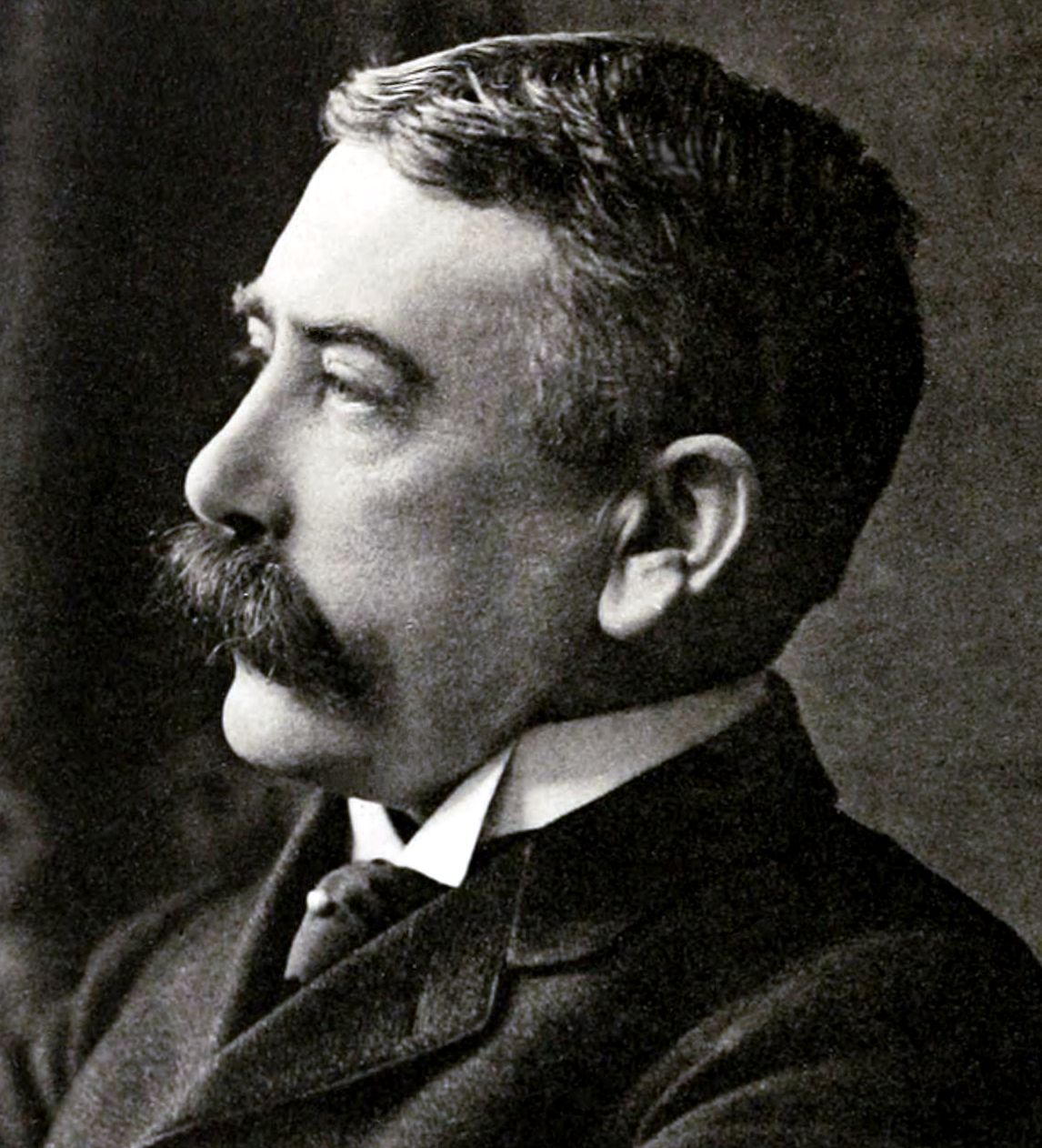
The Symbolic order is the order of language, law and social structures. Lacan theorised this order drawing on two great structuralist sources. The first is Ferdinand de Saussure’s Course in General Linguistics, compiled and published by his students in 1916 after his death. Saussure defines the linguistic sign as an arbitrary bond between a signifier, a sound-image, and a signified, a concept, and says, in the sentence I have taken as an epigraph, that in language there are only differences, no positive terms. The meaning of a word comes not from an essence it carries within it but from its difference from other words.7 Lacan radicalises this: the signifier has primacy over the signified; meaning arises within the chain of signifiers, from their positions relative to one another.
Lacan shows this primacy in his text of 1957, “The Agency of the Letter in the Unconscious”, with a drawing he puts in the place of Saussure’s famous tree diagram. To illustrate the sign Saussure had put above a line a picture of a tree and below it the word “tree”. Lacan draws above the line two identical doors side by side and writes beneath them two words: Hommes and Dames, Men and Ladies. The doors are exactly alike; the only thing that makes them different is the words on them. To the drawing Lacan adds a little story: on a train, a boy and a girl sit facing each other and look out of the window as the train pulls into a station. The boy says, “Look, we’re at Ladies!” and the girl answers, “Idiot, can’t you see we’re at Gentlemen!”8 The two children are looking at the same point of the same platform; but each, from the seat he or she occupies, can see only the name of the other door. For Lacan even sexual difference, before it is an anatomy, is established by passing through the door of a signifier, by a name placing the subject somewhere. The signified, the lavatory itself, is the same behind the two doors; what separates the subjects is the border the signifier draws.

The second source is the structural anthropology of Claude Lévi-Strauss. His The Elementary Structures of Kinship, published in 1949, had shown that human societies are organised not by biological but by symbolic laws, above all through the prohibition of incest and the exchange of women between groups. In the essay he published in the same year, “The Effectiveness of Symbols”, he examines a long song sung by a shaman of the Cuna people of Panama during a difficult childbirth and argues that the song works by giving the woman’s bodily pain a myth, a meaning and an order; and he openly compares this process with psychoanalytic treatment.9 For Lacan this essay is an anthropological confirmation of the principle on which psychoanalysis rests, that a word, a symbol, can act on the body itself.
For Lacan the human subject is placed in this symbolic order from the moment of birth, even before birth. His name, his lineage, his family’s expectations and language itself determine in advance who the subject will be. The face of this order that turns towards the subject is what Lacan calls the Big Other. The Symbolic order brings a third term that regulates the dual tensions of the Imaginary: a deadly rivalry between two persons can be regulated through a law, a contract, a word. Lacan’s famous formula of this period, that the unconscious is structured like a language, is the clinical counterpart of this thought.
Entry into the Symbolic order has a price, and in the Rome Discourse Lacan states it in a short formula: the symbol first manifests itself as the murder of the thing.10 When a thing is given a name, it can be spoken of even when it is no longer there. The word takes the place of the thing in its absence; but for just that reason it does away, to some extent, with the thing itself. A child who can say “mummy” can call her when she is not in the room; but now a word, a name, a language has come between him and his mother. The subject who enters language reaches the world not directly but through the mediation of words. The Symbolic order brings a law that regulates the dual tensions of the Imaginary, but it brings too a loss that puts a distance between the subject and everything. The Real is the name of the place that this loss leaves behind, the place language can never entirely close.
How fragile a process entry into the Symbolic order is, a case recounted in Lacan’s first seminar shows. In March 1954 Rosine Lefort, a student of Lacan’s, presented at the seminar a four-year-old boy she worked with, Robert. Robert had been passed from one institution to another since birth, and had grown up neglected, hungry, in severe deprivation. He hardly spoke at all; only two words came from his mouth: “Madame!” and “Wolf!” This second word he repeated like a scream in moments when he was threatening himself or others. At one stage of her work Lefort recounts that one night Robert tried to cut off his own penis with scissors, and that another day, in the bath, in the water, he cried out his name as if baptising himself a wolf.11 In this case Lacan sees a world in which the Symbolic order has not reached a child, and only one word, a scream, a threat is left to him. The word “wolf” is for Robert not part of a chain of signifiers; it is a word that has to carry a whole language alone, and therefore tells nothing. Lefort’s work is the effort to accompany the slow weaving of other words, other names, around this single word.
IV
The Real is the hardest of the three orders to grasp, since by definition it is what resists being grasped. Lacan’s Real must not be confused with “reality” in the everyday sense. Reality is a world formed and given meaning by the Symbolic and Imaginary orders; the Real is what remains outside this meaning-making, what resists symbolisation. Lacan defines the Real differently in different periods. In the 1950s the Real is a remainder that always returns to the same place, that imposes itself insistently however much one tries to symbolise it. In explaining this definition Lacan looks at the sky: throughout the history of science the purest example of the Real has been the stars that return to the same place every night, the planets that come to the same position at regular intervals. Heavenly bodies do not speak, do not ask for anything, do not move according to a desire; they only return to their places. Its counterpart in psychoanalysis is what in the subject’s life returns, against his wishes, every time to the same place, the same scene, the same loss. From the 1960s Lacan defines the Real as the impossible: what can neither be said nor imagined, yet goes on having its effects.
One of Lacan’s most surprising propositions on the Real is that nothing is lacking in the Real. In his second seminar he defines the Real as a plenitude without interruption, without a fissure.12 Lack enters the world only with the Symbolic. For us to notice that a chair at a dinner is empty, that someone has not come, that chair has to have been reserved for someone, a place at the table has to have been prepared. In the Real there is only a chair; its emptiness becomes an emptiness only in the Symbolic order, which ties it to a name, an expectation, a turn. This also explains why the Real is so hard to think. Language works through lack; to name something is to think it by its difference from other things, together with the places where it is not. The Real is what stands before or beyond these differences, this absence, and does not fit the gaps of language.
An encounter with the Real is most often lived as a traumatic experience. A trauma is an encounter in which the symbolic and imaginary resources the subject has until then possessed are not enough to make sense of what is lived. In his eleventh seminar of 1964 Lacan names this encounter with the concept of tuché, borrowed from Aristotle: an unexpected and unavoidable meeting with the Real, an encounter that is each time slightly missed. Lacan recounts this encounter in the same seminar through the dream that opens chapter VII of Freud’s The Interpretation of Dreams. A father has lost his child, whom he had watched over for days. He has gone to sleep in the room next to the one where the body lies, leaving the door open; an old man is keeping vigil by the candles beside the dead child. In his dream the father sees his child standing beside his bed, taking him by the arm and whispering reproachfully: Father, can’t you see that I’m burning? He wakes and runs into the next room: the old watchman has fallen asleep, and a fallen candle has set fire to the child’s shroud and arm.13 Freud reads the dream as the fulfilment of the father’s wish to prolong sleep a few seconds more, to see his child alive once more. Lacan draws attention to the awakening itself. The father wakes because of the unbearableness of the sentence in the dream; but when he wakes he meets the real thing, that he has been unable to save his child, a loss that nothing can bring back. The Real stands in this place that neither dream nor waking quite catches, between the two scenes. Waking does not find it, it misses it. In psychosis, by contrast, in the formula Lacan takes from Freud, what has found no inscription in the Symbolic order returns in the Real, in the form of a hallucination or a delusion.
How concrete an experience this concept corresponds to, many people in Turkey learned in their own lives after the earthquakes of 6 February 2023. The destruction in a single night of houses, streets, cities, loved ones left under the rubble, all the coordinates of the familiar world disappearing in a few minutes, is one of the barest forms of an encounter with what Lacan calls the Real. One of the sentences survivors of the earthquake said most often in the first weeks and months was about what they could not tell: they could not find a word, an order, a meaning that fitted what they had lived. As clinicians who work with this experience know, recovery does not abolish this Real; but words, names, rituals, memories can slowly be woven around it. Mourning and testimony try to sew the edges of the gap the Real has opened with the thread of the Symbolic, without closing the gap.
V
The evolution of Lacan’s teaching can be read largely as a rethinking of the relation among the three orders. In the 1950s the Symbolic had priority; Lacan stressed that the unconscious is structured like a language and that analytic work proceeds by speech. From the 1960s the Real took an ever more central place: concepts like the object that is the cause of desire, jouissance and the drive pointed to a remainder, a residue, that the Symbolic order could not wholly encompass. In the 1970s Lacan tended to think the three orders as of equal weight and interdependent, and found a figure to express this thought.
Lacan introduces the Borromean knot to his audience on 9 February 1972, in his seminar ...ou pire; by his own account he had learned of the knot the evening before, at a dinner with a listener who followed the lectures of the mathematician Georges-Théodule Guilbaud.14 The knot takes its name from the three rings in the coat of arms of Italy’s Borromeo family and has a simple but astonishing property: none of the three rings passes through another, yet the three together are bound inseparably; when any one of the rings is cut, the other two are freed as well. In this figure Lacan finds the full expression of the relation of the three orders: none can be reduced to the others, and none is independent of them. The seminar of 1974–1975, R.S.I., takes its name directly from the three orders; in the following seminar, Le Sinthome, Lacan asks what it is that holds the three orders together, and answers with a fourth ring, the subject’s singular invention, the sinthome.15
VI
The three orders offer a powerful framework for reading clinical experience on different layers. The Imaginary dimension covers a person’s image of himself, his comparisons with others, his envies and narcissistic wounds; the question “Why can’t I be like him?” belongs to this order. The Symbolic dimension covers a person’s family history, the way he was named, his social roles and how language positions him; the question “What is expected of me, whose place am I taking?” belongs to this order. The Real dimension covers experiences that cannot be put into words, traumas, the body’s impositions and anxiety; the place at which the analysand says “I can’t tell it”, “words aren’t enough” often points to the Real.
The analytic session itself works within these three orders. In his second seminar Lacan says that the analysand’s speech often turns on the Imaginary axis, the axis of an ego speaking to the analyst as an ego, and that this axis, like a wall, a “wall of language”, cuts off the unconscious’s speech. The analysand explains himself, defends himself, seeks the analyst’s approval, tries to guess what he is thinking; however sincere this talk, it veils the speech the subject does not know. The analyst’s intervention tries to cross this wall: drawing attention to the double meaning of a word, giving back a slip, punctuating a sentence in its middle are attempts to carry the analysand’s speech from the Imaginary axis to the Symbolic one. The end of the session, especially in Lacan’s variable-length sessions, can become the most radical form of this intervention: a cut that comes at a moment the analysand does not expect, before the echo of a word has died. The cut does not complete the meaning of what was said; it leaves it open, and calls the analysand, after the session too, to think around that gap.
These three dimensions may be interwoven even within a single symptom. An anxiety attack may be related at once to a feeling of shrinking before another’s gaze in the Imaginary order, to the fear of being unable to meet a family expectation in the Symbolic order, and to an unnameable turmoil of the body in the Real. Analytic work attends to each of these three dimensions: loosening Imaginary fixations, questioning Symbolic positions, and finding a word, a limit, a form for encounters with the Real are inseparable aspects of the psychoanalytic process.
Mourning is the experience in which the three orders touch one another most clearly. When we lose a person a hole opens first in the Real: someone who was once there is no longer, the voice cannot be heard, the chair is empty, the telephone does not ring. In his lectures on Hamlet Lacan defines mourning precisely in this way: a hole that opens in the Real and sets the subject’s whole order of signifiers in motion.16 To fill this hole the Symbolic order comes into play: funeral rites, prayers, condolence visits, a name engraved on a gravestone, words said after the dead. The mourning rituals of every culture are attempts to mark the dead person’s place symbolically, to bind the loss to a word and a time. The Imaginary order carries the image of what has been lost: photographs, memories, seeming for a moment to see the person at a street corner. Mourning slowly comes to an end when these three orders are knotted together again, when the image of the lost becomes a memory, the name a symbol, and the hole in the Real no longer swallows the whole of life. Where mourning cannot be completed, the knot remains undone at some point. This is what the Borromean knot teaches: a change made in one ring affects the other two; and the subject’s world either holds together or falls apart according to how these three rings are knotted.
The Real, the Symbolic and the Imaginary are perhaps the most lasting framework Lacan proposed for thinking human experience. The sequence that began in 1953 with the Symbolic becomes, twenty years later, with the abbreviation R.S.I., a sequence beginning with the Real; this change is a small but meaningful sign of the shift of the teaching’s centre of gravity from speech towards the place speech cannot fill. Psychoanalysis works in each of these three dimensions and in the connections among them. The value of this framework lies in its refusal to reduce the human being to one dimension: a human being is neither only an image, nor only a language, nor only a body. A psychoanalyst, listening to someone, asks in which of the three dimensions something has got stuck, in which something is overflowing, which of them can no longer carry the others. The question is asked not in order to make a diagnosis but to understand how the subject ties his own knot.
Notes
- J. Lacan, “Le symbolique, l’imaginaire et le réel” (1953), in Des Noms-du-Père, Paris: Seuil, 2005. ↩︎
- For a detailed history of the rupture and the decade that followed see E. Roudinesco, Histoire de la psychanalyse en France, vol. 2 (1925–1985), Paris: Seuil, 1986; English: Jacques Lacan & Co., trans. J. Mehlman (1990). In 1964 Lacan founded his own school, the École freudienne de Paris. ↩︎
- J. Lacan, “Fonction et champ de la parole et du langage en psychanalyse” (1953), Écrits, Paris: Seuil, 1966; English in Écrits, trans. B. Fink (2006). In Lacan’s words the unconscious is « ce chapitre de mon histoire qui est marqué par un blanc ou occupé par un mensonge : c’est le chapitre censuré ». ↩︎
- J. Lacan, “Le stade du miroir comme formateur de la fonction du Je” (1949), Écrits (1966), pp. 93–100. ↩︎
- K. Lorenz, Er redete mit dem Vieh, den Vögeln und den Fischen (1949); English: King Solomon’s Ring (1952); N. Tinbergen, The Study of Instinct, Oxford: Clarendon Press, 1951. For this work Lorenz and Tinbergen shared, with Karl von Frisch, the 1973 Nobel Prize in Physiology or Medicine. ↩︎
- S. Freud, Group Psychology and the Analysis of the Ego (1921), SE XVIII (German: Massenpsychologie und Ich-Analyse, Gesammelte Werke XIII), chapter VIII. Freud also shows this definition with a diagram: parallel egos meeting, with arrows directed to the same external object, in a common ego ideal. ↩︎
- F. de Saussure, Cours de linguistique générale (1916), ed. C. Bally and A. Sechehaye; English: Course in General Linguistics, trans. W. Baskin (1959). ↩︎
- J. Lacan, “L’instance de la lettre dans l’inconscient ou la raison depuis Freud” (1957), Écrits, Paris: Seuil, 1966. Lacan tells the story to show that each of the two children, from where he or she sits, can see only the name of the opposite sex, and that sexual difference too is established by passing through the door of a signifier. In Lacan’s French the words are Dames and Hommes. ↩︎
- C. Lévi-Strauss, Les structures élémentaires de la parenté (1949); “L’efficacité symbolique”, Revue de l’histoire des religions 135 (1949); English: The Elementary Structures of Kinship (1969); “The Effectiveness of Symbols”, in Structural Anthropology (1963). ↩︎
- Lacan, “Fonction et champ de la parole et du langage en psychanalyse” (1953), Écrits: « le symbole se manifeste d’abord comme meurtre de la chose ». In the same place Lacan adds that this death makes possible the perpetuation of the subject’s desire; the thought rests on Hegel’s idea that the concept is the time of the thing, and on Kojève’s interpretation of it. ↩︎
- J. Lacan, Le Séminaire, Livre I: Les écrits techniques de Freud (1953–1954), Paris: Seuil, 1975, Rosine Lefort’s presentation and Lacan’s comment, in the chapter “L’enfant au loup”; English: Freud’s Papers on Technique, trans. J. Forrester (1988). Lefort’s work was later published, with Robert Lefort, as Les structures de la psychose: L’enfant au loup et le Président (Paris: Seuil, 1988). ↩︎
- J. Lacan, Le Séminaire, Livre II: Le moi dans la théorie de Freud et dans la technique de la psychanalyse (1954–1955), Paris: Seuil, 1978; English: The Seminar of Jacques Lacan, Book II, trans. S. Tomaselli (1988). In the same seminar Lacan stresses that lack enters the world only with the Symbolic order, that is, with the existence of a place and a name. ↩︎
- S. Freud, The Interpretation of Dreams (1900), SE V (German: Die Traumdeutung), chapter VII. The sentence in the dream is in the German text Vater, siehst du denn nicht, daß ich verbrenne? Freud says he heard the dream from a patient, who had heard it at a lecture. Lacan interprets the dream at length in Le Séminaire, Livre XI, in the lessons of early 1964. ↩︎
- J. Lacan, Le Séminaire, Livre XIX: ...ou pire (1971–1972), Paris: Seuil, 2011, lesson of 9 February 1972. Lacan says that the knot fitted him, so to speak, like a ring on a finger. ↩︎
- J. Lacan, Le Séminaire, Livre XXII: R.S.I. (1974–1975), Ornicar? 2–5 (1975); Le Séminaire, Livre XXIII: Le sinthome (1975–1976), Paris: Seuil, 2005. ↩︎
- J. Lacan, Le Séminaire, Livre VI: Le désir et son interprétation (1958–1959), Paris: La Martinière, 2013, the lessons devoted to Hamlet. In the same place Lacan reads the hasty funeral rites in Hamlet, the manner of burial of Polonius and Ophelia, as the tragedy’s counterpart of mourning not being symbolically carried out. ↩︎
References
- Freud, S. (1900). The interpretation of dreams. SE IV–V.
- Freud, S. (1921). Group psychology and the analysis of the ego. SE XVIII.
- Lacan, J. (1966). Écrits. Seuil. [“Le stade du miroir comme formateur de la fonction du Je” (1949); “L’agressivité en psychanalyse” (1948); “Fonction et champ de la parole et du langage en psychanalyse” (1953); “L’instance de la lettre dans l’inconscient” (1957).]
- Lacan, J. (1975). Le Séminaire, Livre I: Les écrits techniques de Freud (1953–1954). Seuil.
- Lacan, J. (1978). Le Séminaire, Livre II: Le moi dans la théorie de Freud et dans la technique de la psychanalyse (1954–1955). Seuil.
- Lacan, J. (1973). Le Séminaire, Livre XI: Les quatre concepts fondamentaux de la psychanalyse (1964). Seuil.
- Lacan, J. (1975). Le Séminaire, Livre XXII: R.S.I. (1974–1975). Ornicar?, 2–5.
- Lacan, J. (2005). Le symbolique, l’imaginaire et le réel (1953). In Des Noms-du-Père. Seuil.
- Lacan, J. (2005). Le Séminaire, Livre XXIII: Le sinthome (1975–1976). Seuil.
- Lacan, J. (2011). Le Séminaire, Livre XIX: ...ou pire (1971–1972). Seuil.
- Lacan, J. (2013). Le Séminaire, Livre VI: Le désir et son interprétation (1958–1959). La Martinière.
- Lefort, R., & Lefort, R. (1988). Les structures de la psychose: L’enfant au loup et le Président. Seuil.
- Lorenz, K. (1949). Er redete mit dem Vieh, den Vögeln und den Fischen. Borotha-Schoeler.
- Lévi-Strauss, C. (1949). Les structures élémentaires de la parenté. PUF.
- Lévi-Strauss, C. (1949). L’efficacité symbolique. Revue de l’histoire des religions, 135.
- Roudinesco, E. (1986). Histoire de la psychanalyse en France (Vol. 2). Seuil.
- Saussure, F. de (1916). Cours de linguistique générale (C. Bally & A. Sechehaye, Eds.). Payot.
- Tinbergen, N. (1951). The study of instinct. Clarendon Press.