This essay first appeared in Turkish. The English version is my own.

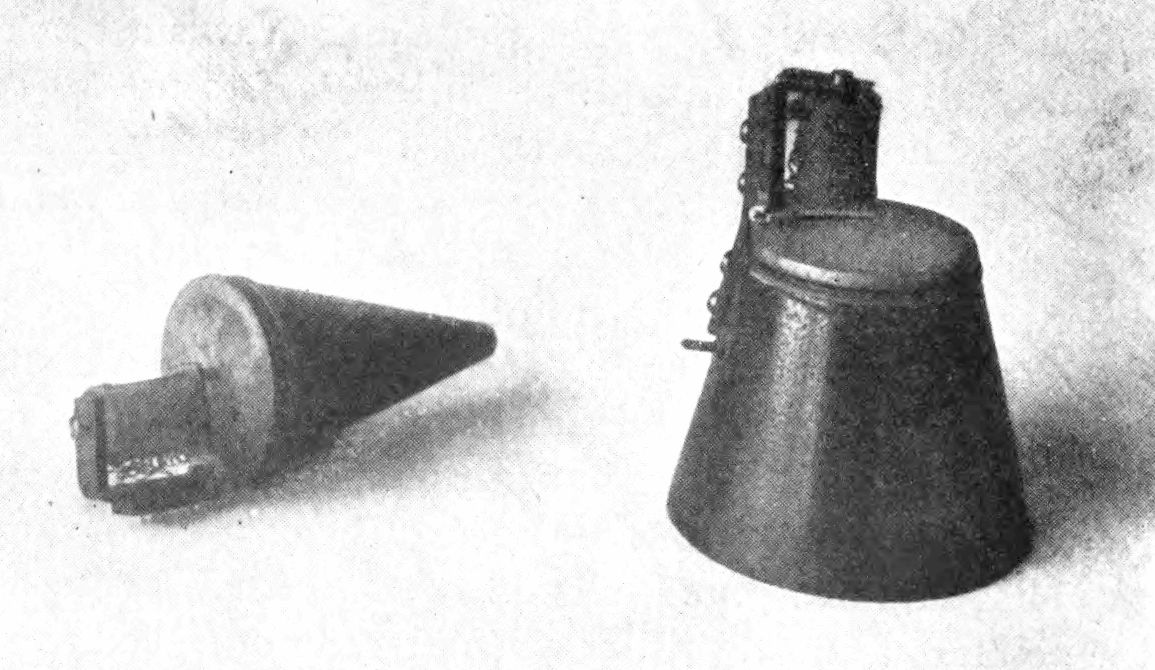
He must adjust himself to the patient as a telephone receiver is adjusted to the transmitting microphone.
Sigmund Freud, “Recommendations to Physicians Practising Psycho-Analysis” (1912), trans. J. Strachey
I
One of the founding moments of psychoanalysis is a correspondence. Between 1887 and 1904 Freud wrote hundreds of letters to Wilhelm Fliess, an ear, nose and throat specialist in Berlin. In them he shared his scientific ideas, his clinical observations, his doubts, even his own dreams and childhood memories. The self-analysis he undertook in the second half of the 1890s, after his father’s death, took place largely within this correspondence: in a letter of 15 October 1897 he wrote that he had discovered in his own childhood feelings of love for his mother and jealousy of his father, and that these feelings corresponded to a universal structure, to Sophocles’ Oedipus.1 The first “analyst” of psychoanalysis was, in a sense, a pen friend living in another city, on whose couch Freud never lay.
Throughout his life Freud also went on listening and answering by letter. One of the best-known examples is a short letter he wrote in 1935 to an American mother. She had written describing her son’s homosexuality and asking for help; she could not even bring herself to name what she was speaking of. Freud’s reply, written in English, is remarkably frank for its time: “Homosexuality is assuredly no advantage, but it is nothing to be ashamed of, no vice, no degradation; it cannot be classified as an illness.” He reminds her that many highly respected people since antiquity have been homosexual, and adds that analysis might bring her son harmony, peace of mind and full efficiency, whether or not he remained homosexual.2 The letter is not an analysis; but it is a fine example of how words written from afar to someone never seen can change the way a person looks at their own child.
The first child analysis, too, was conducted through an intermediary. In the case of Little Hans, published in 1909, the phobia of horses that the five-year-old had developed was analysed by the boy’s father under Freud’s supervision; Freud saw the child only once and followed the analysis through the detailed notes and letters the father sent him regularly.3 An analysis could be carried on by reading, in a father’s handwriting, the words of a child the analyst had hardly seen. These two examples show that psychoanalysis, though known as a discipline founded on the physical closeness symbolised by the couch and the shared room, tried out the possibilities of speaking at a distance from the very beginning.
Another early scene showing that analysis is not tied to a room is the experience counted as the first training analysis. In 1907 Max Eitingon, a young physician working at the Burghölzli clinic in Zurich, came to Vienna and for a few weeks took long evening walks with Freud through the streets of the city. On these walks Eitingon talked about his life, his dreams, his anxieties, while Freud listened and interpreted.4 There was no couch, no room with a closing door, no waiting room, not even a fixed hour; but there was speech, someone listening to it, and a repeated meeting. Thirteen years later, when Eitingon founded in Berlin the first psychoanalytic institute to tie the training of analysts to a structure of personal analysis, supervision and theoretical teaching, he had surely not forgotten that his own training had begun on a pavement.
II
More striking still, to describe the analyst’s way of listening Freud turned to the newest communication technology of his time. In his technical recommendations to physicians of 1912, Freud asks of the analyst an “evenly suspended attention”, focused on nothing in particular and equally open to everything said, and describes this attitude through the analogy I have taken as an epigraph: the analyst must turn his own unconscious like a receptive organ towards the transmitting unconscious of the patient, adjusting himself to the patient as a telephone receiver is adjusted to the transmitting microphone.5 The telephone turns electrical vibrations back into sound waves; the analyst must likewise turn the vibrations coming from the analysand’s unconscious, hidden within speech, back into unconscious thoughts.
The analogy is not mere ornament. From the beginning, psychoanalysis thought of its own practice of listening in the language of a communication technology, because at heart it is concerned with a voice reaching another person, with the gap between what is transmitted and what is received, with interference, loss and misunderstanding. The central place Lacan later gave to language and the signifier deepens this intuition: what matters in analysis is less the physical closeness of bodies than speech being addressed to another, and that other being able to hear it from a place the speaker does not know.
The classical analytic arrangement is itself, more than is often thought, an arrangement of distance. The famous couch in Freud’s consulting room was reportedly the gift of a grateful patient around 1890. The analysand lies on the couch, the analyst sits at its head, in an armchair the analysand cannot see. Freud wrote the reason for this arrangement openly in 1913: he could not bear to be stared at by other people for eight hours a day or more.6 What began as a personal discomfort soon became a technical principle: the analyst’s face being out of sight left the analysand to their own speech, without trying to read the analyst’s reactions. The couch is a distance deliberately placed between two people in the same room. The analysand feels the analyst’s presence, hears the analyst’s voice, but does not see the analyst’s face.

Recalling this arrangement throws an unexpected light on the debate about online sessions. The most frequently criticised side of online sessions is that the face is squeezed into a screen and the body disappears; yet classical analysis itself is founded on an arrangement that deliberately removes the face from view. This is why a session conducted by voice alone, with the camera off, strange as it may seem at first, comes surprisingly close to the function of the couch. A session in which the camera is on and two faces meet on the screen, by contrast, resembles the arrangement of face-to-face psychotherapy more than the couch. Which arrangement is chosen is, before it is a technical preference, a clinical question about finding the place from which the analysand can speak.
The analyst’s room is also part of the frame, and analysands often watch it closely. In the book in which, years later, she recounted her analysis with Freud in Vienna in 1933 and 1934, the American poet Hilda Doolittle, who signed as H.D., describes at length the ancient statuettes, Egyptian, Greek and Roman figures, that filled Freud’s study. One day Freud picks up a small bronze Athena from his desk, holds it out to her, and says that it is his favourite, that it is perfect, only she has lost her spear.7 H.D. thought about this sentence for years, together with all the themes of her analysis: femininity, lack, creativity. In an online session, too, there is something the analysand sees: a bookcase behind the analyst, a wall, a picture, changing light. These details can also enter the material of the analysis. The analysand ceases to be someone looking at the analyst’s room and becomes someone who sees a rectangle’s worth of the analyst’s world; and what they see in that rectangle, what they wonder about, what they ignore, says something about them.
A limit must also be drawn from the outset. Psychoanalytic work is a work of speech, and therefore not the same thing as forms of “therapy” conducted by written messages or messaging apps. The letters Freud wrote to Fliess were the material of a self-analysis, but not an analysis. Writing has a different time from speech: the writer can think over a sentence, delete it, correct it, decide whether or not to send it. In speech, by contrast, words escape the speaker’s control for a moment; a slip, a hesitation, a sentence left unfinished, an unexpected word, are moments in which the unconscious shows itself. Autocorrect on today’s phones is in this respect an ironic tool: it corrects and erases the slips of written language, the small traces of the unconscious, before we have even noticed them. That online psychoanalytic sessions take place by voice or video is therefore not a preference but a necessity.
III
The real knot in the debates about online sessions is what psychoanalysts call “the frame”. In a paper published in 1967, which later became a classic, the Argentine psychoanalyst José Bleger argued that the analytic process takes place within a frame made up of elements that remain constant, the time, place and frequency of sessions, the fee, the analyst’s attitude, and that this frame is a silent ground noticed only when it breaks down.8 For Bleger the frame is the place where the analysand’s most primitive, least differentiated anxieties silently settle; this is why the constancy of the frame matters as much as the analytic work itself. Donald Winnicott’s concept of the “holding environment” carries a similar intuition: just as an infant needs the reliable, predictable presence of a mother in order to develop, the analytic process needs a reliable frame.
Seen this way, the real problem of online sessions is not the screen itself but how the frame is set up. In a session held in the same room, the place itself provides part of the frame: the waiting room, the closed door, the unchanging furnishings of the analyst’s room, the time spent travelling. In an online session a good many of these elements have to be set up deliberately. Where the analysand will speak from, how privacy will be ensured, the transition time left at the beginning and end of the session, what to do when the connection fails, should be discussed in the first meetings. When the frame is well set up, the screen ceases to be something that disrupts it and becomes an ordinary condition of the session.
The small rituals of a session held in the same room often do important work without anyone noticing. The analysand leaves home or work, sets off, enters the building, rings the bell, sits in the waiting room; during this time they slowly shed the bustle of the day, think about what they will say or try not to. After the session they walk the same way back, and the echo of what they said goes along with them for a while longer. In Freud’s consulting room in Vienna, patients passed through double doors from the waiting room into the study; the double door, while keeping what was said from carrying outside, also made the body feel that a threshold was being crossed. In an online session this threshold is reduced to a link, a click. Someone who was in a work meeting a minute ago can find themselves in front of their analyst a minute later; and as soon as the session ends, they are back in the kitchen, with their children, with their notifications. During the pandemic years many analysts recounted that analysands joined sessions from parked cars, from larders, from bathrooms, from balconies, and that finding a corner of the home in which to speak was a task in itself. This is why deliberately setting up the threshold in online sessions, being alone for a few minutes before the session and not moving straight on to something else afterwards, is as important a part of the frame as time and fee.
It is useful at this point to recall a sentence of Lacan’s about transference. In his seminar of 1964, Lacan says that the presence of the analyst, la présence de l’analyste, is itself a manifestation of the unconscious.9 The presence in question is not simply that of a body in the same room. The analyst’s presence is the presence of the place to which the analysand’s speech is directed, of the feeling of speaking to someone supposed to know something, of a listening. This presence can be lost in a room, for example if the analyst is distracted, tired, lost in their own thoughts; and it can be established at both ends of a screen. The analyst’s presence is measured not by proximity but by the quality of listening.
IV
In the psychoanalytic tradition, bodies being in the same room was long regarded as an indispensable element of the work, and the view has its merits. Observing the analysand’s body, their silences, their breathing, their way of entering and leaving the room, offers knowledge that speech itself cannot carry. Online sessions lose part of this knowledge, and the matter is still debated in psychoanalytic circles; the debate deserves to be taken seriously.
From a Lacanian point of view, however, what is preserved is as decisive as what is lost. Voice and gaze, which Lacan counted among the objects of desire, do not disappear in online sessions; they simply appear in a different form. A voice coming through headphones can be heard as much closer than one in the same room, almost as if coming from within. The gaze is both intensified and mediated by the screen; while seeing the other person’s face, one may at the same time be obliged to watch one’s own face in a small window, which can create a peculiar discomfort of its own. Some analysands prefer to turn off the camera and speak by voice alone, and this, much like the function of the couch, can make freer speech possible by moving away from the gaze. A paper published in 2021 by Jeremy Bailenson of Stanford University lists precisely this among the causes of the “videoconference fatigue” that spread during the pandemic: constantly watching one’s own face on the screen, a situation we never meet in everyday life, is like sitting permanently in front of a mirror and intensifies self-criticism; and seeing the other’s face continuously, at a distance acceptable in ordinary conversation only in very close relationships, also creates tension in the body.10 Hiding one’s own image is therefore a small but important adjustment in online sessions. Technical details such as small delays in the connection, speaking at the same time, or not knowing whether a silence is a dropped connection or a pause, are also new material to be taken into account in analytic work.
The place of the voice in analytic work is given separate thought in Lacan’s theory. In his seminar on anxiety of 1962–1963, Lacan treats the voice, along with the gaze, as one of the objects of desire he adds to the breast and the faeces counted by Freud. To describe this object-status of the voice he turns to a study published in 1919 by Freud’s pupil Theodor Reik, on the shofar, the ram’s horn blown on holy days in the Jewish tradition. The sound of the shofar carries no word and conveys no meaning; yet it shakes everyone who hears it to the core, and is heard as if it were the very voice of a law, a covenant, a call.11 For Lacan the voice is an object distinct from the words spoken, their carrier, which itself says nothing. Analytic listening attends not only to the meaning of what is said but to the voice itself, its tone, its breaks, its hesitations, the stress falling on a word. In a session where the screen erases part of the face and makes most of the body invisible, the voice therefore becomes even more prominent. A voice coming straight into the ear through headphones differs from one spreading through the air of a room: closer, more intimate, sometimes almost as if coming from inside one’s own head.
V
Analytic work at a distance was debated before the internet age too. In the second half of the twentieth century, analyses continued by telephone when analysts moved or analysands went to other cities or countries were discussed from time to time in the psychoanalytic literature. With the spread of video technologies the debate widened; the paper published in 1998 by the American psychoanalyst Sharon Zalusky, whose title sums up the debate, “Telephone analysis: out of sight, but not out of mind”, was one of its turning points. Drawing on her own clinical experience, Zalusky showed that in analyses continued by telephone transference, resistance and unconscious material do not disappear but simply appear in different forms.12 Publications such as Psychoanalysis Online, edited by Jill Savege Scharff, brought together the experience and theoretical discussions of analysts from different countries.13 The pandemic of 2020 took the debate out of the academic realm: all over the world analysts and analysands had to work for months by screen and telephone alone, and the experience made the possibilities of remote work as visible as its limits.
The number of studies on the effectiveness of video therapy has grown markedly over the last decade. Meta-analyses bringing these studies together show that therapies conducted by video give results broadly equivalent to face-to-face therapy for common difficulties such as depression and anxiety; the meta-analysis published by Ashley Batastini and colleagues in 2021 is one of the comprehensive studies in the field.14 Another important finding of the research is that the therapeutic alliance, the working relationship between client and therapist, can be strongly established in video sessions too. Honesty requires a caveat here: most of these studies were carried out with short, structured therapies; systematic research on long-term psychoanalytic work conducted online is still limited.
VI
Beyond distance, online sessions also have possibilities of their own. You can reach a practitioner working in the approach you are looking for regardless of the city you live in; this matters especially for orientations, such as Lacanian psychoanalysis, that are not found in every city. Moving house, travelling or busy periods at work need not interrupt the sessions, and given the place of continuity in analytic work this is no small advantage. Removing travel time makes it easier to fit regular sessions into everyday life. And perhaps most important of all, a person gains the possibility of working with an analyst with whom they can express their feelings in their own language, in their own words; the place of the mother tongue in putting the most intimate experiences into words is among the oldest knowledge of psychoanalysis.
One of the clearest clinical witnesses to this knowledge is a short paper published in 1950 by the American psychoanalyst Ralph Greenson. Conducting in English the analysis of a woman patient born and raised in a German-speaking country who had later emigrated to America, Greenson noticed that she could not reach certain memories and feelings of her childhood. When at one point they moved the analysis into German, memories that had been unspeakable until then, shames and fears about her relationship with her mother, suddenly emerged. In English the patient lived herself as a polite, measured, grown woman; in German she became a frightened little child made to feel dirty.15 The mother tongue is not only a means of communication but the language of a subject’s first loves, first fears, first prohibitions. Online sessions can also be a way of opening up to this language again where someone cannot find an analyst working in their mother tongue in the city where they live, for instance someone living abroad.
Whether online sessions are fruitful depends largely on the care with which the frame is set up. Choosing a room with a door that closes, where no one can hear you throughout the session, using headphones, checking the internet connection and the device’s battery beforehand, turning off notifications and not doing anything else at the same time, are the cornerstones of this frame. If privacy cannot be ensured at home, a parked car is a frequently used solution. Leaving a few minutes of transition before and after the session also matters: in sessions held in the same room, the time spent travelling does this work by itself; in online sessions the transition has to be set up deliberately. The other elements of the frame should be discussed just as openly: the day and time of sessions, the fee and how it is paid, how cancelled or missed sessions will be handled. At first sight these details look like practical arrangements; but in analytic work each of them becomes part of the analysand’s relationship with the frame, and therefore with the analyst. Always cancelling a session at the last minute, the connection always failing on that particular day, the camera freezing just as something important is about to be said, are events that enter the material of the analysis and can be talked about. Sessions are not recorded, and the information shared is protected under Turkish Law No. 6698 on the Protection of Personal Data.
Although online sessions are a suitable option for many people, in some situations face-to-face support may be a better place to start. In acute crises where there is a risk of harm to oneself or others, one should without delay call the local emergency number (112 in the European Union and Turkey, 999 in the United Kingdom, 911 in North America) or go to the nearest health service. Where there is no safe and private space to speak at home, for example in relationships involving violence or coercion, online sessions may not be safe. In severe conditions requiring close psychiatric follow-up, online work can be planned only together with psychiatric support.
VII
None of this means that an online session is identical in every respect to one held in the same room. Something is lost: the body’s entrance into the room, the meaning of a handshake or its absence, silence spreading between two people breathing the same air, the sound of the door closing after the session. Something is also gained: the possibility of reaching an analyst with whom one can speak in one’s own language, the preservation of continuity, for some analysands a speech freed from the weight of the gaze. The clinician’s task is to weigh these losses and gains separately for each analysand, and to treat online sessions as neither an ideal nor a fallback, but as a way of working with its own conditions and its own limits. Some analyses begin online and continue so; some begin in the same room and move to the screen with a move of house; some, after a period on screen, need to return to the room. Each of these transitions can be spoken about within the analysis itself.
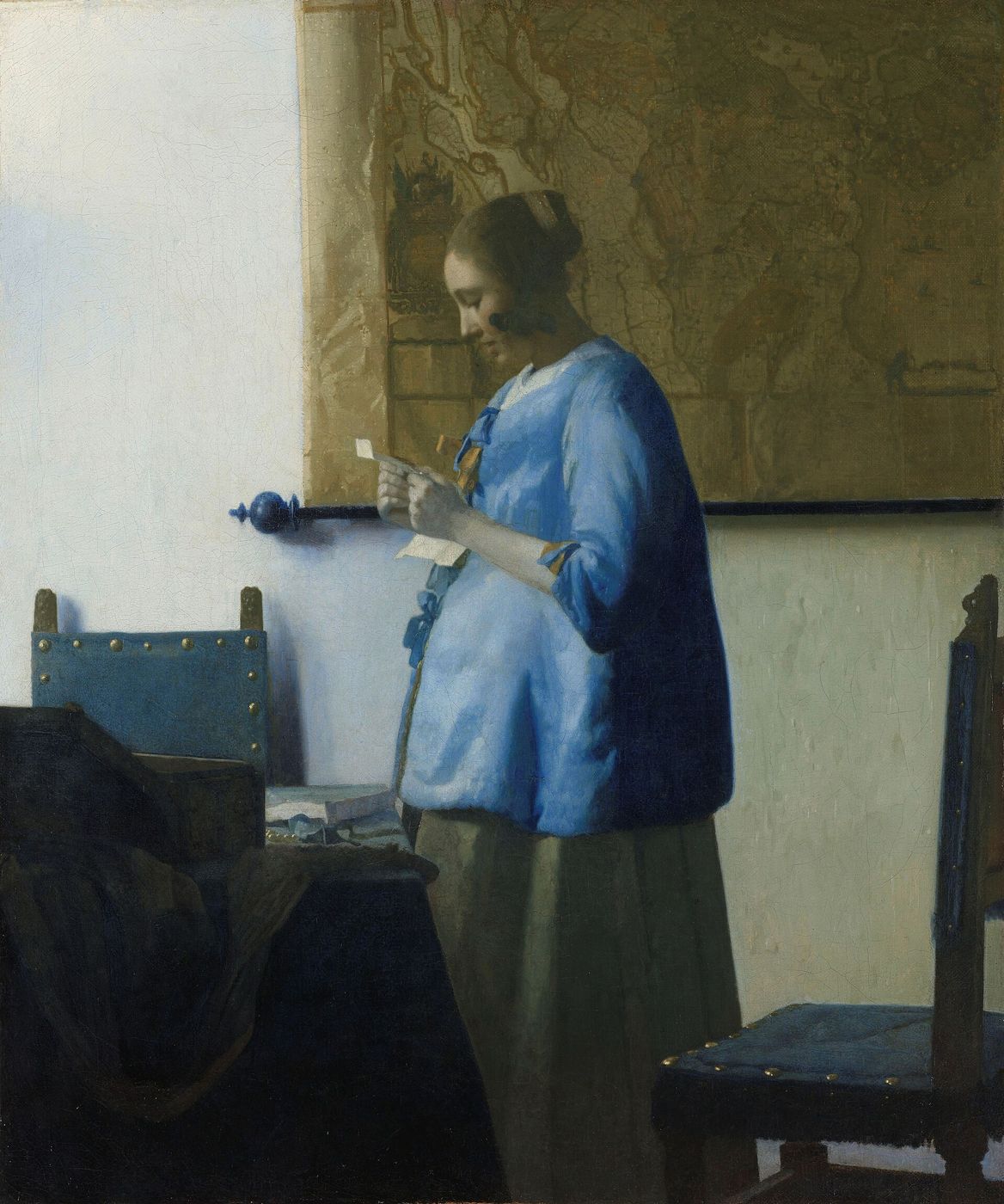
The road from Freud’s letters to Fliess to today’s screens shows that psychoanalysis’s relation to distance is much older and much more fruitful than is often thought. Vermeer’s woman reading a letter lives inside the words of someone she does not see; Freud’s telephone connects two unconsciouses along a line. What has been decisive in psychoanalysis has never been physical distance; it is the existence of a place where speech can be addressed to another, where that other can hear it from a place the speaker does not know, and where this encounter can be repeated within a stable, reliable frame. That place can be set up in a room, or at both ends of a screen. What matters is not that two people sit in the same place, but that a place where one can speak and the other can hear can be set up again, week after week, at the same hour, with the same care.
Notes
- J. M. Masson (Ed.), The Complete Letters of Sigmund Freud to Wilhelm Fliess, 1887–1904 (1985), letter of 15 October 1897. ↩︎
- Freud’s letter of 9 April 1935 was published at the recipient’s request in the American Journal of Psychiatry in 1951. It is today among Freud’s most quoted texts and is remembered in the history of psychoanalysis as an early testimony against the pathologising of homosexuality. ↩︎
- S. Freud, “Analysis of a Phobia in a Five-Year-Old Boy” (1909), SE X. Freud’s works are cited by their titles in the Standard Edition (SE), with volume numbers. ↩︎
- Eitingon’s walks with Freud are recalled as the first training analysis in the second volume of Ernest Jones’s biography, The Life and Work of Sigmund Freud (1955). Eitingon would go on to found the Berlin Psychoanalytic Polyclinic in 1920 and to become one of the pioneers of making personal analysis compulsory in the training of analysts. ↩︎
- S. Freud, “Recommendations to Physicians Practising Psycho-Analysis” (1912), SE XII. ↩︎
- S. Freud, “Zur Einleitung der Behandlung” (1913), Gesammelte Werke VIII; SE XII. Alongside this personal reason, Freud also gives a technical one in the same place: the analyst’s facial expressions should not give the patient material for interpretation or influence his associations. ↩︎
- H.D., Tribute to Freud, New York: Pantheon, 1956. H.D.’s book is one of the richest testimonies of an analysis with Freud told from inside; it shows in detail how the objects in Freud’s room became sources of association in the course of the analysis. ↩︎
- J. Bleger, “Psycho-analysis of the psycho-analytic frame”, International Journal of Psycho-Analysis 48 (1967). ↩︎
- J. Lacan, Le Séminaire, Livre XI: Les quatre concepts fondamentaux de la psychanalyse (1964), Paris: Seuil, 1973; English: The Four Fundamental Concepts of Psychoanalysis, trans. A. Sheridan (1977). Lacan treats the presence of the analyst as an element to be included in the concept of transference; this presence is defined less by the analyst’s body being physically there than as the place to which the analysand’s speech is addressed and where the unconscious opens and closes. ↩︎
- J. N. Bailenson, “Nonverbal overload: A theoretical argument for the causes of Zoom fatigue”, Technology, Mind, and Behavior 2/1 (2021). Bailenson’s suggestions include hiding one’s self-view and reducing the size of the image. ↩︎
- T. Reik, “Das Schofar”, in Das Ritual: Psychoanalytische Studien, Leipzig and Vienna: Internationaler Psychoanalytischer Verlag, 1919. Lacan discusses Reik’s study at length in the last lessons of Le Séminaire, Livre X: L’angoisse (1962–1963; Paris: Seuil, 2004). ↩︎
- S. Zalusky, “Telephone analysis: Out of sight, but not out of mind”, Journal of the American Psychoanalytic Association 46/4 (1998). Zalusky also notes there that for some analysands the telephone brought a freedom from the analyst’s gaze similar to that provided by the couch. ↩︎
- J. S. Scharff (Ed.), Psychoanalysis Online: Mental Health, Teletherapy, and Training (2013). ↩︎
- A. B. Batastini, P. Paprzycki, A. C. T. Jones and N. MacLean, “Are videoconferenced mental and behavioral health services just as good as in-person? A meta-analysis of a fast-growing practice”, Clinical Psychology Review 83 (2021), 101944. ↩︎
- R. R. Greenson, “The mother tongue and the mother”, International Journal of Psycho-Analysis 31 (1950). Greenson concluded that a second language can sometimes serve as an instrument of repression, while the mother tongue carries the traces of the earliest object relations, especially the relationship with the mother. ↩︎
References
- Bailenson, J. N. (2021). Nonverbal overload: A theoretical argument for the causes of Zoom fatigue. Technology, Mind, and Behavior, 2(1).
- Batastini, A. B., Paprzycki, P., Jones, A. C. T., & MacLean, N. (2021). Are videoconferenced mental and behavioral health services just as good as in-person? A meta-analysis of a fast-growing practice. Clinical Psychology Review, 83, 101944.
- Bleger, J. (1967). Psycho-analysis of the psycho-analytic frame. International Journal of Psycho-Analysis, 48.
- Freud, S. (1909). Analysis of a phobia in a five-year-old boy. SE X.
- Freud, S. (1912). Recommendations to physicians practising psycho-analysis. SE XII.
- Freud, S. (1913). On beginning the treatment. SE XII.
- Freud, S. (1951). A letter from Freud (9 April 1935). American Journal of Psychiatry, 107.
- Greenson, R. R. (1950). The mother tongue and the mother. International Journal of Psycho-Analysis, 31.
- H.D. (1956). Tribute to Freud. Pantheon.
- Jones, E. (1955). The life and work of Sigmund Freud (Vol. 2). Hogarth Press.
- Lacan, J. (1973). Le Séminaire, Livre XI: Les quatre concepts fondamentaux de la psychanalyse (1964). Seuil. [English: The four fundamental concepts of psychoanalysis (A. Sheridan, Trans.). Norton, 1977.]
- Lacan, J. (2004). Le Séminaire, Livre X: L’angoisse (1962–1963). Seuil. [English: Anxiety (A. R. Price, Trans.). Polity, 2014.]
- Masson, J. M. (Ed.). (1985). The complete letters of Sigmund Freud to Wilhelm Fliess, 1887–1904. Harvard University Press.
- Reik, T. (1919). Das Ritual: Psychoanalytische Studien. Internationaler Psychoanalytischer Verlag.
- Scharff, J. S. (Ed.). (2013). Psychoanalysis online: Mental health, teletherapy, and training. Karnac.
- Winnicott, D. W. (1965). The maturational processes and the facilitating environment. Hogarth Press.
- Zalusky, S. (1998). Telephone analysis: Out of sight, but not out of mind. Journal of the American Psychoanalytic Association, 46(4).