This essay first appeared in Turkish. The English version is my own.
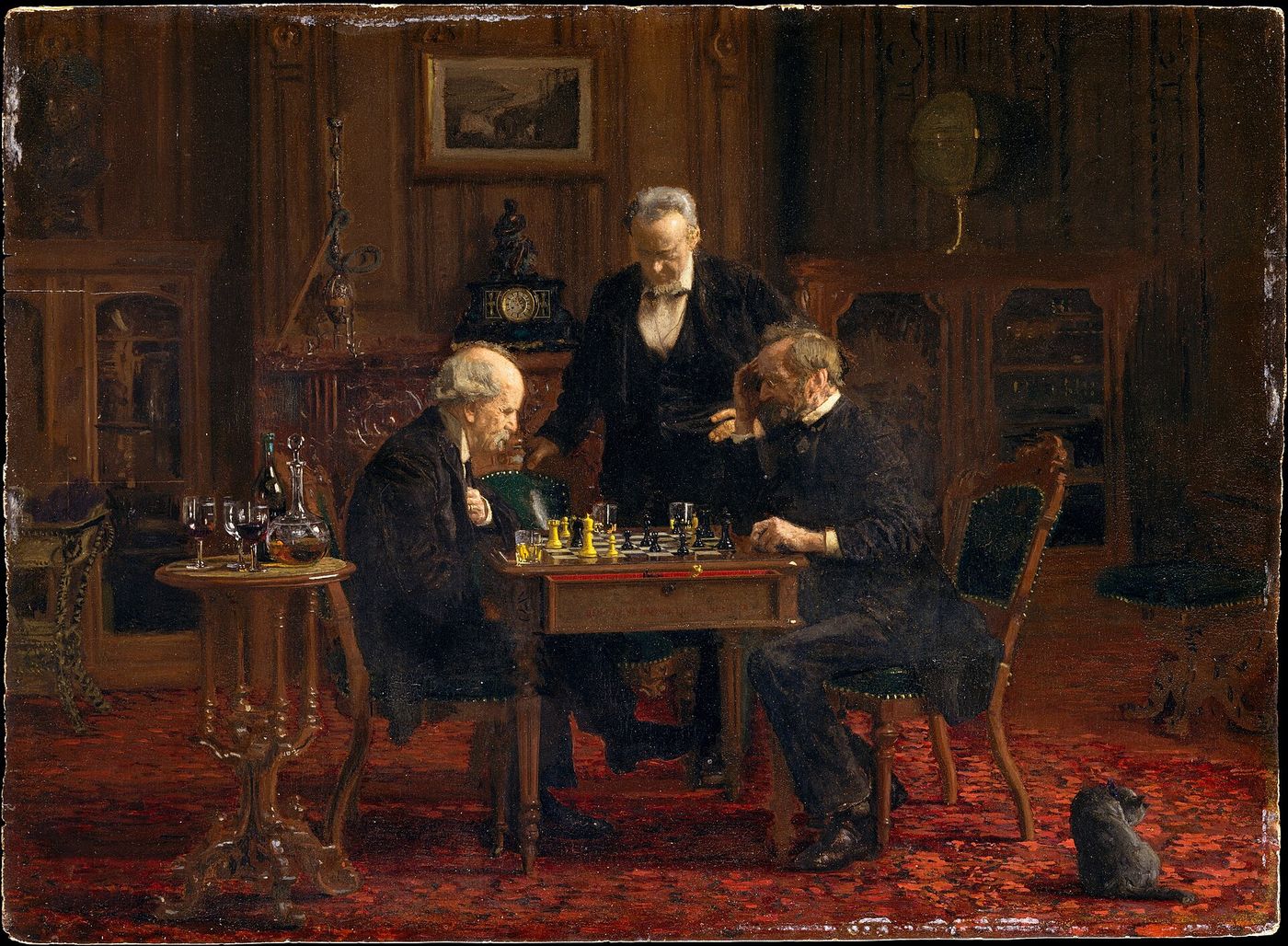

Der Löwe springt nur einmal.
Sigmund Freud, “Die endliche und die unendliche Analyse” (1937)
I
Asking how long a therapy will last before beginning it is as natural as wanting to know what to expect before entering a process that requires time, effort and money. The answer psychoanalysis gives is often met with impatience: there is no predetermined length. In a world that values speed, efficiency and measurable results, beginning a process without knowing when it will end requires trust in itself, even courage. The answer may sound evasive; yet the history of psychoanalysis is the history of a discipline that has wrestled with this question seriously, repeatedly and sometimes dramatically. From Freud to today, how long an analysis should last, when and how it ends, and even whether it can end at all, have been among the liveliest debates in psychoanalytic thought.
Freud first touches on the question in 1913, in his technical paper on the beginning of treatment, and answers it not with the sentence of the epigraph but with a chess analogy. Anyone who hopes to learn chess from books, Freud says, will soon discover that only the openings and the end-games admit of a systematic presentation, while the infinite variety of moves that follow the opening defies any such description. The rules of analytic treatment are subject to a similar limitation.1 In the same paper Freud says plainly that patients are right to ask how long the treatment will take, but that a definite answer is impossible, and he turns to one of Aesop’s fables: when a wayfarer asks the philosopher how long the journey will take, the philosopher first answers only “Walk!”; only after seeing the wayfarer’s pace can he estimate the time of arrival.
In the same paper Freud sets out a principle about the practical ordering of time that still holds today. He leases each analysand a particular hour; the hour belongs to the analysand, who is responsible for it even if they do not use it. Freud writes the reason for this strictness openly: under a flexible arrangement, “chance” obstacles, illnesses, unexpected business, multiply during the periods when the analysis is laden with resistance, and the treatment unwittingly sabotages itself.2 At first sight the principle may look like a commercial rule; but analytically it says that time itself is material. A reserved hour opens, in the analysand’s life, a place that belongs to their own speech and is given over to nothing else. The arrangement many analysts today call “the fifty-minute hour” is also a legacy of this principle; the phrase spread with the title of a book of case histories published in 1955 by the American psychoanalyst Robert Lindner.3
II
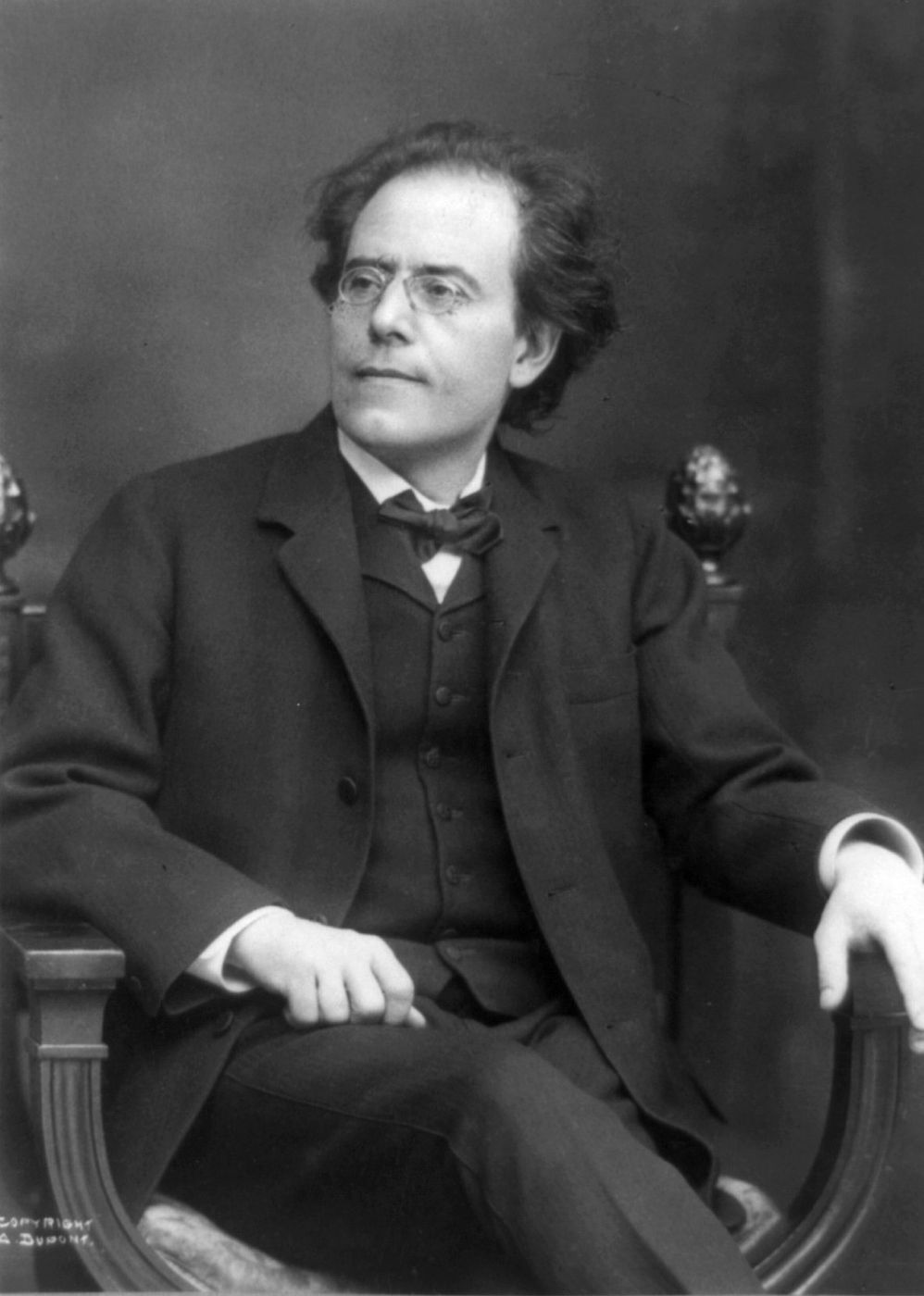
In the first decades of psychoanalysis, treatments could be short in a way unthinkable today. Dora’s analysis lasted eleven weeks; the Rat Man’s about a year. Perhaps Freud’s most famous “short analysis”, however, is the walk of about four hours he took with the composer Gustav Mahler in the summer of 1910, in the Dutch city of Leiden. Going through a deep crisis in his marriage, Mahler had come to Holland, where Freud was on holiday, for a meeting he had put off several times; years later Freud would recount that in this single meeting they had been able to grasp something important about Mahler’s attachment to his mother and his difficulties in love.4 According to Ernest Jones, during the walk Mahler told Freud a scene from his childhood: while his father was treating his mother brutally, he had run out of the house into the street unable to bear it, and at that moment heard a barrel organ in the street playing a cheerful Viennese popular song, “Ach, du lieber Augustin”. Mahler believed that the way a commonplace, cheerful melody suddenly seeps into the midst of the most deeply tragic moments of his compositions was a connection left over from that day: tragedy and light amusement were inextricably knotted in his mind.5 That so much could be talked about in a single walk shows once again that the time of analysis cannot be measured by the calendar. Mahler died a year later.

In the same years Freud was conducting the analysis of a young Russian aristocrat later known as the Wolf Man, and this analysis was the first case that brought Freud face to face with the question of duration. Begun in 1910, the analysis had stalled after a few years: the analysand was docile, cooperative and interested, but nothing changed. Freud then took a radical decision and announced that the analysis would end on a fixed date, in the summer of 1914, whatever happened. According to Freud, under the pressure of this time limit the analysand’s resistance gave way and the analysis quickly produced the decisive material.6 Assessing the experience twenty-three years later, Freud draws on a popular saying and writes the sentence of the epigraph: the lion springs only once. A time limit can be effective if set at the right moment; but it cannot be used a second time, and once set it cannot be withdrawn. The Wolf Man’s later life also bears out the caution of this assessment: a few years later he would need help again, and in 1926–1927 he entered a second analysis with Freud’s pupil Ruth Mack Brunswick.
III
The 1920s were the period of the first major experiments with the length of psychoanalytic treatment. Sándor Ferenczi developed an “active technique” by which the analyst, taking a more active stance, forbidding or recommending certain behaviours, might speed up the process. Otto Rank, in The Trauma of Birth (1924), argued that at the root of all neuroses lies birth itself, the first separation from the mother, and that this trauma could be worked through much faster in analysis by time-limited work. The two published a joint book on the developmental aims of psychoanalysis the same year.7 Freud approached these experiments first with interest, then with growing doubt; Rank’s theory ended with his parting from Freud.
A few years later, in 1927, in a short paper on the termination of analysis, Ferenczi drew a lesson from his own shortening experiments. For him, a proper analysis should end not on a date set from outside but of its own accord, by exhaustion, as it were: the analysand gradually realises that he no longer needs the analysis, that the analyst has ceased to be an extraordinary figure for him, that there is nothing new left to say, and the analysis ends not like an illness but like the natural end of a long conversation.8 This idea stands directly opposite the time limit Freud set the Wolf Man. The tension between the two approaches persists today: on one side respect for the analysis’s own time, on the other the knowledge that this time should not stretch on forever.
The search for shorter treatment continued in the later history of psychoanalysis. In a book published in 1946, Franz Alexander and Thomas French argued that the length and frequency of analysis could be adjusted flexibly and that treatment could be shortened by providing a “corrective emotional experience”. The book is counted among the forerunners of the short-term psychodynamic therapies developed in the following decades, such as the approaches of David Malan, Peter Sifneos and Habib Davanloo.9 Today the psychodynamic tradition offers a wide range, from short pieces of work lasting a few months around a particular focus to analyses spread over years.
The deepest answer to the question of why analysis takes time lies in an observation of Freud’s about the unconscious. In his paper on the unconscious of 1915, Freud says that unconscious processes are timeless: they are not ordered in time, are not altered by the passage of time, and have no reference to time at all.10 A humiliation suffered thirty years ago is as fresh in the unconscious as if it had happened yesterday; a wish directed at a mother in childhood is at work with the same intensity in a grown woman’s or man’s present relationship. This timelessness of the unconscious explains the time of analysis. Analysis tries, through speech, to bring into time something that time does not change: to turn a scene frozen in the past into a memory, a story, a past. The transformation does not happen at once; until the same scene has been met again and again in different forms, the past cannot really become past.
Freud had described the time of this process two years later, in his paper on mourning. When someone loved dies, reality-testing shows that the loved object no longer exists and demands that libido be withdrawn from it. But the demand is not carried out all at once. For Freud the work of mourning takes place bit by bit, at great expense of time and energy: each memory, each expectation, each hope bound to the lost person is called up separately, lived again, and only then can be let go.11 The time of analysis resembles the time of this mourning. What is let go of in analysis is not only a symptom; an old identity, a hope, a fantasy, a way of relating are let go of too. And each of these, as in mourning, can be taken leave of only piece by piece, by being called up again many times, over time.
IV
Freud returns to the question of duration at the end of his life, in Analysis Terminable and Interminable, published in 1937 and counted among the most honest texts in the history of psychoanalysis. The paper’s question is simple but unsettling: does an analysis have a natural end? Freud distinguishes two senses of “the end of an analysis”. In the practical sense, an analysis ends when analyst and analysand stop meeting; this happens when the analysand is free of their symptoms, has overcome their anxieties and inhibitions, and the analyst judges that enough repressed material has been made conscious. But what really interests Freud is a more ambitious sense: whether analysis can reach a point at which no further change can be expected from continuing it.12
Freud’s answer is cautious. Analysis cannot resolve everything in the face of the strength of the drives, the alterations the ego has undergone through its defences, and the upheavals life may bring in the future. At the end of the paper Freud says that in both sexes analysis comes up against a limit, a “bedrock” as it were: in women penis envy, in men a deep resistance to falling into a passive position towards another man. The assumptions about sex in this thesis are rightly disputed today; but Freud’s real lesson is that analysis is not a promise of infinite perfection, and that it includes meeting a limit. In another famous passage of the paper Freud defines analysing, together with educating and governing, as one of the three “impossible professions”, in which one can be sure beforehand of achieving unsatisfying results, and he recommends that analysts too, some time after their own analysis, for instance every five years, should go into analysis again.
V
In Freud’s own practice analysands were seen six days a week, every day at the same hour. Classical psychoanalysis long regarded four or five sessions a week as standard; today most psychoanalytically oriented work takes place with one or two sessions a week. The frequency is set according to the analysand’s needs, their circumstances and the phase of the process, and can change over time: it can be increased in an intense period and reduced as the end approaches. Regularity matters as much as frequency itself: sessions continuing without interruption on the same day and at the same hour make it easier for speech to carry over from one session to the next, and for unconscious material to gain continuity.
Paradoxically, the same continuity is also nourished by breaks. The analyst’s holidays, public holidays, breaks due to illness or travel often arouse unexpectedly strong feelings in analysands: anger, abandonment, anxiety, or on the contrary a strange relief. These feelings are important material for analytic work. But breaks have another function too. In 1958 Donald Winnicott wrote that the capacity to be alone is born from experiences of the child being alone in the presence of its mother: to the extent that the child can become absorbed in its own play while its mother is there, without needing her, it later learns to be truly alone.13 Breaks in analysis are also moments when the analysand tries to carry the analysis in the analyst’s absence, to take their own questions along with them. One of the signs that an analysis is nearing its end is when the analysand comes back after a break having noticed that the analysis went on even in the analyst’s absence.
The length of the session became the subject of one of the fiercest debates in the history of psychoanalysis. The classical tradition usually works with fixed fifty-minute sessions. From the early 1950s, however, Lacan developed the practice of setting the length of the session according to the flow of speech, ending it at the moment a significant word had been said or speech had begun to repeat itself. The practice is called by a name borrowed from prosody, scansion: punctuation, or cut. The variable-length session was one of the main causes of Lacan’s conflict with the International Psychoanalytical Association, a conflict that led first to the split of 1953 and then, in 1963, to Lacan’s removal from the list of training analysts. Lacan’s reasoning was that the session should be measured not by the stopwatch but by the logic of discourse itself; his critics stressed that the practice was open to arbitrary use. Today some Lacanian-oriented work takes place with variable-length sessions and some with fixed ones, and the frame of the work is discussed openly in the first meetings.
VI
Lacan’s most original contribution to the question of time, however, is the essay “Logical Time and the Assertion of Anticipated Certainty”, published in 1945 and later included in the Écrits.14 The essay begins with a logical puzzle a prison governor puts to three prisoners. The governor has three white discs and two black ones; a disc will be fastened to each prisoner’s back, which he cannot see but the others can. The first to work out the colour of his own disc by logical reasoning and walk out of the door will be set free. The governor fastens a white disc to all three backs. In Lacan’s analysis the prisoners, observing one another’s hesitations and stillness, conclude at the same moment that their own discs are white too, and walk to the door.
Lacan distinguishes three distinct times in this reasoning: the instant of seeing, the time for understanding and the moment of concluding. The lesson of the puzzle is that the moment of concluding does not wait for the time for understanding to be completed: the prisoners act by anticipating certainty, in a kind of haste; and the decision made in this haste creates the certainty. The idea is extraordinarily fruitful for thinking about the time of analysis. The length of an analysis is not a chronological duration measured by the calendar, but a logical one. The time for understanding is the time the analysand needs to grasp their own history, repetitions and fantasy, and no one can know in advance how long it will be. But analysis must not surrender to the endless extension of this time for understanding either; at some point the moment of concluding arrives. This is why analysis requires both patience and courage: the patience to bear the time understanding needs, and the courage to reach a decision at some point, before everything has been understood.
The ancient Greeks used two different words for time. Khronos was the measurable, regular flow of hours, days and years; kairos was the right moment, the opportunity, the critical moment at which something can be done only then. The moment an archer must release the arrow, the moment a physician must intervene, the moment an orator must say the word, was kairos. The first of the aphorisms attributed to Hippocrates says as much: life is short, art is long, opportunity fleeting.15 The time of psychoanalysis is a union of these two times. On one side there is the khronos of sessions, regular, repeated at the same hour week after week; on the other, within this order, the kairos that comes at a wholly unexpected moment, when a word, a cut, an interpretation can take effect. Lacan’s logical time and variable-length session can also be read as a search for this second time, for the right moment. But the right moment comes within a regular time; kairos does not come without the patient repetition of khronos.
VII
Research on the length of therapy adds an important external perspective to these theoretical debates. In the classic study known as the “dose–effect relationship”, published by Kenneth Howard and colleagues in 1986, about half of those who came to therapy reported significant improvement within the first eight sessions, and about three-quarters within the first twenty-six.16 The same study, however, showed that the speed of improvement varies greatly with the type of symptoms, and that characterological difficulties require much longer.
Findings on deeper and more lasting change paint a similar picture. Falk Leichsenring and Sven Rabung’s meta-analysis of 2008 showed that, especially for complex and long-standing difficulties, long-term psychodynamic therapy gives more comprehensive results than short-term approaches. In Sweden, the study by Rolf Sandell and colleagues, which followed hundreds of people in psychoanalysis and long-term psychotherapy for years, showed that improvement continued after the end of treatment and that this continuation was related to the frequency of sessions and the length of treatment.17 Jonathan Shedler’s review of 2010 also stresses that the gains of psychodynamic therapies tend to last, and even to grow, after treatment has ended. These findings say that initial relief and a radical transformation in a person’s life are not the same thing. Both are valuable, and which is to be aimed at becomes clear, together with the analysand, over time.
These findings are also in tension with a trend that increasingly shapes the field of mental health today. Health systems and insurers are moving towards defining treatments as ever shorter, more measurable programmes limited to a predetermined number of sessions. The approach has legitimate reasons: resources are limited, many people genuinely benefit from short and focused help, and measurable outcomes make it easier to see whether a treatment works. But the same approach carries the assumption that every form of human suffering will fit the same time scale. Expecting a structure built over years, within a family history, a language and a culture, to dissolve in a few weeks is no more realistic than expecting to learn a language or an instrument in a few weeks. The long time of psychoanalysis is neither a luxury nor a negligence, but a consequence of respect for the nature of what one wants to change.
This does not mean that every analysis must be long. Some people find, in a few months of work, an answer to a question they have carried for a long time, or the clarity they needed at the threshold of a decision, and leave analysis; their leaving is not a failure. Others come back years later, at another period of their lives, with another question. As Freud himself suggested, analysis is less an operation done once and finished than a form of relationship one can return to throughout one’s life.
VIII
Psychoanalytic work usually begins with a period Lacan called preliminary interviews. In them the person describes what has led them to come; the analyst listens for whether the complaint can turn into a question. The difference between saying “I am anxious” and asking “Why do I become anxious precisely in these situations?” is the starting point of analytic work. As the process advances, what is said deepens; what at first looked like a single problem may turn out to be a pattern reaching into different areas of life. In this phase some periods may be fast and fruitful, others static or demanding, and this fluctuation is a natural part of the process. Periods that look static are often the periods in which the most is happening: returning to the same subject again and again, saying the same complaint anew in different words, the feeling that the analyst is doing nothing and the analysis is going nowhere, are what the patient labour Freud called working-through looks like from outside. Some analysands think of leaving the analysis precisely in such periods; the thought itself is worth talking about, because it often carries a wish to move away from something the analysis is approaching: a memory, a feeling, a truth. The rhythm of an analysis resembles the flow of a river: in some places it runs fast, in others it seems almost to have stopped; but beneath still water the current goes on.
The end of the analysis is ideally decided by talking it over together and allowing it time. Ending is itself a process; the weeks or months after a date has been set are often among the most intense and fruitful periods of the analysis. Ending comes up when the analysand notices that their relation to the complaints they came with has changed, that more room for movement has opened in their life, and that they can carry their own questions without needing analysis. In 1967, in his proposal on the structure of his school, Lacan put forward an original procedure, called passe, “pass”, to test the end of an analysis and the analysand’s becoming an analyst; the procedure shows that the end of analysis is defined not only by the disappearance of symptoms but by a transformation of the subject’s relation to their own desire.18 Of course the analysand has the right to end the process whenever they wish; still, talking the decision over in sessions helps the process close meaningfully.
Someone thinking of beginning can clarify their expectations by asking themselves a few questions. Do I want relief from a particular complaint, or to understand myself more deeply? Did the difficulty I am living through begin recently, or has it been repeating for a long time? Can I set aside time and resources for regular sessions? The answers need not be definite; they can be thought through together in the first meetings. The answer Freud borrowed from Aesop is perhaps still the most honest: one must first walk. The length of the road varies with the walker’s steps, with what is met along the way, with where one wants to arrive. How long the road will take becomes clear only within the walk itself, step by step.
Notes
- S. Freud, “On Beginning the Treatment” (1913), SE XII. Freud’s works are cited by their titles in the Standard Edition (SE), with volume numbers. ↩︎
- Freud, “Zur Einleitung der Behandlung” (1913). Freud writes that when he applied this principle over many years, his patients’ “accidental” illnesses became surprisingly rare, while the tendency to miss sessions increased markedly during resistant phases of the analysis. ↩︎
- R. Lindner, The Fifty-Minute Hour: A Collection of True Psychoanalytic Tales, New York: Rinehart, 1955. The case in the book entitled “The Jet-Propelled Couch” later became the subject of many discussions on science fiction and the history of psychiatry. ↩︎
- The meeting took place in August 1910. Freud’s later accounts to Theodor Reik and Marie Bonaparte are the main sources for its content. ↩︎
- E. Jones, The Life and Work of Sigmund Freud, vol. 2, London: Hogarth Press, 1955. Jones also reports there that Freud reminded Mahler that his mother’s name was Marie while his wife was called Alma, and that Mahler replied that his wife’s full name was Alma Maria and that he called her Marie. ↩︎
- S. Freud, “From the History of an Infantile Neurosis” (1918 [1914]), SE XVII; Freud returns to the experience in the first section of “Analysis Terminable and Interminable” (1937). ↩︎
- O. Rank, Das Trauma der Geburt (1924); S. Ferenczi and O. Rank, Entwicklungsziele der Psychoanalyse (1924). ↩︎
- S. Ferenczi, “Das Problem der Beendigung der Analysen” (1927; publ. 1928), Internationale Zeitschrift für Psychoanalyse 14. In the same paper Ferenczi stresses that the analyst’s own analysis must have been fully completed if the analysand’s analysis is to be carried through to its end. ↩︎
- F. Alexander and T. M. French, Psychoanalytic Therapy: Principles and Application (1946). ↩︎
- S. Freud, “The Unconscious” (1915), Gesammelte Werke X; SE XIV, section V. In the same place Freud also stresses that unconscious processes are indifferent to contradiction and replace external reality by psychical reality. ↩︎
- S. Freud, “Mourning and Melancholia” (1917), Gesammelte Werke X; SE XIV. Freud’s words are that mourning can carry out the command of reality-testing only im Einzelnen unter großem Aufwand von Zeit und Besetzungsenergie, that is, piece by piece and at great expense of time and cathectic energy. ↩︎
- S. Freud, “Analysis Terminable and Interminable” (1937), SE XXIII. ↩︎
- D. W. Winnicott, “The capacity to be alone”, International Journal of Psycho-Analysis 39 (1958). For Winnicott, the capacity to be alone is one of the most important signs of emotional maturity and, paradoxically, is acquired in the reliable presence of another. ↩︎
- J. Lacan, “Le temps logique et l’assertion de certitude anticipée” (1945), Écrits (1966), pp. 197–213. The text was first published, just after the war, in the combined 1940–1944 issue of the art review Cahiers d’art edited by Christian Zervos; it is one of the first important texts Lacan published after the silence of the occupation years. ↩︎
- Hippocrates, Aphorisms I, 1: ὁ βίος βραχύς, ἡ δὲ τέχνη μακρή, ὁ δὲ καιρὸς ὀξύς. The sentence, known in Latin as vita brevis, ars longa, goes on to say that experience is deceptive and judgement difficult. ↩︎
- K. I. Howard, S. M. Kopta, M. S. Krause and D. E. Orlinsky, “The dose-effect relationship in psychotherapy”, American Psychologist 41/2 (1986), pp. 159–164. ↩︎
- F. Leichsenring and S. Rabung, “Effectiveness of long-term psychodynamic psychotherapy: A meta-analysis”, JAMA 300/13 (2008), pp. 1551–1565; R. Sandell et al., “Varieties of long-term outcome among patients in psychoanalysis and long-term psychotherapy”, International Journal of Psycho-Analysis 81 (2000). ↩︎
- J. Lacan, “Proposition du 9 octobre 1967 sur le psychanalyste de l’École”, Autres écrits (2001). ↩︎
References
- Alexander, F., & French, T. M. (1946). Psychoanalytic therapy: Principles and application. Ronald Press.
- Ferenczi, S. (1928). Das Problem der Beendigung der Analysen (1927). Internationale Zeitschrift für Psychoanalyse, 14.
- Ferenczi, S., & Rank, O. (1924). Entwicklungsziele der Psychoanalyse. Internationaler Psychoanalytischer Verlag.
- Freud, S. (1913). On beginning the treatment. SE XII.
- Freud, S. (1915). The unconscious. SE XIV.
- Freud, S. (1917). Mourning and melancholia. SE XIV.
- Freud, S. (1918 [1914]). From the history of an infantile neurosis. SE XVII.
- Freud, S. (1937). Analysis terminable and interminable. SE XXIII.
- Hippocrates. Aphorisms.
- Howard, K. I., Kopta, S. M., Krause, M. S., & Orlinsky, D. E. (1986). The dose-effect relationship in psychotherapy. American Psychologist, 41(2), 159–164.
- Jones, E. (1955). The life and work of Sigmund Freud (Vol. 2). Hogarth Press.
- Lacan, J. (1966). Le temps logique et l’assertion de certitude anticipée (1945). In Écrits (pp. 197–213). Seuil. [English: Écrits (B. Fink, Trans.). Norton, 2006.]
- Lacan, J. (2001). Proposition du 9 octobre 1967 sur le psychanalyste de l’École. In Autres écrits. Seuil.
- Leichsenring, F., & Rabung, S. (2008). Effectiveness of long-term psychodynamic psychotherapy: A meta-analysis. JAMA, 300(13), 1551–1565.
- Lindner, R. (1955). The fifty-minute hour. Rinehart.
- Rank, O. (1924). Das Trauma der Geburt. Internationaler Psychoanalytischer Verlag.
- Sandell, R., et al. (2000). Varieties of long-term outcome among patients in psychoanalysis and long-term psychotherapy. International Journal of Psycho-Analysis, 81.
- Shedler, J. (2010). The efficacy of psychodynamic psychotherapy. American Psychologist, 65(2), 98–109.
- Winnicott, D. W. (1958). The capacity to be alone. International Journal of Psycho-Analysis, 39.