This essay first appeared in Turkish, and part of its argument turns on Turkish words and Turkish grammar; I have kept them and explained them. The English version is my own.

Bir garip ölmüş diyeler
Üç günden sonra duyalar
Soğuk su ile yuyalar
Şöyle garip bencileyinThey will say a stranger has died,
Yunus Emre (my translation)
they will hear of it three days later,
they will wash him with cold water,
a stranger, just like me.
Je n’ai qu’une langue, ce n’est pas la mienne.
Jacques Derrida, Le monolinguisme de l’autre
I
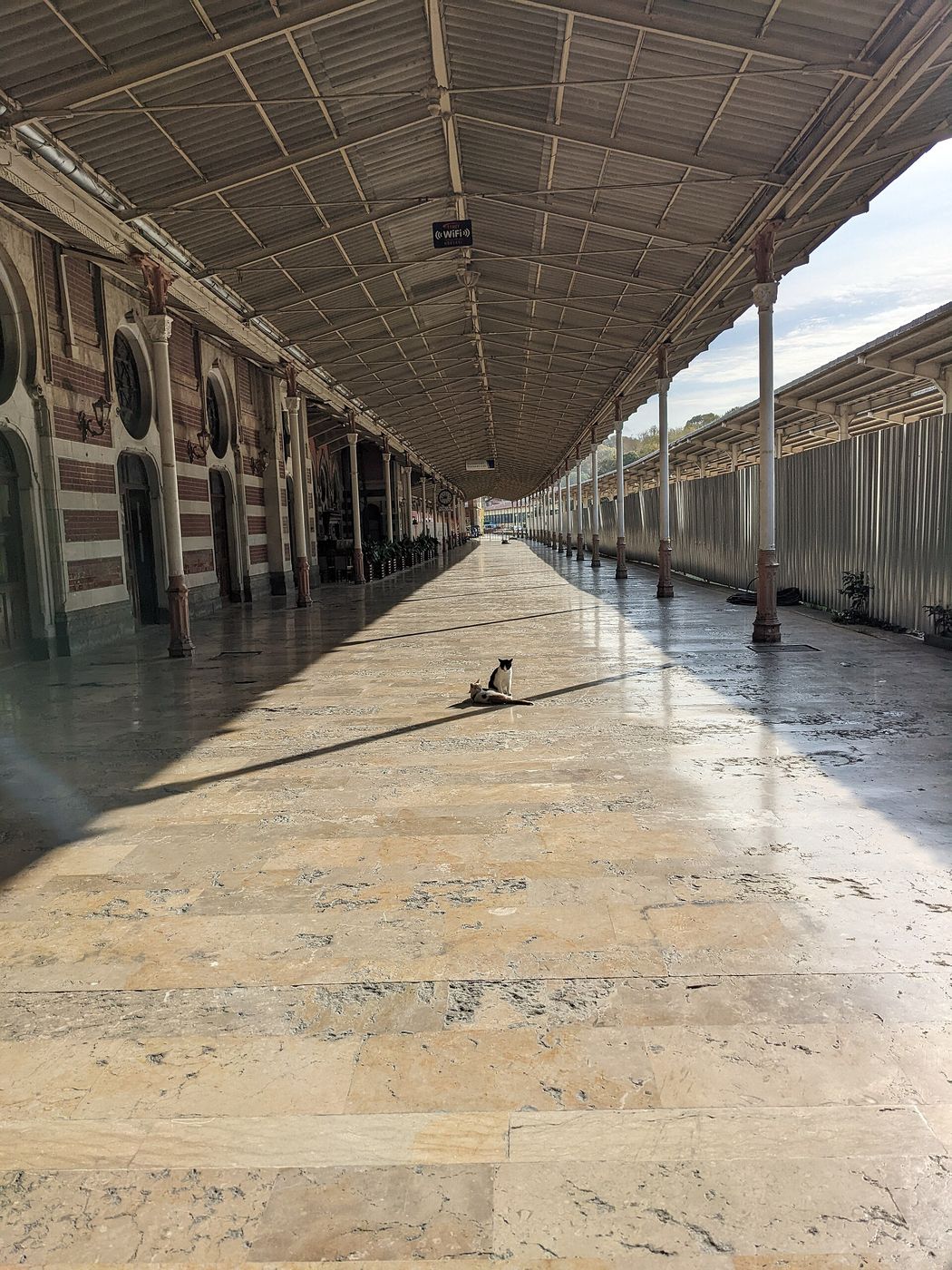
Words sometimes wait, with a patience ready to tell their own story. The Arabic root ġ-r-b speaks of the setting of the sun, of something moving out of sight and vanishing. Maghrib, the name of the evening prayer, garb, the West, garip, the stranger, the one without kin, and gurbet, the condition of being far from one’s homeland, are branches of the same root.1 Because Turkish borrowed these words separately, the kinship between them escapes most speakers. But the journey of the hundreds of thousands who boarded the trains leaving Sirkeci for Munich after the labour recruitment agreement signed in Bonn on 30 October 1961 joined the root’s two meanings in a single movement: they were going west, and they were going into gurbet.2
The quatrain Yunus Emre wrote seven hundred years ago gives perhaps the oldest and barest description of gurbet. The stranger dies; the news arrives only three days later; the hands that wash him with cold water are strangers’ hands. In the Turkish, the verb of the first line deserves attention: ölmüş diyeler, “they will say he has died”. The suffix -mış marks what Turkish grammarians call the indirect or reported past: the speaker did not witness the event, and knows of it only afterwards, from someone else’s mouth. The stranger’s death is lived, in the language of those who could not witness it, as hearsay.3 This is the grammar of gurbet: for those left behind, a life lived far away is a matter of report. Births, weddings, illnesses and deaths arrive by telephone, by letter, in the stories told on holiday visits. No one witnessed them; they have all happened, been heard, been told. But this grammar has another side. The person in gurbet also comes to learn what happens at home in the same mood: their mother has fallen ill, it seems; the neighbourhood has changed, it seems; a childhood friend has married, it seems. The subject living between two places falls into hearsay from both directions.
Edward Said begins his well-known essay on exile by saying that exile is strangely compelling to think about but terrible to experience.4 The warning in that sentence must be taken seriously. Most writing on migration, literary or theoretical, tends to turn exile into an image, a metaphor, a symbol of the human being’s existential estrangement. Yet gurbet is above all a concrete life: shifts, tenancy agreements, residence permits, language courses, parents who depend on their children to interpret for them at school meetings, afternoons that grow dark early in winter, and every summer a journey of thousands of kilometres back home. If psychoanalysis has anything to say to this life, it can say it only without forgetting this concreteness.
Turkey’s own culture has often recorded this concreteness better than psychoanalysis. The title of Şerif Gören’s 1979 film starring Hülya Koçyiğit, Almanya, Acı Vatan, “Germany, Bitter Homeland”, reads like an analysis in three words: the country one has gone to is called “homeland”, but this homeland tastes bitter. From the songs of gurbet and the films about “Almancı”, the “German-Turks”, to the summer journey home along the long highway through Yugoslavia, recounted over generations with its accidents, its queues and its border crossings, the memory of migration has been carried largely in songs, films and family stories. What is interesting about this memory from a psychoanalytic point of view is that it ties pain to a place, a road, a country. The pain is “in Germany”, “in gurbet”, “on the road”. But clinical work knows that the address of a pain is not always where it appears. The pain of gurbet is sometimes a loss, a separation or a silence that began long before migration and found a new name for itself with it.
II
Psychoanalysis itself ends with a story of exile. When Austria was annexed by Nazi Germany in March 1938, Freud was eighty-one, had been living with cancer of the jaw for more than fifteen years, and had long refused to leave Vienna. The day-long interrogation of his daughter Anna by the Gestapo was one of the events that changed his mind. While preparations for departure were under way, in a letter of 12 May 1938 to his son Ernst in London, he speaks of two hopes that kept him going in those dark days: to see his family together again and, switching suddenly into English in the middle of a letter written in German, to die in freedom.5 This small change of language deserves attention. The language of the country he had not yet reached arrived in his letter before he did; the word freedom could be said only in the language of the place he was going to. The language of exile sometimes comes before exile itself.
Freud spent the last fifteen months of his life in London, the last year of it at 20 Maresfield Gardens in Hampstead. His Vienna study, with its antiquities and its couch, was reconstructed almost intact in this house. The only surviving recording of his voice is a short statement made for the BBC in December 1938, and it is in English: an old man, speaking with difficulty because of the prosthesis in his mouth, sums up his life’s work in a language he had learned but never lived in.6 It is no accident that the voice of the founder of psychoanalysis reaches us in a foreign language. After Freud, the history of psychoanalysis is to a large extent a history of exiles: analysts scattered from Vienna, Berlin and Budapest to London, New York and Buenos Aires had to rebuild their theories and their practices in other languages. That we read most of the basic concepts of psychoanalysis through a translation is the trace of this dispersal.


III
One of the first systematic treatments of migration as a psychoanalytic concept comes from two analysts who were themselves exiles. The Argentines León and Rebeca Grinberg had emigrated from Buenos Aires to Madrid after the coup of 1976; Psychoanalysis of Migration and Exile, published in 1984, is a book written from within that experience.7 For the Grinbergs, migration is not simply a change of place but a crisis in which a series of losses is lived at once: people, streets, smells, climate, tones of voice, habits, and the language that carries them all. According to an idea León Grinberg had developed in earlier work, the sense of identity rests on three bonds: a spatial bond, the body and its surroundings lived in continuity; a temporal bond, the continuity between yesterday’s self and today’s; and a social bond, the familiar weave of relations with others. Migration loosens all three at once.8
This framework allows us to carry over to the experience of migration the distinction Freud drew in 1917 between mourning and melancholia. Mourning is a long labour in which each memory bound to the lost object is called up one by one, hypercathected, and only then detached. But in migration the lost object is not entirely lost. The homeland is still there; one can go back every summer, call on the telephone, and today watch it on a screen at any moment. The migrant’s mourning is a strange mourning in which the lost object still exists, but no longer exists as it once did. The village one returns to every summer is not the village one left; the Istanbul one visits years later is not the Istanbul one departed from. Never being able to locate the loss exactly means that the mourning can never be entirely completed.9
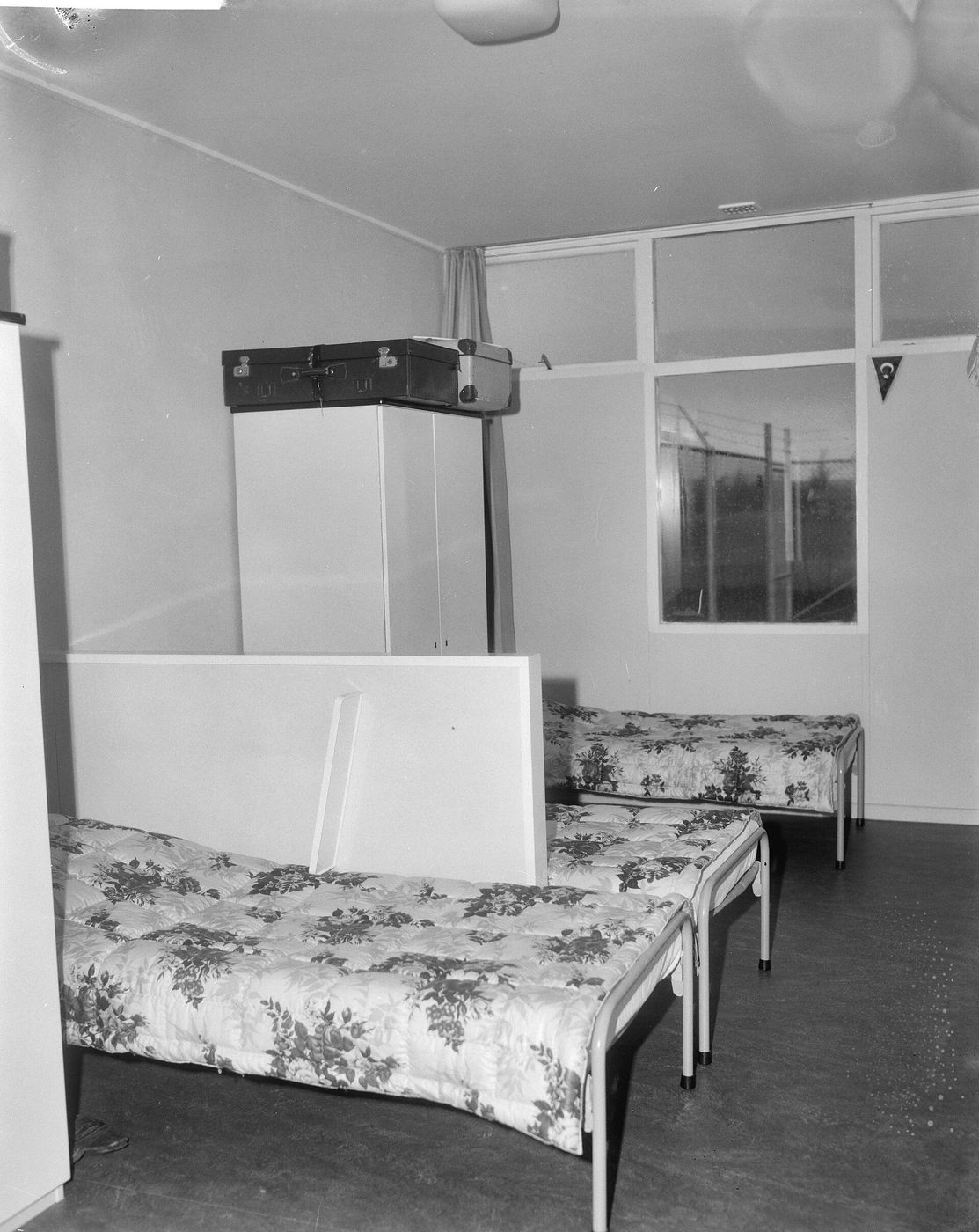
Another point the Grinbergs stress is guilt towards those left behind, and it carries particular weight in the story of migration from Turkey to Europe. The workers of the 1960s had gone as much for the families they left behind as for themselves; the money sent home, the houses built in the village, the siblings put through school, largely determined the meaning of gurbet. Psychoanalytically, this means that gurbet was founded on a debt, on a promise given, on an account to be settled. That many members of the first generation kept alive in retirement the dream of “return”, but most often did not fulfil it, may be related to the feeling that this debt could never be fully paid. To return would have meant closing the debt; not returning, keeping it open forever. The sociology of migration calls this phenomenon the “myth of return”: a plan of return that is never carried out, yet determines every decision of life abroad, the houses bought, the money saved, the schools the children will attend.10 Psychoanalysis looks less at the content of this myth than at its function: the dream of return is a way of living life abroad as temporary, suspended, not yet really begun. A provisionality lasting forty years can leave a person with the feeling of never having fully entered their own life.
The place of language among these losses is a particular one. The picture Joseba Achotegui named the Ulysses syndrome is a concept proposed to describe the chronic and multiple stress experienced by migrants, and it serves more as a warning than as a diagnostic category: the difficulties a migrant experiences may be the product not of an individual pathology but of extreme conditions.11 The warning holds for psychoanalytic work too. To refer the pain of gurbet solely to the subject’s inner world would be to ignore the concrete exclusion, discrimination and loneliness to which they are exposed. But the reverse is also true: to attribute everything to conditions blurs the singular relation the subject forms with those conditions, and the difference between people who live the same conditions in other ways. Psychoanalysis has to walk the narrow path between the two.

IV
Where in a person does the mother tongue live? The concept Lacan put forward at the beginning of the 1970s and wrote as a single word, lalangue, gives this question an unexpected answer. Lalangue is the matter of language prior to its grammar, its dictionary and its meaning: the sound of the lullabies sung to the infant, the timbre of the mother’s voice, words heard before their meaning is known that leave traces in the body. It is no accident that this matter is called the “mother” tongue.12 The mother tongue, in this sense, is not only the first language learned but the language mixed with the body’s first pleasures and first fears. This is why someone living abroad, even after many years, spontaneously returns to their mother tongue when angry, in love or afraid.
Psychoanalysis noticed this early. In a short but much-quoted paper published in 1950, Ralph Greenson describes an analysand whose mother tongue was German and whose analysis was conducted in English: as soon as she switched to German, memories and anxieties from her childhood rose to the surface, while in English she felt more protected, more “grown-up”.13 The second language, in this case, serves a defensive function: it makes it possible to look from a certain distance at what the mother tongue touches too closely. In The Babel of the Unconscious, published in 1990, the psychoanalysts Jacqueline Amati-Mehler, Simona Argentieri and Jorge Canestri, working in Rome, extend this observation to the whole clinical picture of the multilingual subject: changing language can be an escape, but it can also be a way of saying what the mother tongue cannot say.14
The findings of linguistics over the last twenty years agree with these clinical observations. Research conducted by Aneta Pavlenko and Jean-Marc Dewaele with more than a thousand multilingual speakers shows that most people feel emotionally charged words, swearwords and terms of endearment more strongly in their mother tongue, and that saying “I love you” or hearing an insult weighs far more heavily in the mother tongue. The same research also shows that some speakers find it easier to talk about shameful or painful matters in a second language.15 The mother tongue is both the deepest and the least protected place. The question of which language someone living abroad wishes to speak in is therefore not a practical preference but a clinical question in its own right.
V
Some of the most interesting testimonies about language in the twentieth century come from writers who grew up between several languages. Elias Canetti was born in 1905 in Ruse, on the Danube, in present-day Bulgaria, into a Sephardic Jewish family that spoke at home an old Spanish called Ladino. He heard Bulgarian in the street and learned English in Manchester; after his father’s death his mother taught him German, at the age of eight, in Lausanne, almost by force. The language in which Canetti would write his entire work was this language his mother gave him from within a mourning. The title of the first volume of his autobiography, Die gerettete Zunge, “The Tongue Set Free”, or more literally “the rescued tongue”, therefore carries a double meaning: Zunge in German means both language and the organ of speech, and the book opens with the writer’s earliest memory, a scene in which a man tells the small child to put out his tongue and threatens to cut it off with a knife.16
The first sentence of the little book Jacques Derrida published in 1996 fits another side of this experience into a paradox: I have only one language, and it is not mine. Born in Algeria into a Jewish family that knew no language other than French, Derrida lost his French citizenship at the age of ten, in 1940, by a decision of the Vichy regime, and two years later was expelled from his school. His mother tongue was a language that had never fully belonged to him.17 Derrida’s sentence is strikingly familiar to the second and third generations of migration from Turkey to Europe. For someone born in Germany, the Netherlands or France, schooled there, who has formed their thinking in that language yet is still regarded there as being “of foreign origin”, neither the language of school nor the Turkish spoken at home is entirely their “own”. They have remained a child in one language and become an adult in the other. When they come to Turkey, their accent gets them called “Almancı”; in Germany, their name marks them as foreign. Gurbet here is no longer a place but a condition of language; the never-closing openness of the question of the language in which one can be oneself.
Fatih Akın’s Gegen die Wand, “Head-On”, which won the Golden Bear at the Berlin Film Festival in 2004, is perhaps the harshest cinematic expression of this second-generation experience. Two people of Turkish origin living in Hamburg, Cahit, who is trying to destroy himself, and Sibel, who enters into a sham marriage with him to escape the pressure of her family, can find a place for themselves in neither German nor Turkish society. The film eventually takes them to Istanbul; but Istanbul here is not a home one returns to, it is another gurbet. That the film’s characters move back and forth between two languages, sometimes within a single sentence, is less a stylistic choice than the record of a way of existing. Akın’s film shows that in the second generation gurbet becomes less a problem of place than a problem of finding a place: there is no homeland to go back to, because home is neither there nor here. In psychoanalytic work this often finds expression in a question: in which language, before whom, under which name can I say “I”?
One of the finest literary expressions of this condition comes from Emine Sevgi Özdamar, who went to Berlin as a worker at a very young age in 1965 and later became one of the most important writers in the German language. Her first book, published in 1990, is called Mutterzunge: the Turkish expression for “mother tongue”, ana dil, carried word for word into German. In German the mother tongue is Muttersprache; Zunge is the organ. A sentence in the story that gives the book its title says it plainly: In meiner Sprache heißt Zunge: Sprache. In my language, tongue means language.18 In Turkish the organ and speech are named by the same word, dil, uniting what German separates; and by carrying what Turkish unites into German, Özdamar builds a new language between the two. This is one of the linguistic solutions of gurbet: instead of rescuing the lost language, inventing a third one from between two languages.
In Strangers to Ourselves, written twenty-three years after her arrival in Paris from Bulgaria, Julia Kristeva reads foreignness not as the attribute of someone coming from outside but as a dimension every subject carries within. Kristeva’s point of reference is the essay Freud wrote in 1919 on the uncanny: the uncanny is not what we have never known, but what was once very familiar, was repressed, and returns in a foreign guise.19 The German word, unheimlich, carries within it Heim, home. The strange feeling the emigrant has every summer on returning home, the home no longer quite being home, the familiar becoming strange, is perhaps the most everyday form of what Freud called the uncanny.
Donald Winnicott’s concepts help us think of another possibility in the face of this uncanniness. Winnicott had shown that the infant first learns to separate from the mother through a toy, the corner of a blanket, a murmur, that is, through “transitional objects” that belong neither wholly to the infant nor wholly to the outside world. In later writings he argues that this intermediate area continues into adult life, and that art, religion and all cultural experience take place in this “potential space” between the individual and the environment.20 The tulip-shaped tea glasses people living abroad carry with them, the smell of food cooking in the kitchen, the series watched by satellite, the folk songs played at weddings, are from this point of view not merely a symptom of “nostalgia”. They are transitional areas set up to make a new place liveable: objects and rituals that belong neither wholly to the homeland left behind nor wholly to the new country, but open a possibility of living between the two. By Winnicott’s measure, what is healthy is the existence of this area; the problem is when it either collapses entirely or turns into a refuge that covers the whole of life.
VI
What does all this mean for clinical work? First of all, that the question of which language a person living abroad will speak in has no answer given in advance. For some analysands the mother tongue is the language of childhood, of mother and father, of losses and longing; the hardest things to say can be said only in it. For others it is the language of the family’s expectations, of shame and of silence; the way to speak freely passes through leaving it for a moment. And for many, the real material is the passages between the two languages themselves: speech that slips into another language in the middle of a sentence, the moment a word cannot be translated, a sentence that seems impossible to say in the mother tongue being said easily in another. This is one dimension of what Lacan meant when he said that the unconscious is structured like a language: the unconscious is tightly bound to the sound of words, to their double meanings and to the remainders lost in translation.
Secondly, the pain of someone living abroad should not be referred to a general heading such as “adjustment problems”. Migration replays the subject’s pre-existing conflicts on a new stage; but at the same time it gives them a new stage, a new language and sometimes a new name. A mother telling her daughter “You’ve become someone else over there”, a son saying “No one here really knows me”, are not just complaints but the coming into words of the question of before whom, and in which language, the subject can tell their own story. In migrant families where children who have changed language interpret for their parents, this question also circulates between generations: a child who translates their parents’ official correspondence and speaks in their place at the doctor’s carries early on the weight of being a bridge between the family’s language and the language of the world.21
The same question holds for those who go back. Many of the children who returned to Turkey with their parents in the 1980s and were called “Almancı” at school found themselves foreigners, this time in Turkey. Today, too, the strangeness felt by someone who returns after years abroad is less talked about than that felt by someone who leaves, because return is expected to be a reunion. Yet the place one returns to is not the place one left, and the person who returns is not the person who left. Psychoanalytically, return is not the reversal of migration but a second migration. The loss is harder to name this time, because what is lost is not a country but a life built between two countries. The words of analysands who say that gurbet never ended but only changed direction express, for this reason, a discovery more than a complaint: home may come to be less a place than a language and a listener before whom one can tell one’s own history.
Thirdly, a session conducted at a distance may have a particular meaning for someone living abroad. The frame of an online session differs from that of a session held in the same room; but this difference itself bears a strange closeness to the experience of exile. Speaking in one’s mother tongue with someone sitting at the other end of a screen, in another time zone, in another city, is a small staging of living between two places. The history of psychoanalysis, from Freud’s letters to Fliess to the analysis of Little Hans conducted through his father, is also intertwined with the history of speaking at a distance.22 What matters is that the frame be known, protected and open to discussion by both parties.
I began this essay with Yunus Emre’s stranger; I want to end with him. The stranger’s death was lived, in the language of those left behind, in the reported past: unwitnessed, heard afterwards, news from someone else’s mouth. Perhaps this is one of the deepest pains of life abroad: that the life one lives remains always a matter of report for those who should know it best. The aim of psychoanalytic work can, from this point of view, also be described as a grammatical movement. In analysis the subject tries to tell their life before another, in the first person and in the witnessed past: not with -mış but with -dı, not “it seems it happened” but “I lived it”. As Lacan said in his Rome discourse, at the foundation of analytic work lies the subject’s assumption of their own history, insofar as it is constituted by speech addressed to the other.23 This does not do away with the pain of gurbet; but it changes the shape pain takes when it is spoken before another, in one’s own language. Yunus’s stranger was washed with cold water by strangers’ hands; in analysis, speech is left not to strangers’ hands but to an ear ready to hear it. For someone living abroad, that this other should speak their mother tongue sometimes changes everything. Instead of news heard three days later, a life listened to here and now, in one’s own language.
Notes
- In Arabic the root speaks both of the setting of the sun and of moving away, of becoming a stranger; the Turkish words garp, garip, gurbet, mağrip and garabet all derive from it. In Turkish garip has also come to mean “odd”; that the foreign should be thought odd, and the odd foreign, shows that a language carries a judgement within itself. ↩︎
- The labour recruitment agreement between Turkey and the Federal Republic of Germany was signed on 30 October 1961; it was followed by agreements with Austria, the Netherlands and Belgium in 1964 and with France in 1965. After Germany halted the recruitment of foreign workers in November 1973, migration continued largely through family reunification. For a comprehensive history of migration from Turkey to Europe, see N. Abadan-Unat, Turks in Europe: From Guest Worker to Transnational Citizen (2011; Turkish original 2002). ↩︎
- On the evidential and mirative functions of -mış, see D. I. Slobin and A. A. Aksu, “Tense, aspect and modality in the use of the Turkish evidential” (1982). The essay on The Museum of Innocence on this site examines the function of the same suffix in the first sentence of Orhan Pamuk’s novel. ↩︎
- E. W. Said, “Reflections on Exile” (1984), in Reflections on Exile and Other Essays (2000). ↩︎
- S. Freud, letter to his son Ernst Freud, 12 May 1938, in Briefe 1873–1939, ed. E. L. Freud (1960); English: Letters of Sigmund Freud (1961). The letter is written in German; only the phrase “to die in freedom” is in English. Freud left Vienna with his family on 4 June 1938 and reached London via Paris on 6 June. ↩︎
- The recording was made on 7 December 1938 at the house in Maresfield Gardens. Freud had read and written English well since his youth; the difficulty audible in the recording comes less from the language than from the jaw prosthesis he had to wear after his cancer operations. ↩︎
- L. Grinberg and R. Grinberg, Psicoanálisis de la migración y del exilio (1984); English: Psychoanalytic Perspectives on Migration and Exile (1989). ↩︎
- The Grinbergs group the anxieties of the migrant into three clusters: anxiety in the face of the new, mourning and guilt for what has been left behind, and the confusion of being caught between the two. One of the book’s most lasting contributions is that it thinks of migration not as a single trauma but as a process lasting years and spreading across generations. ↩︎
- S. Freud, “Mourning and Melancholia” (1917 [1915]), SE XIV. Freud’s works are cited by their titles in the Standard Edition (SE), with volume numbers. ↩︎
- The concept became established through M. Anwar’s study of Pakistani migrants in Britain: The Myth of Return: Pakistanis in Britain (1979). The literature on migration from Turkey to Europe also frequently stresses that the first generation’s plan of “going back one day”, even if it is never realised, is an axis that organises life abroad. ↩︎
- J. Achotegui, “Emigrar en situación extrema: el Síndrome del inmigrante con estrés crónico y múltiple (Síndrome de Ulises)”, Norte de Salud Mental 21 (2004). The concept was proposed not as a psychiatric diagnosis but as a warning against reducing the conditions migrants live in to individual pathologies. ↩︎
- J. Lacan, Le Séminaire, Livre XX: Encore (1972–1973), Paris: Seuil, 1975; English: Encore, trans. B. Fink (1998). In this seminar Lacan says that language (langage) is made of lalangue, that language is a structure of knowledge built upon lalangue. ↩︎
- R. R. Greenson, “The mother tongue and the mother”, International Journal of Psycho-Analysis 31 (1950), pp. 18–23. ↩︎
- J. Amati-Mehler, S. Argentieri and J. Canestri, La Babele dell’inconscio: Lingua madre e lingue straniere nella dimensione psicoanalitica (1990); English: The Babel of the Unconscious (1993). ↩︎
- J.-M. Dewaele, “The emotional force of swearwords and taboo words in the speech of multilinguals”, Journal of Multilingual and Multicultural Development 25/2–3 (2004), pp. 204–222; J.-M. Dewaele, Emotions in Multiple Languages (2010); A. Pavlenko, Emotions and Multilingualism (2005) and The Bilingual Mind (2014). ↩︎
- E. Canetti, Die gerettete Zunge. Geschichte einer Jugend (1977); English: The Tongue Set Free (1979). Canetti writes that the events of his childhood took place in Ladino or Bulgarian, but that he finds them in his memory in German: the memories are kept not in the language in which they were lived but in a language learned later. ↩︎
- J. Derrida, Le monolinguisme de l’autre ou la prothèse d’origine (1996); English: Monolingualism of the Other; or, The Prosthesis of Origin (1998). The Crémieux Decree of 1870, which had granted French citizenship to the Jews of Algeria, was abrogated by the Vichy regime in October 1940. ↩︎
- E. S. Özdamar, Mutterzunge (1990); English: Mother Tongue (1994). Özdamar received the Ingeborg Bachmann Prize in 1991 and, in 2022, the Georg Büchner Prize, regarded as the most important literary award in the German language. ↩︎
- J. Kristeva, Étrangers à nous-mêmes (1988); English: Strangers to Ourselves (1991), especially the final chapter devoted to Freud’s essay “The Uncanny” (1919, SE XVII). The German unheimlich literally means “un-homely”; the presence of the house, Heim, within the word is the starting point of Freud’s analysis. ↩︎
- D. W. Winnicott, “Transitional objects and transitional phenomena”, International Journal of Psycho-Analysis 34 (1953), pp. 89–97; “The location of cultural experience”, International Journal of Psycho-Analysis 48 (1967), pp. 368–372. Both texts were republished in Playing and Reality (1971). ↩︎
- In the literature of linguistics and psychology, this interpreting done by children for their parents in migrant families is called language brokering. For some children the experience becomes a source of competence and pride; for others it can mean a responsibility their age cannot bear. ↩︎
- The essay Online Therapy and Psychoanalysis on this site examines in detail the history of psychoanalytic work at a distance and the question of the frame. ↩︎
- J. Lacan, “Fonction et champ de la parole et du langage en psychanalyse” (1953), Écrits (1966): “l’assomption par le sujet de son histoire, en tant qu’elle est constituée par la parole adressée à l’autre.” ↩︎
References
- Abadan-Unat, N. (2011). Turks in Europe: From guest worker to transnational citizen. Berghahn. (Turkish original 2002)
- Achotegui, J. (2004). Emigrar en situación extrema: el Síndrome del inmigrante con estrés crónico y múltiple (Síndrome de Ulises). Norte de Salud Mental, 21, 39–52.
- Akın, F. (Director). (2004). Gegen die Wand [Film]. Wüste Filmproduktion.
- Amati-Mehler, J., Argentieri, S., & Canestri, J. (1993). The Babel of the unconscious: Mother tongue and foreign languages in the psychoanalytic dimension. International Universities Press. (Original work published 1990)
- Anwar, M. (1979). The myth of return: Pakistanis in Britain. Heinemann.
- Canetti, E. (1977). Die gerettete Zunge. Geschichte einer Jugend. Hanser.
- Derrida, J. (1996). Le monolinguisme de l’autre ou la prothèse d’origine. Galilée.
- Dewaele, J.-M. (2004). The emotional force of swearwords and taboo words in the speech of multilinguals. Journal of Multilingual and Multicultural Development, 25(2–3), 204–222.
- Dewaele, J.-M. (2010). Emotions in multiple languages. Palgrave Macmillan.
- Freud, S. (1917 [1915]). Mourning and melancholia. SE XIV.
- Freud, S. (1919). The uncanny. SE XVII.
- Freud, S. (1960). Briefe 1873–1939 (E. L. Freud, Ed.). S. Fischer.
- Gören, Ş. (Director). (1979). Almanya, acı vatan [Film].
- Greenson, R. R. (1950). The mother tongue and the mother. International Journal of Psycho-Analysis, 31, 18–23.
- Grinberg, L., & Grinberg, R. (1989). Psychoanalytic perspectives on migration and exile. Yale University Press. (Original work published 1984)
- Kristeva, J. (1988). Étrangers à nous-mêmes. Fayard.
- Lacan, J. (1966). Fonction et champ de la parole et du langage en psychanalyse (1953). In Écrits (pp. 237–322). Seuil.
- Lacan, J. (1975). Le Séminaire, Livre XX: Encore (1972–1973). Seuil.
- Özdamar, E. S. (1990). Mutterzunge. Rotbuch.
- Pavlenko, A. (2005). Emotions and multilingualism. Cambridge University Press.
- Pavlenko, A. (2014). The bilingual mind: And what it tells us about language and thought. Cambridge University Press.
- Said, E. W. (2000). Reflections on exile (1984). In Reflections on exile and other essays. Harvard University Press.
- Slobin, D. I., & Aksu, A. A. (1982). Tense, aspect and modality in the use of the Turkish evidential. In P. J. Hopper (Ed.), Tense-aspect: Between semantics and pragmatics (pp. 185–200). John Benjamins.
- Winnicott, D. W. (1953). Transitional objects and transitional phenomena. International Journal of Psycho-Analysis, 34, 89–97.
- Winnicott, D. W. (1967). The location of cultural experience. International Journal of Psycho-Analysis, 48, 368–372.