This essay first appeared in Turkish. The English version is my own.
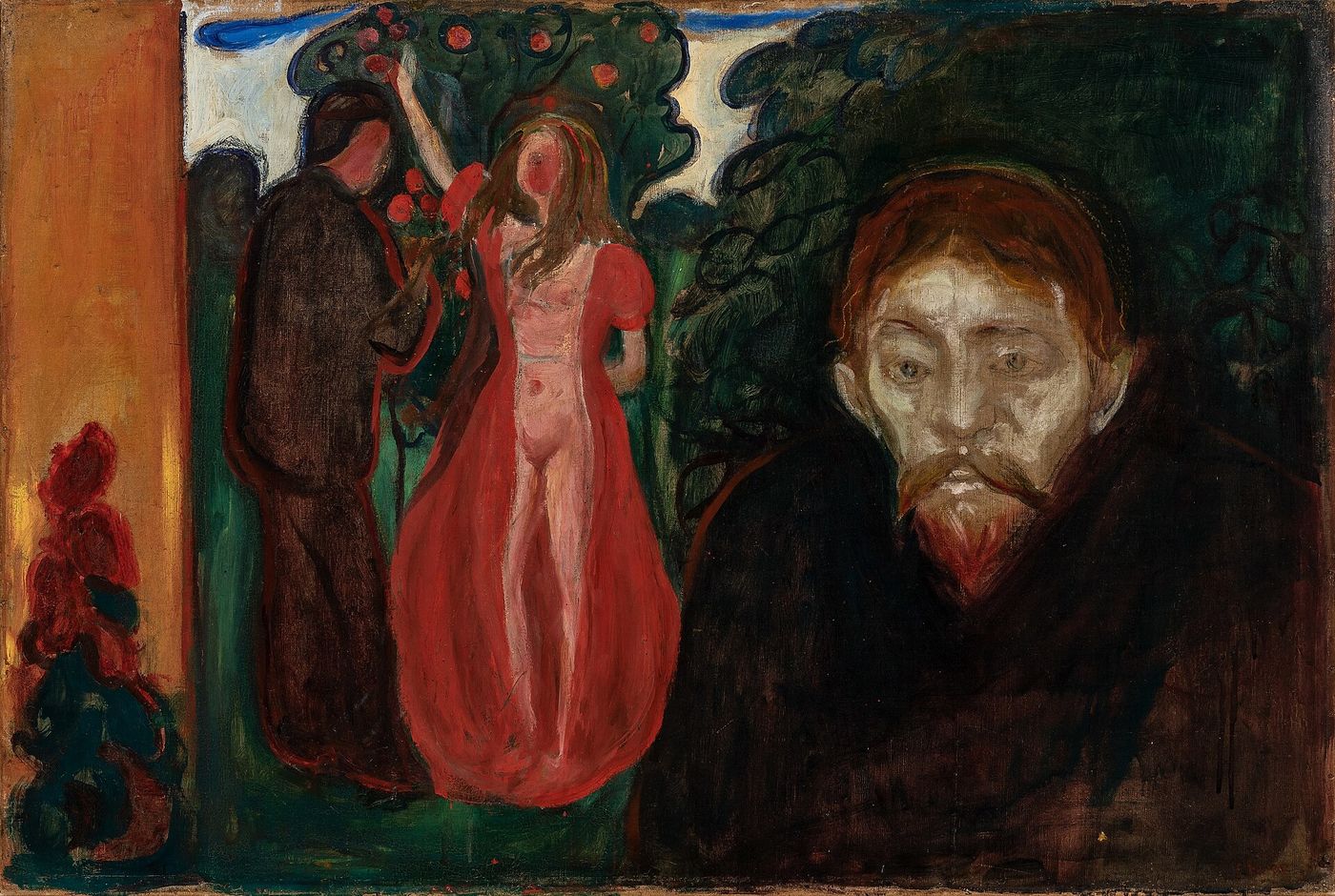

Vidi ego et expertus sum zelantem parvulum.
Augustine, Confessiones I, 7, 11
Trifles light as air / Are to the jealous confirmations strong / As proofs of holy writ.
Shakespeare, Othello III, 3
I
In the first book of the Confessions, written in the last years of the fourth century, Augustine says that he cannot remember his own infancy and can only guess at it by watching other infants, and into that guess he places one of the shortest and most unsettling observations ever written about human nature: “I have seen and known a jealous little child: he could not yet speak, but he stared, pale and with a bitter look, at his foster brother.” Augustine reports the observation to unsettle the common belief in the innocence of infants, and in the same paragraph draws his famous conclusion: what is innocent in infants is the weakness of their limbs, not their minds.1


Lacan returns to this scene at least twice: in the long text on family complexes written in 1938 for the Encyclopédie française, and ten years later in his Brussels lecture on aggressiveness.2 Where Lacan parts from Augustine is that he sees in the scene not a sin but a structure. The child does not yet know a single word; but in his own place, at his mother’s breast, he sees someone else who resembles him. Lacan calls this experience the intrusion complex (complexe de l’intrusion): the sibling is the stranger who settles in the very middle of my image. That jealousy comes before language shows that it is not a considered judgement, but is born on a stage of images, in the imaginary order of the mirror relation. The rival is the one I want to be; the pallor of the infant staring at his foster brother is the pallor of seeing one’s own place in someone else.
Thirty-five years later, in 1973, in the seminar Encore, Lacan comes back once more to Augustine’s infant, and this time coins a new word for the scene: jalouissance. The word fuses the French for jealousy, jalousie, with jouissance, the term Lacan uses for a satisfaction beyond pleasure.3 What Lacan says with this word is that jealousy is not only the fear of losing an object, the breast, the mother’s attention. The infant staring at his foster brother is looking not at the milk the other receives but at the pleasure the other is having, a jouissance closed to him, from which he is shut out. What is envied is less something the other has than a scene in which the other enjoys, which I witness but cannot enter. The most unbearable image in a jealous person’s mind is the image of the pleasure the beloved shares with someone else; and that image, whether or not there has been any real betrayal, can become a self-feeding source of jouissance.
This scene also gives the basic geometry of jealousy. Jealousy always involves three: me, the one I love, and the one who comes between us. But the darkest corner of the triangle is often not the rival himself but my own image, projected into the rival’s place; and in the opposite corner stands the beloved’s desire, an unknown that never fully opens to me. The rest of this essay will try to follow the tension between these two corners.
Words carry the two faces of the feeling too. The Latin zelare that Augustine uses comes from the Greek zēlos, which means both jealousy and the passion to emulate another: zeal, ardour. The one we are jealous of is also the one we take as a model. Turkish has another old and still living sense of the verb “to be jealous”, kıskanmak: to begrudge, to withhold something from someone. “He did not begrudge his labour”, one says in Turkish, using the same verb, meaning that he gave generously. The jealous person is the one who withholds what he has, or believes he has, and wants to share it with no one. These two origins sum up jealousy’s two faces: on one side the wish to take another’s place, to be him; on the other the fear of giving one’s own place, one’s own beloved, one’s own share to anyone.
II
Freud set out his most systematic thoughts on jealousy in 1922, in a short but dense paper, Some Neurotic Mechanisms in Jealousy, Paranoia and Homosexuality, where he divides jealousy into three layers.4 The first is what Freud calls competitive or normal jealousy. He adds at once that even this jealousy is far from rational, and analyses it as a compound of several feelings: grief at the thought of losing the loved object, the pain of a narcissistic wound, hostility towards the successful rival, and a self-criticism that holds oneself responsible for the loss. For Freud, the roots of this jealousy reach back to the first love relationships of childhood, to the Oedipal triangle and to rivalry between siblings; adult jealousy is a much older scene replayed with new actors. One of the paper’s finest observations is that this jealousy can be lived bisexually: a jealous man, while grieving for the woman he loves and hating his male rival, may at the same time unconsciously grieve for the man he loves and see the woman as a rival.
The second layer is projected jealousy. Freud observes that some people’s jealousy of their partners has its source in their own actual unfaithfulness or in repressed impulses towards it. The person attributes to the other the desire they carry within themselves and cannot accept; the thought “she wants to deceive me” lightens the burden of the thought “I desire someone else”. Freud also notes here that society’s tolerance of small infidelities, flirtation for example, works as a kind of safety valve for these impulses. Although projected jealousy can take on an almost delusional appearance, it is open to analytic work; for the person can change the address of their jealousy to the extent that they can bear to have their unconscious fantasies brought to the surface.
The third layer is delusional jealousy: a certainty that no evidence can shake, in which every detail becomes a sign of betrayal. Freud links this picture to the grammar of paranoia he set out in the Schreber study of 1911. In that grammar, a repressed homosexual desire is transformed by the various ways of denying the sentence “I love him”, and in the delusion of jealousy the sentence takes this form: it is not I who love him, she loves him.5 The place Freud gives homosexuality in this explanation is rightly disputed today. But the logical core of the explanation, the subject living his own desire as the other’s desire, holds good in every layer of jealousy.
Psychiatry later gave the picture Freud called delusional jealousy a literary name. In a paper published in 1955, the English psychiatrists John Todd and Kenneth Dewhurst described patients whose certainty of their partner’s infidelity was shaken by no evidence, and called the picture the “Othello syndrome”.6 What these patients share is that their jealousy is lived not as a suspicion but as knowledge: every movement of the partner, every delay, every silence is new proof of a betrayal already known. These are serious clinical pictures and often require psychiatric assessment; of all the forms of jealousy, the delusion of jealousy is the one closest to violence.
III
Long before Freud, Spinoza had defined jealousy, in the third part of the Ethics, as a fluctuation of the mind in which love and hatred towards the loved thing are mixed, fed by envy of a third person.7 In the scholium to the same proposition, Spinoza links the source of a jealous man’s pain to an image, with surprising frankness: the man who imagines the woman he loves with another suffers not only because his own desire is thwarted, but because he is forced to join the image of the thing he loves to another man’s body.8 At the centre of jealousy, once again, stands an image: the image of the other’s pleasure. Two aspects of the definition are striking: jealousy is not a single feeling but an oscillation; and within it there is another passion that must be distinguished from jealousy, namely envy.
English, like Turkish, has two separate words for these feelings, and the psychoanalytic distinction between them was drawn most sharply by Melanie Klein. In Envy and Gratitude (1957), Klein defines envy as a two-person relation: the envious person wants the good thing the other has, and if he cannot obtain it wants to spoil and devalue it. Jealousy is three-person: the jealous person fears losing to a rival something he loves and believes belongs to him. Envy tends to destroy the good, jealousy tries to protect it; for Klein envy is the more primitive and destructive feeling, while jealousy at least presupposes the existence of a love relationship.9 The distinction is decisive in the clinic, because much of what is lived as jealousy in relationships is in fact envy. Someone who cannot bear their partner’s success, happiness, or having a life independent of them may be afraid less of losing the partner than of what the partner has.
Freud thought that jealousy and envy also had a place in the social bond itself. In his book on group psychology of 1921 he observes children in a nursery: at first they are jealous of one another, each wanting the adults’ love for himself alone. But when none of them can be privileged, jealousy turns into a demand: let no one be privileged, let everyone be treated equally. For Freud, group spirit, the sense of justice and the demand for equality are a transformation of this first jealousy: we give up many things ourselves so that others will have to give them up too.10 At first sight the sentence looks like a cynical attack on justice; but Freud’s intention is to show that jealousy is not only destructive, and that through a transformation it can become part of the mortar of the social bond. What makes living together possible is not that jealousy disappears but that it changes form, that it is bound to a law, to a rule of sharing.
The founder of psychoanalysis was not exempt from this feeling. Freud was twenty-six when he became engaged to Martha Bernays in 1882; the engagement lasted four years, most of it spent in letters, with Martha in Wandsbek near Hamburg and Freud in Vienna. These letters, quoted at length in Ernest Jones’s biography, show plainly the intense jealousy Freud felt towards the men in his fiancée’s life, especially an old admirer of hers, the painter Fritz Wahle, and her cousin Max Mayer. Freud asked Martha not to see these men, and was jealous even of her attachment to her family, particularly to her mother and brother.11 Forty years later, writing in his paper on jealousy that even its “normal” form is far from rational, Freud must have remembered these letters of his youth.
Over the last thirty years the psychoanalytic account of jealousy has also been in debate with another theoretical framework, evolutionary psychology. A much-discussed study published in 1992 by David Buss and his colleagues concluded that men react with more intense jealousy to a partner’s sexual infidelity, and women to emotional infidelity, and linked the difference to the different reproductive risks faced by the ancestors of the two sexes.12 This explanation offers a framework for understanding why jealousy is so universal and so powerful. But the psychoanalytic view asks another question: why, in the same situation, does one person go mad with jealousy while another stays calm? Why does someone who has never been betrayed burn with the same jealousy in every relationship? The question of what form a universal tendency takes in a subject’s history can be answered only in that subject’s own words.
IV
Perhaps the deepest study of jealousy in literature is “Swann in Love”, in the first volume of Marcel Proust’s In Search of Lost Time. Elegant, wealthy and received in the most select salons of Parisian society, Charles Swann slowly becomes attached to Odette, whom at first he does not much like. The moment his love crystallises is the evening Odette is not at the Verdurins’ salon and Swann searches for her madly, at midnight, through the restaurants of the Paris boulevards. From then on Swann’s love and his jealousy can no longer be told apart: to find out where Odette is and whom she sees, he waits outside her house, watches the windows, and once tries to read, through the envelope held up to the light, a letter Odette has written to another man.
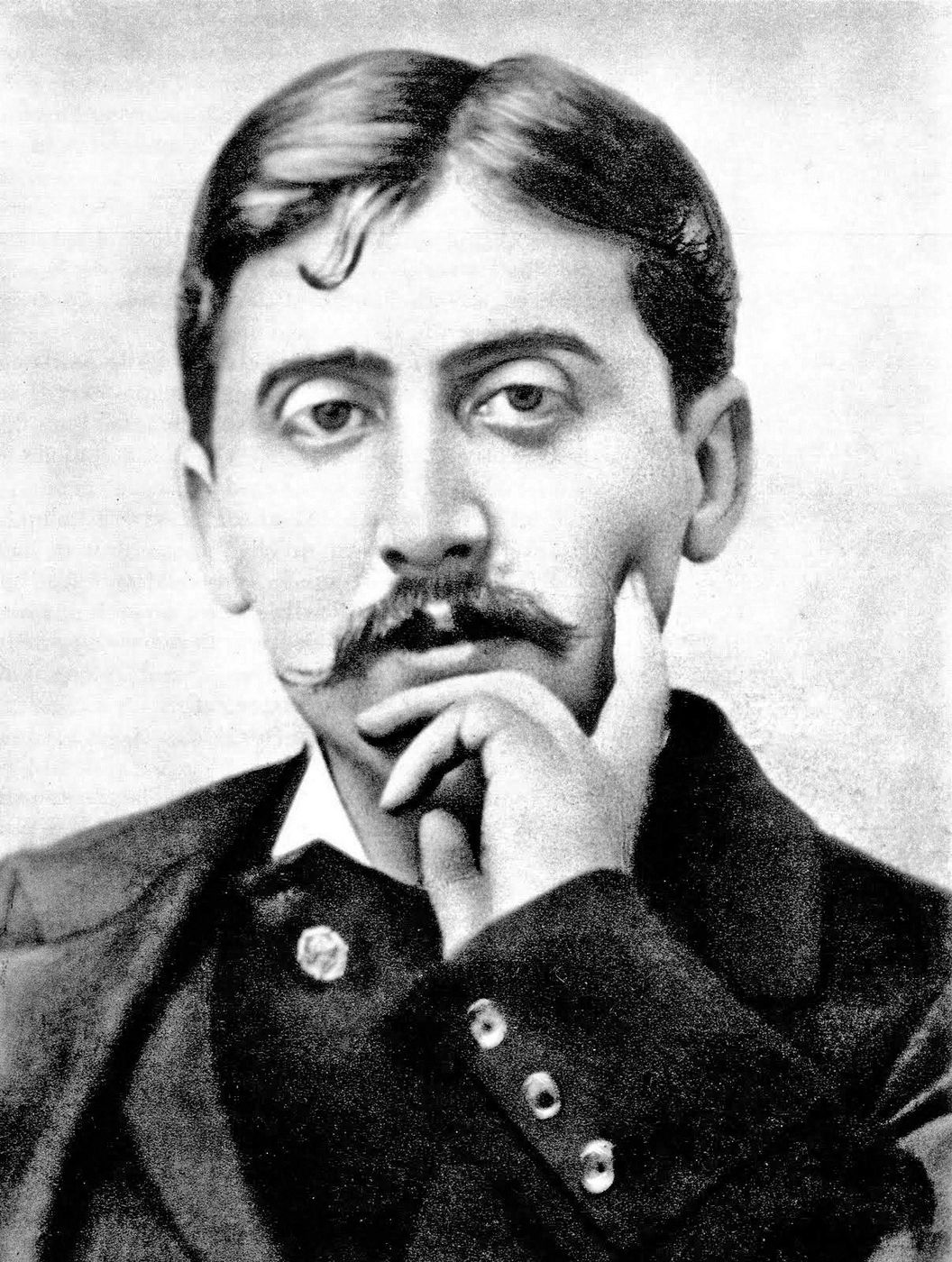

Proust’s insight is that jealousy is a passion for knowledge. The jealous person wants to know; but no knowledge is ever enough, every answer gives rise to a new question, and what is sought is not really knowledge but a certainty that will never come. More striking still, in Proust jealousy is not the consequence of love but the engine that drives it: Swann’s love grows in the measure that Odette seems to escape him. The section closes with the famous sentence Swann says to himself after the love is over: “Dire que j’ai gâché des années de ma vie, que j’ai voulu mourir, que j’ai eu mon plus grand amour, pour une femme qui ne me plaisait pas, qui n’était pas mon genre !” The woman for whom he wasted years of his life, for whom he wanted to die, with whom he had his greatest love, is a woman who did not appeal to him, who was not his type.13
More than sixty years later, in the entry on jealousy in A Lover’s Discourse, Roland Barthes describes how the experience is lived from inside with an unforgettable count: Comme jaloux, je souffre quatre fois; as a jealous man, I suffer four times. The four sufferings Barthes counts are the pain of being jealous, of blaming oneself for being jealous, of fearing that one’s jealousy will hurt the other, and finally of submitting to so banal a feeling.14 Perhaps the least noticed wound of jealousy is the last: one is ashamed, too, that one’s pain is so common, so ordinary.
Proust returns to jealousy in the later volumes of his novel, with the narrator’s passion for Albertine, and takes it to a far darker point than Swann’s story. In The Captive the narrator, afraid that Albertine will escape him and see other women, in effect shuts her up in his apartment; but jealousy is not soothed by bringing the beloved’s body under control. On the contrary, it spreads to every thought, every glance, every past moment that control cannot reach. Even after Albertine’s death the narrator goes on investigating her past, sending someone to gather information about her.15 That jealousy outlives even the beloved shows that its real object is not a person but the region of that person’s desire that remains closed to us. Death does not close this region; it makes it inaccessible forever.
Russian literature takes this dark face of jealousy to its extreme in Tolstoy’s The Kreutzer Sonata of 1889. On a train journey, through the night, a man named Pozdnyshev tells a fellow passenger how he killed his wife. His wife had played Beethoven’s Kreutzer Sonata at the piano with a violinist who came to the house; for Pozdnyshev, the music created between the two of them an intimacy, a pleasure from which he was excluded. Jealousy grows amid a betrayal with no proof and the images a piece of music arouses, and ends in a murder.16 What drives Pozdnyshev mad is not an act but a scene: a pleasure his wife shares with someone else, which he cannot enter. It is one of literature’s most frightening examples of what Lacan calls jalouissance.
V
In Shakespeare’s Othello, jealousy is staged as the erasure of the difference between evidence and sign. Warning Othello against jealousy, Iago in fact drives him into it, likening jealousy to the green-eyed monster that mocks the meat it feeds on. Then he speaks the lines I have taken as an epigraph: trifles light as air are, to the jealous, confirmations as strong as proofs of holy writ. What convinces Othello is a small handkerchief dropped by Desdemona. One of the least noticed details of the play is that Iago himself is jealous. In his soliloquy at the end of the first act, Iago says that he hates Othello, that it is thought abroad that Othello has done his office between his sheets, that he does not know whether it is true, but that for mere suspicion of that kind he will act as if it were certain.17 The man who drives Othello into jealousy is the man who passes his own jealousy on to him. Jealousy circulates through the play like a contagion: Iago’s suspicion becomes Othello’s certainty. Shakespeare shows that jealousy does not even need an outside instigator in The Winter’s Tale, written years later. Leontes, King of Sicilia, the moment he sees his wife Hermione persuade his childhood friend Polixenes, King of Bohemia, to stay a little longer, is suddenly seized by jealousy without any Iago’s whisper; he thinks his wife’s hand rests a little too long in their guest’s, and believes he sees a certain betrayal.18 In Othello jealousy has a source, an instigator, a handkerchief; in The Winter’s Tale only a glance, a hand, a moment. Jealousy does not come from outside; it gives a face, at the first opportunity outside, to a question, a suspicion, a fear already waiting within.
Jealousy always feeds on small objects like these: a handkerchief, a letter, a name appearing on a phone screen, a delay, a smile. Digital life has multiplied these objects as never before: the “last seen” time, a like left on a photograph, a name added to a list of people followed, are today’s equivalents of Othello’s handkerchief; and all of them are as light as what Iago calls light as air, and as heavy as what he calls proofs of holy writ. These objects are not evidence but signs; yet for the jealous subject a sign is always evidence. Here lies the epistemological paradox of jealousy: no evidence is enough to soothe it, but the slightest sign is enough to confirm it. From a Lacanian point of view, the source of the paradox is that the jealous subject’s real question never concerns facts. Jealousy is an answer given to the old question posed before the desire of the big Other: “What am I for him, for her?” When this question remains unanswered, anxiety rises, and the jealous subject, rather than bear this anxiety, turns it into a certainty: there is a rival, there is a betrayal, I have been left outside. Jealousy gives uncertainty a face. Othello’s tragedy lies less in Desdemona’s innocence than in his need for this face.
VI
A widespread belief still holds jealousy to be a proof of love: if he is jealous, he loves. The belief is not innocent; it prepares the ground for jealousy to become a justification for control, surveillance and violence. Checking a phone, interfering with clothes, restricting friendships, constantly questioning where someone has been, are signs not of love but of control. From a psychoanalytic point of view too, jealousy says something not about the beloved but about the lover’s own anxiety: someone who constantly watches their partner is trying not to know what the partner wants, but to obtain a guarantee of their own place; and no surveillance can provide that guarantee. Where jealousy turns into threats, intimidation or violence, it ceases to be a relationship problem and becomes a safety problem. The public debate on this question has also reached the language of the law. In Turkey, for instance, the provision of the Penal Code on unjust provocation was long debated in cases of violence against women in which the defendant claimed to have acted out of jealousy or to “protect his honour”; women’s rights advocates stress that presenting jealousy as a mitigating circumstance feeds a culture that legitimises such violence.19 The psychoanalytic view takes a clear position in this debate: jealousy as a feeling deserves to be understood, spoken about and worked through; but it can never be the justification for an act against another person’s body, freedom or life. In such a situation the first steps are to call the local emergency number (112 in the European Union and Turkey, 999 in the United Kingdom, 911 in North America) or a specialised helpline, such as the National Domestic Abuse Helpline on 0808 2000 247 in the United Kingdom.
VII
In the clinic, jealousy often comes accompanied by shame: sometimes at a partner’s insistence, sometimes at a moment when a relationship has reached a threshold, sometimes on the day when a burden carried for years can no longer be carried. The person knows that their jealousy is out of proportion and wants to be free of it, but cannot stop. Psychoanalytic work does not try to suppress jealousy or force the person to behave “rationally”; instead, it asks which old scene the jealousy is replaying, whom the person sees in the rival, whose desire is the desire they attribute to their partner. The infant staring at his foster brother, Freud’s projected jealousy, Klein’s envy and Swann’s endless investigation are different faces of these questions.
Jealousy appears in the analysis itself too, and there it has a particular value. Another analysand met in the waiting room, a message arriving on the analyst’s phone, a session postponed because of someone else, wondering whom the analyst is with on holiday: these small events can set up, within the analysand, a scene in which the analyst prefers someone else and leaves them outside. Such feelings may embarrass the analysand; but they are extremely valuable for analytic work. For here jealousy appears in a place where there has been no real betrayal and the frame of the relationship with the analyst is clear; and so it offers, for the first time, the possibility of examining from outside, by speaking, the old scene the subject brings from their own history, the scene of the child staring at his foster brother.
The most marked trait of the jealous subject is certainty about what the other wants. Psychoanalytic work tries to loosen this certainty and open a question in its place. Moving from surveillance to speech, from looking for evidence to listening to one’s own anxiety, is what breaks the chain of jealousy; for the real object of jealousy is not the beloved’s secret life but the unbearable uncertainty about the subject’s place in that life. This uncertainty never disappears entirely; to love is to accept living with another’s desire, which will never fully open to us. To be free of jealousy means being able to live with this uncertainty, rather than filling it with a certainty.
Notes
- Augustine, Confessiones I, 7, 11: “Vidi ego et expertus sum zelantem parvulum: nondum loquebatur et intuebatur pallidus amaro aspectu conlactaneum suum.” In the same chapter: “Ita imbecillitas membrorum infantilium innocens est, non animus infantium.” The translations in the text are mine. ↩︎
- J. Lacan, “Les complexes familiaux dans la formation de l’individu” (1938), Autres écrits (2001); “L’agressivité en psychanalyse” (1948), Écrits (1966), pp. 101–124. ↩︎
- J. Lacan, Le Séminaire, Livre XX: Encore (1972–1973), Paris: Seuil, 1975; English: Encore, trans. B. Fink (1998). Recalling Augustine’s scene, Lacan stresses that jealousy arises from a pleasure the infant sees in his foster brother and from which he himself is excluded. ↩︎
- S. Freud, “Some Neurotic Mechanisms in Jealousy, Paranoia and Homosexuality” (1922), SE XVIII. Freud’s works are cited by their titles in the Standard Edition (SE), with volume numbers. ↩︎
- S. Freud, “Psycho-Analytic Notes on an Autobiographical Account of a Case of Paranoia” (1911), SE XII. ↩︎
- J. Todd and K. Dewhurst, “The Othello syndrome: a study in the psychopathology of sexual jealousy”, Journal of Nervous and Mental Disease 122 (1955). The authors also drew attention to the frequent association of the picture with alcohol dependence and with certain neurological illnesses. ↩︎
- B. de Spinoza, Ethica (1677), part III, proposition 35 and scholium. ↩︎
- Spinoza, Ethica, III, 35, scholium. Spinoza’s observation is strikingly close to the structure Lacan would name three centuries later with the word jalouissance: the idea that the image of the other’s pleasure stands at the centre of jealousy. ↩︎
- M. Klein, Envy and Gratitude (1957). ↩︎
- S. Freud, Group Psychology and the Analysis of the Ego (1921), Gesammelte Werke XIII; SE XVIII, chapter IX. In the same chapter Freud explains by the same mechanism how the women crowding round a musician after a concert, instead of being jealous of one another, unite in a shared admiration. ↩︎
- E. Jones, The Life and Work of Sigmund Freud, vol. 1, London: Hogarth Press, 1953, the chapters on the engagement years. Jones describes Freud’s jealousy in these years as “almost obsessive” and thinks it left traces in his later theoretical thinking. ↩︎
- D. M. Buss, R. J. Larsen, D. Westen and J. Semmelroth, “Sex differences in jealousy: Evolution, physiology, and psychology”, Psychological Science 3/4 (1992). The generality of the finding has been substantially questioned in later research, depending on the method of measurement and on cultural context. ↩︎
- M. Proust, Du côté de chez Swann (1913), last sentence of “Un amour de Swann”. ↩︎
- R. Barthes, Fragments d’un discours amoureux (1977), entry “Jalousie”; English: A Lover’s Discourse: Fragments, trans. R. Howard (1978). ↩︎
- M. Proust, La Prisonnière (1923) and Albertine disparue (1925). ↩︎
- L. Tolstoy, Kreytserova sonata (1889). The novella was caught by the censorship before publication in Russia because its views on sexuality and marriage were judged obscene; it nevertheless reached a wide readership through copies passed from hand to hand, and could be printed in 1891 in Tolstoy’s collected works with the permission of Tsar Alexander III. ↩︎
- Shakespeare, Othello, I, 3: “I hate the Moor, / And it is thought abroad that ’twixt my sheets / He has done my office. I know not if’t be true, / But I, for mere suspicion in that kind, / Will do as if for surety.” ↩︎
- Shakespeare, The Winter’s Tale (ca. 1610–1611), I, 2. Leontes’s jealousy is linked to no external cause in the play; critics read this scene as the place where Shakespeare portrays jealousy as a passion born entirely from within. ↩︎
- Turkish Penal Code No. 5237, Article 29. The way the provision has been applied in cases of violence against women has long been debated in court decisions and in public opinion, and the debate has been reflected in legislative changes. Comparable debates over “crimes of passion” have taken place in many other legal systems. ↩︎
References
- Augustine. Confessiones, Book I.
- Barthes, R. (1977). Fragments d’un discours amoureux. Seuil. [English: A lover’s discourse: Fragments (R. Howard, Trans.). Hill and Wang, 1978.]
- Buss, D. M., Larsen, R. J., Westen, D., & Semmelroth, J. (1992). Sex differences in jealousy: Evolution, physiology, and psychology. Psychological Science, 3(4).
- Freud, S. (1911). Psycho-analytic notes on an autobiographical account of a case of paranoia. SE XII.
- Freud, S. (1921). Group psychology and the analysis of the ego. SE XVIII.
- Freud, S. (1922). Some neurotic mechanisms in jealousy, paranoia and homosexuality. SE XVIII.
- Jones, E. (1953). The life and work of Sigmund Freud (Vol. 1). Hogarth Press.
- Klein, M. (1957). Envy and gratitude. Tavistock.
- Lacan, J. (1966). L’agressivité en psychanalyse (1948). In Écrits (pp. 101–124). Seuil.
- Lacan, J. (1975). Le Séminaire, Livre XX: Encore (1972–1973). Seuil. [English: Encore (B. Fink, Trans.). Norton, 1998.]
- Lacan, J. (2001). Les complexes familiaux dans la formation de l’individu (1938). In Autres écrits. Seuil.
- Proust, M. (1913). Du côté de chez Swann. Grasset.
- Proust, M. (1923). La Prisonnière. Gallimard.
- Proust, M. (1925). Albertine disparue. Gallimard.
- Shakespeare, W. (1603–1604). Othello.
- Shakespeare, W. (ca. 1610–1611). The winter’s tale.
- Spinoza, B. de (1677). Ethica.
- Todd, J., & Dewhurst, K. (1955). The Othello syndrome: A study in the psychopathology of sexual jealousy. Journal of Nervous and Mental Disease, 122.
- Tolstoy, L. (1889). Kreytserova sonata.