This essay first appeared in Turkish. Aşk-ı Memnu (1900), one of the founding novels of modern Turkish literature, means “Forbidden Love”; I cite it by its Turkish title. The English version is my own.

Concupiscentiam nesciebam, nisi lex diceret: Non concupisces.
Paul, Epistle to the Romans 7:7 (Vulgate)
I
In the seventh chapter of Paul’s Epistle to the Romans stands one of the most unsettling sentences of Western thought on the relation between desire and the law: I had not known covetousness, had the law not said, Thou shalt not covet. For Paul the sentence is a confession; sin, though it is not born of the law itself, comes alive through the law and makes itself known. In his seminar on ethics of 1959–1960 Lacan rereads the passage and puts in the place of the word “sin” the Thing of his own conceptual vocabulary, the absolute object of desire that can never be reached. The law does not merely repress desire; it also brings its object to light, giving it a glow that ordinary objects can never possess.1
The title of Halit Ziya’s novel fits this thought into a single phrase. An everyday reading hears in “forbidden love” the prohibition as a misfortune that has befallen love; yet as the pages advance, the novel shows the reverse relation. What makes Behlül precious to Bihter is less his own qualities than the fact that he stands behind a prohibition. The novel is merciless on this point: Behlül, Adnan Bey’s nephew, is a light, flirtatious young man who likes to be loved and can form no lasting bond. All his attraction comes from where he stands: in the house of Bihter’s husband, as her husband’s relative, a figure seen every day but never to be possessed. That the spell lifts when the prohibition lifts is an experience known to everyone who has lived a forbidden love; it is what the novel shows from Behlül’s side. The word in the title itself carries this structure. Memnu, which comes from Arabic, derives from a root meaning to hinder, to withhold, to prevent; what is memnu is that before which an obstacle has been set, that which has been withheld. Although the Turkish word memnuniyet, contentment, comes from an entirely different root, hearing these two similar-sounding words, prohibition and contentment, side by side lends the novel’s title an irony that readers often fail to notice. In Halit Ziya’s novel contentment seems possible only behind an obstacle, in the shadow of a prohibition.
II
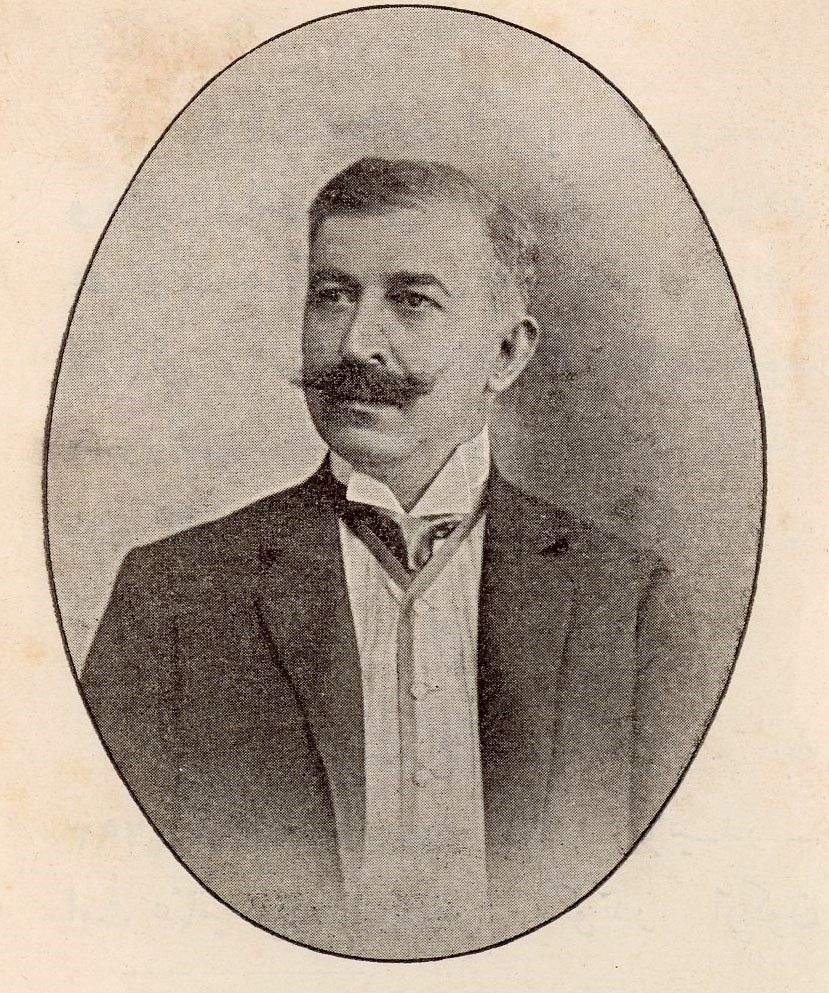
Aşk-ı Memnu was serialised in the review Servet-i Fünun in 1899–1900 and published as a book in 1900. It is regarded as the most mature novel of the Edebiyat-ı Cedide, the “New Literature” movement, and as one of the first great psychological novels in Turkish, and it deserves the description: Halit Ziya is less interested in his characters’ actions in the outer world than in the fluctuations of their inner world, and gently reveals to the reader what they hide from themselves. What makes this possible is free indirect discourse, which Halit Ziya used in Turkish prose with a mastery unprecedented in its extent: the narrator’s third-person sentences slip imperceptibly into the character’s inner voice; the reader hears Bihter’s thoughts not from her mouth but from her point of view, almost with her breathing. For a psychoanalytic reading this technique is a gift, for the novel makes visible in the very texture of the sentence the gap between what the character says to herself and what she hides from herself, the place where the unconscious works. Halit Ziya wrote the novel at the age of thirty-three. Born in Istanbul in 1866, he had spent his childhood and youth in İzmir, learned French there and read the French novel at first hand; in later years he became chief secretary of the palace under Sultan Mehmed V Reşad, and towards the end of his life published his memoirs under the title Kırk Yıl, “Forty Years”.2 In old age the author simplified the language of his novels himself; the Aşk-ı Memnu we read today is largely this second, simplified text. That a novel should be rewritten by its author thirty years later bears a strange resemblance to what its story tells: the past is rebuilt afterwards, in another language. Critics have often compared the novel with Flaubert’s Madame Bovary, and the comparison is apt. What Jules de Gaultier in 1892, starting from Flaubert’s heroine, called bovarysme, the human power to conceive of oneself as other than one is, also lies at the core of Bihter’s story.3
Another leg of the comparison is these novels’ relation to their own societies. Flaubert was tried the year after Madame Bovary was serialised in the Revue de Paris in 1856, on a charge of offending public morals and religion, and was acquitted. Tolstoy’s Anna Karenina, completed in 1877, said in its famous first sentence that happy families are all alike, but every unhappy family is unhappy in its own way; Anna, like Bihter, would end her own life at the end of a forbidden love.4 Aşk-ı Memnu met no such trial; but the review in which Halit Ziya’s novel appeared, Servet-i Fünun, was closed a year later, in 1901, by the regime of Abdülhamid II because of an article translated from French, and the New Literature group broke up.5 In a period when censorship watched over everything, it is no accident that the whole drama of the novel takes place within the walls of a waterside mansion, in a family’s silent relationships. The society’s unspeakable conflicts had withdrawn into a house, into women’s gazes, before mirrors, into words left unsaid.
But Bihter is no Emma Bovary. Emma’s dreams are fed by the novels she reads; the source of Bihter’s dreams is much closer to hand: in her mother’s house. Halit Ziya’s previous novel, Mai ve Siyah, “Blue and Black”, serialised in Servet-i Fünun in 1897, told the story of Ahmet Cemil, a young poet crushed between the grandeur of his dreams and the narrowness of his life; in the novel’s title blue was the colour of dreams and black the colour of reality.6 In Aşk-ı Memnu this opposition moves from a man’s literary dreams to a woman’s desire, from a writing desk to the rooms of a waterside mansion. The psychoanalytically most fertile vein of the novel is that Bihter’s desire is, from the very first moment, woven with the desire of another woman: her mother’s.
III
Bihter is the younger daughter of a family on the Bosphorus known as “the Melih Bey lot”. Her mother, Firdevs Hanım, is a widow, beautiful, unwilling to let her youth go, and constantly talked about; her elder sister Peyker is long married. The nickname is less the name of a family than the name of a piece of gossip: the place where women’s desire has fallen into the neighbourhood’s mouth. All the women of the novel live under the gaze of this language, of this gossip. The mansions of the Bosphorus stand close to one another, boats pass in front of one another, windows look at one another; who has been seen with whom, who got into which boat, who entered whose house at what hour, circulates along the shore from mouth to mouth. What Lacan calls the gaze works here not as a particular person’s eye but as an eye that is everywhere and visible nowhere, as the neighbourhood itself. Bihter’s whole life is built, in the face of this gaze, on not being a woman who is “talked about” like her mother; and the novel is the story of her turning into precisely what this gaze fears most. Firdevs Hanım, who believes that Adnan Bey, a rich widower of about forty-five, has shown an interest in her on their boat outings, expects a proposal of marriage. The proposal comes; but to her daughter. The novel implies that Bihter knew of her mother’s expectation and watched her defeat with a silent pleasure.
Bihter’s marriage thus accomplishes two things at once: an escape from her mother’s world and a victory over her mother. One of the oldest lessons of psychoanalysis is that what one flees is often what one repeats with the greatest fidelity. Bihter takes the man her mother wanted; she inherits her desire, so to speak, from her mother’s desire. In “Female Sexuality” (1931) Freud had shown that the girl’s attachment to her mother lasts much longer than had been thought, that this bond is interwoven with a deep hostility, and that the daughter’s reproaches against the mother can persist into adulthood.7 Lacan, in 1972, names the relation many women have with their mother with a single harsh word: ravage, devastation.8 The silent war between Firdevs Hanım and Bihter is a version of this devastation set in a mansion on the Bosphorus.
Firdevs Hanım herself is one of the novel’s most tragic figures, though Halit Ziya mostly shows her in a mocking light. As her daughters grow up, she is growing old, and she does not want to accept it. Hers is a life spent with mirrors and clothes, trying among the young to go on seeing herself as a desired woman. A type of woman Freud described in his paper on narcissism of 1914, the woman nourished less by loving than by seeing herself as loved, is almost as distinct as a caricature in Firdevs Hanım.9 But behind this caricature lies a fear: the withdrawal of the gaze, no longer being seen, ceasing to be the object of desire and becoming a mother, an old woman, a past. Bihter both scorns and inherits this fear of her mother’s. What Bihter lives through before Nihal at the end of the novel is exactly what Firdevs Hanım lived through before Bihter: feeling one’s own place taken away by the presence of a younger woman.
IV
One of the most remembered scenes of the novel is the one in which Bihter, back from an outing to Göksu, undresses and contemplates her own body before the mirror. In the years when Halit Ziya wrote this scene, it was extremely rare in the Turkish novel for a woman to look at her own body with so long and so direct a gaze.
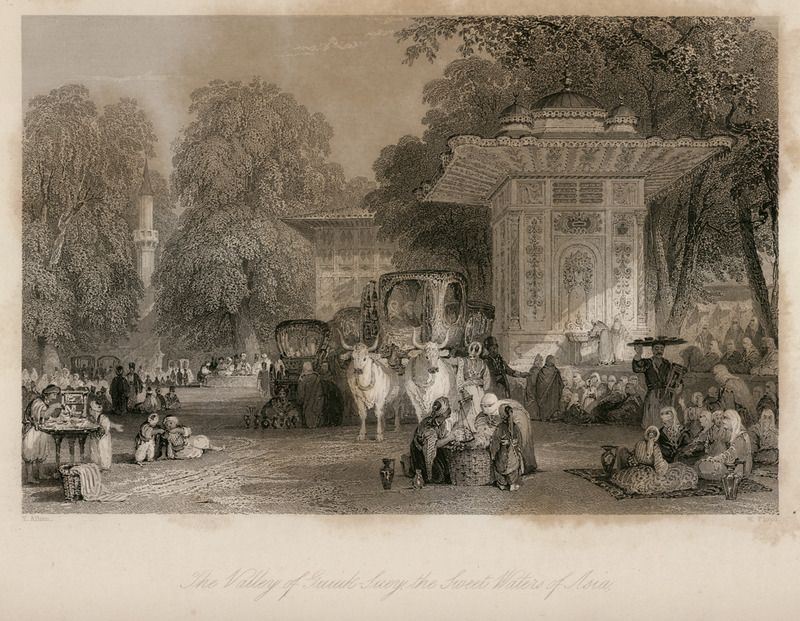

To read this scene merely as an awakening of sensuality diminishes it. Bihter before the mirror is looking at herself with another’s eyes; and the real tension of the scene arises from the uncertainty about who that other is. Lacan’s concept of the mirror stage describes exactly this: the ego is constituted for the first time outside, in an image, offered to a gaze. What Bihter discovers in the mirror is not her body’s beauty but the question of whom this beauty belongs to: for whom does this body exist? For her husband, for herself, for some other not yet named?
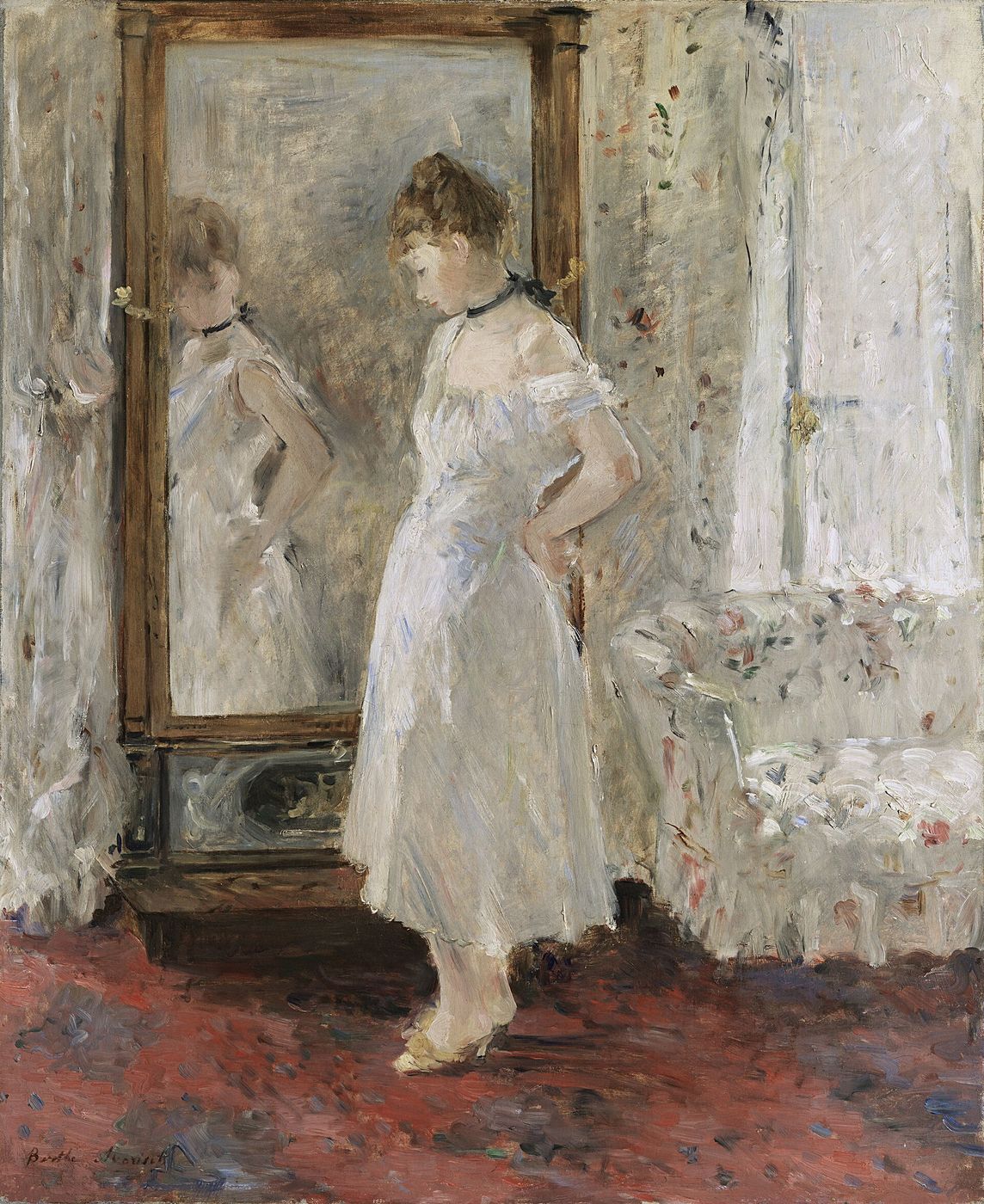

The British psychoanalyst Joan Riviere, in her famous paper of 1929, had argued that womanliness cannot be distinguished from a mask worn before the gaze of others.10 Lacan joins this idea to the question with which hysteria constantly confronts the subject. In his third seminar he says that at the heart of the hysterical question lies the question “What is a woman?”11 Bihter before the mirror asks this question caught between two answers that have been offered to her. One is her mother’s life: the woman talked about, whose desire has become the property of the neighbourhood. The other is the life her husband’s house offers: a respectable, sheltered wife deprived of desire. Bihter’s tragedy is that neither belongs to her, that both are a place assigned to her by someone else, a mother or a husband.
V
Adnan Bey offers Bihter tenderness, wealth and a respectable position. But something is missing in the marriage, and the novel makes this lack felt for pages without naming it openly. In his paper of 1912, “On the Universal Tendency to Debasement in the Sphere of Love”, Freud writes that in many people love is split into two currents: affection and sensuality. These people, in Freud’s unforgettable sentence, do not desire where they love, and cannot love where they desire.12 Aşk-ı Memnu distributes this split inside one house, between two men. Adnan Bey is on the side of affection, of the law and of order; Behlül, on the side of desire. But Behlül himself is an emptiness. His value as an object of desire comes, like the object Paul’s law points to, from the place a prohibition sets him in. Behlül’s own desire carries the other face of the same split. The novel draws him as a young man who loves to be loved, who confirms himself in the attention of many women but can attach himself to none. He desires Bihter while she stands behind a prohibition; when the prohibition collapses, that is, when Bihter really belongs to him, his interest scatters. Like the man Freud describes, he cannot desire where he loves, nor love where he desires; his turning towards Nihal is perhaps an attempt to cross over not to the side of desire but to that of a respectable, safe woman, one “to be loved”. Behlül’s emptiness is less his wickedness than the lightness of someone who has never questioned his own desire.
VI
As soon as he possesses Bihter, Behlül’s interest begins to scatter, and in the end he becomes engaged to Adnan Bey’s daughter, Nihal. Here appears what is perhaps the least noticed but sharpest structural feature of the novel. Firdevs Hanım had lost the man she was waiting for to a woman younger than herself, her daughter Bihter. Now Bihter is losing the man she loves to a woman younger than herself, her husband’s daughter Nihal. Bihter falls into the very middle of the place she fled: her mother’s position.
In Beyond the Pleasure Principle (1920) Freud speaks of people whose lives seem governed by a fate, and stresses that this fate is to a large extent arranged by the subject’s own unconscious.13 Bihter’s story is the novel of how women’s desire is passed down from generation to generation, of how a mother’s defeat looks like her daughter’s victory and turns into her daughter’s fate. What Bihter feels towards Nihal is, from this point of view, more than simple jealousy. Nihal is the being her father loves most; she holds, inside the house, a bond Bihter can never fully enter. Behlül’s turning to Nihal mercilessly exposes how fragile Bihter’s place in this house is: she is neither the daughter of this house nor its real mistress.
The least discussed person in this triangle is perhaps Adnan Bey. A man who marries a woman of his daughter’s age, who to the very end does not see, or chooses not to see, what is happening in his house. That Adnan Bey suspects nothing throughout the novel seems almost incredible to the reader: the glances between his wife and his nephew, Bihter’s changing moods, the tension in the air of the house, escape him. Psychoanalysis reads this kind of blindness less as ignorance than as a wish not to know. Adnan Bey’s not seeing is a way both of not admitting that his own marriage is flawed by a limit, an age, a lack, and of not facing a truth that might break the privileged bond he has with his daughter. When the truth comes out, the first thing Adnan Bey does is return to his daughter, to the old order, to their closeness as a pair. The novel does not show his mourning; the house closes over Bihter’s absence as if nothing had happened.
Nihal herself deserves, in a psychoanalytic reading of the novel, as much attention as Bihter. Halit Ziya draws her as a nervous, fragile girl, often seized by crises, living through sleepless nights. Nihal is passionately attached to her father; she lives his marriage as a betrayal, and approaches her stepmother first coldly, then with hostility, then with a strange closeness. The picture strikingly recalls Dora, the eighteen-year-old Freud was treating in Vienna in the same years. Dora too is attached to her father, and feels towards the woman with whom her father is having an affair, Frau K., both jealousy and a deep admiration; her coughing fits, her loss of voice, her thoughts of suicide, are parts of the picture Freud called hysteria.14 In Lacan’s reading of Dora, the girl’s interest in Frau K. expresses a curiosity about the secret of femininity: what is it that makes her father desirable as a woman? The same question can be read in Nihal’s gaze on Bihter. Bihter is the woman her father loves; the woman Nihal is not yet, fears becoming, and perhaps wants to become. At the end of the novel Nihal learns of Behlül’s betrayal and Bihter’s secret at the same time; and with this discovery she sees how dangerous a place it is to be desired as a woman. The return to the old closeness of father and daughter is, from this angle, less a victory than a retreat: from the question of being a woman to the safe place of being the father’s daughter.
VII
Bihter’s mirror cannot help recalling another famous mirror. In the tale of Snow White collected by the Brothers Grimm, the queen asks her mirror every day: who is the fairest in the land? And one day the mirror says that the answer is no longer the queen but the girl who is growing up. A little-known detail of the tale is almost unsettling in the light of Aşk-ı Memnu: in the Grimms’ first edition of 1812 the jealous queen is Snow White’s own mother; only in the edition of 1819 is she turned into a stepmother.15 Bruno Bettelheim, in the book he devoted to the psychoanalytic reading of fairy tales, interprets Snow White as the staging of the Oedipal rivalry between mother and daughter: as the girl grows up she threatens the mother’s place, and the voice of the mirror is this threat finding words.16
Halit Ziya’s novel plays this fairy-tale structure twice over two generations. Between Firdevs Hanım and Bihter there is the rivalry of a natural mother and daughter; between Bihter and Nihal, that of a stepmother and stepdaughter. In the first scene Bihter is the girl and wins; in the second she becomes the queen and loses. The novel’s mirror, like the tale’s, is a mirror that says time has passed. Nihal’s own place deserves separate thought from this angle too: a girl of weak nerves who lost her mother early, is passionately attached to her father, and has grown up under the protection of her French governess, Mademoiselle de Courton. Freud had explicitly refused to name the girl’s attachment to her father an “Electra complex”, as Jung had proposed; for him the girl’s development was not a mirror of the boy’s but a separate and more circuitous road, beginning with attachment to the mother.17 At the end of the novel, when the house returns to the old closeness of father and daughter, it is Nihal who wins; but the price of this victory remains a question the novel does not openly ask.
VIII
The end comes at full speed. Nihal witnesses a quarrel between Bihter and Behlül and learns of the secret affair; everything comes out. Behlül leaves the house. Bihter, having found nothing she was waiting for, ends her life. The novel closes with the house returning to its old order, with Adnan Bey and Nihal recovering their old closeness.
Bihter’s last act is a literary picture of a moment psychoanalysis thinks about with care. In his seminar on anxiety of 1962–1963 Lacan distinguishes between acting out and the passage to the act. In acting out the subject remains on a stage; their behaviour is a message addressed to another, waiting to be understood. In the passage to the act, by contrast, the subject falls from the stage: under the gaze that looks at them, at a moment when no room is left for any word, any message, they let themselves drop out of the world like an object.18 Lacan’s example is a young woman Freud described in 1920: walking in the street with the woman she loves, she meets her father’s angry gaze and at that moment throws herself into a railway cutting. Bihter’s last moment too, as the novel tells it, comes after a gaze, Nihal’s and Adnan Bey’s, after a moment in which all her secrets are laid bare. Seeing this structure matters not in order to explain a literary heroine’s fate, but in order to remember how heavy such moments are in the clinic, and why, at moments when the subject sees themselves under another’s gaze only as a “fallen” object, a word, a listener, a limit are vital. There is not a single person around Bihter to whom she could speak.
Read a hundred and twenty-five years later, this ending is disturbing, and it should be. The woman who follows her desire dies, law and order are restored; the novel, in keeping with the moral world of its time, seems to punish female desire. But this reading is not enough to account for the novel’s own power. At the end of his seminar on ethics Lacan reduces the ethics of psychoanalysis to a single question: have you acted in conformity with the desire that dwells in you?19 Bihter’s tragedy is that she can neither give up her desire nor bear it. Between her mother’s fate and her husband’s house, she can find no place where she could be the owner of her own desire. Her death is less the triumph of the law than the outcome of this impossible position; and the novel’s real question is why a third place in which Bihter could have lived never opened.
Afterword
The novel was first brought to the screen in 1975 in a six-episode series for the Turkish state broadcaster TRT, directed by Halit Refiğ, with Müjde Ar as Bihter. The seventy-nine-episode series broadcast on Kanal D in 2008–2010, starring Beren Saat, Kıvanç Tatlıtuğ, Selçuk Yöntem and Nebahat Çehre, became a social phenomenon; its finale entered the list of the most watched broadcasts in the history of Turkish television.20 At the series’ finale millions of viewers pitied Bihter, even understood her, more than they judged her. That a story set more than a hundred years ago within the walls of a waterside mansion should feel so close to today’s viewers is also thought-provoking. The neighbourhood’s gossip has been replaced by the endless gaze of screens; who has been seen with whom now circulates not along the shore but from phone to phone. But a woman’s desire falling into other people’s mouths, a mother and a daughter standing in turn before the same mirror, a prohibition making desire glow, seem to have remained unchanged. The reason, in my view, is that forbidden love, before it is a moral matter, is a structural fact of desire: prohibition makes the object glow, the obstacle feeds desire, repetition brings back what one has fled. Psychoanalytic work offers at this point neither a permission nor a prohibition; it tries to separate desire from the glow of prohibitions. The question asked is not “Is this forbidden?” but “What do I really desire, and whose desire is this desire?” Perhaps this is the question Bihter could never ask. Throughout the novel she seems to be looking for a place, a listener, a time in which to ask it; but in no room of the mansion, before no mirror, is there anyone to whom she could say that question aloud.
Notes
- J. Lacan, Le Séminaire, Livre VII: L’éthique de la psychanalyse (1959–1960), Paris: Seuil, 1986, the lessons devoted to the relation between the Thing and the law; English: The Ethics of Psychoanalysis, trans. D. Porter (1992). Reading Paul’s sentence, Lacan says openly that he puts the word “Thing” in place of the word “sin”, and shows that with this change the text becomes a flawless description of the dialectic between desire and the law. ↩︎
- H. Z. Uşaklıgil, Kırk Yıl, Istanbul: Matbaacılık ve Neşriyat, 1936. In the 1930s Halit Ziya himself simplified the language of his novels, replacing in the new editions some of the Arabic and Persian words with Turkish equivalents; the texts of Aşk-ı Memnu most widely read today are based on this simplified edition. ↩︎
- J. de Gaultier, Le Bovarysme, la psychologie dans l’œuvre de Flaubert (1892); he broadened the concept in Le Bovarysme, essai sur le pouvoir d’imaginer (1902). ↩︎
- Flaubert’s trial was heard in Paris in January–February 1857; the indictment of the prosecutor Ernest Pinard and the defence of the advocate Jules Senard were appended to later editions of the novel. Tolstoy’s novel was serialised in the journal Russkiy Vestnik in 1875–1877. ↩︎
- The review was temporarily closed in October 1901 after an article entitled “Literature and Law”, translated from French by Hüseyin Cahit, was found objectionable; after it reopened, most of the group’s writers no longer wrote for it. ↩︎
- H. Z. Uşaklıgil, Mai ve Siyah, Istanbul, 1897. The novel has been read as the emblem of the disillusionment of a whole generation of the New Literature period. ↩︎
- S. Freud, “Female Sexuality” (1931), SE XXI. Freud’s works are cited by their titles in the Standard Edition (SE), with volume numbers. ↩︎
- J. Lacan, “L’étourdit” (1972), in Autres écrits (2001), pp. 449–495. ↩︎
- S. Freud, “Zur Einführung des Narzißmus” (1914), Gesammelte Werke X; “On Narcissism: An Introduction”, SE XIV. Freud’s description in this section is rightly criticised today; but the observation of a narcissistic structure that builds itself in the mirror of another’s love and collapses when that mirror darkens keeps its clinical value, independently of sex. ↩︎
- J. Riviere, “Womanliness as a masquerade”, International Journal of Psycho-Analysis 10 (1929), pp. 303–313. ↩︎
- J. Lacan, Le Séminaire, Livre III: Les psychoses (1955–1956), Paris: Seuil, 1981, the lessons on “La question hystérique”; English: The Psychoses, trans. R. Grigg (1993). ↩︎
- S. Freud, “On the Universal Tendency to Debasement in the Sphere of Love” (1912), SE XI: “Wo sie lieben, begehren sie nicht, und wo sie begehren, können sie nicht lieben.” ↩︎
- S. Freud, Beyond the Pleasure Principle (1920), SE XVIII, especially chapter III. ↩︎
- S. Freud, “Fragment of an Analysis of a Case of Hysteria” (1905), SE VII. Dora’s analysis took place in the autumn of 1900, the year Aşk-ı Memnu was published as a book. In “Intervention sur le transfert” (1951) Lacan stresses that Dora’s real interest was directed towards Frau K., the woman she believed held the secret of femininity. ↩︎
- J. and W. Grimm, Kinder- und Hausmärchen, 1st edition (1812) and 2nd edition (1819), “Sneewittchen”. ↩︎
- B. Bettelheim, The Uses of Enchantment (1976). There are aspects of Bettelheim’s readings that are rightly criticised today; but his observation on the rivalry between mother and daughter is counted among the book’s lasting contributions. ↩︎
- Freud, “Female Sexuality” (1931), SE XXI. In this text Freud objects to the use of Jung’s term “Electra complex”. ↩︎
- J. Lacan, Le Séminaire, Livre X: L’angoisse (1962–1963), Paris: Seuil, 2004, lessons of January 1963; English: Anxiety, trans. A. R. Price (2014). Lacan develops this distinction by interpreting the young woman in Freud’s paper of 1920, “The Psychogenesis of a Case of Homosexuality in a Woman”, who, walking with the woman she loves, meets her father’s angry gaze and at that moment throws herself into a railway cutting. ↩︎
- Lacan, Seminar VII, last lessons: “Avez-vous agi en conformité avec le désir qui vous habite ?” ↩︎
- In the 1975 adaptation Behlül was played by Salih Güney, Firdevs Hanım by Neriman Köksal, Adnan Bey by Şükran Güngör. The 2008 series was broadcast between 4 September 2008 and 24 June 2010. ↩︎
References
- Bettelheim, B. (1976). The uses of enchantment. Knopf.
- Flaubert, G. (1857). Madame Bovary. Michel Lévy.
- Freud, S. (1905). Fragment of an analysis of a case of hysteria. SE VII.
- Freud, S. (1912). On the universal tendency to debasement in the sphere of love. SE XI.
- Freud, S. (1914). On narcissism: An introduction. SE XIV.
- Freud, S. (1920). Beyond the pleasure principle. SE XVIII.
- Freud, S. (1931). Female sexuality. SE XXI.
- Gaultier, J. de (1892). Le Bovarysme, la psychologie dans l’œuvre de Flaubert.
- Grimm, J., & Grimm, W. (1812, 1819). Kinder- und Hausmärchen. Realschulbuchhandlung.
- Lacan, J. (1966). Le stade du miroir comme formateur de la fonction du Je. In Écrits (pp. 93–100). Seuil.
- Lacan, J. (1966). Intervention sur le transfert (1951). In Écrits. Seuil.
- Lacan, J. (1981). Le Séminaire, Livre III: Les psychoses (1955–1956). Seuil.
- Lacan, J. (1986). Le Séminaire, Livre VII: L’éthique de la psychanalyse (1959–1960). Seuil.
- Lacan, J. (2001). L’étourdit (1972). In Autres écrits (pp. 449–495). Seuil.
- Lacan, J. (2004). Le Séminaire, Livre X: L’angoisse (1962–1963). Seuil.
- Riviere, J. (1929). Womanliness as a masquerade. International Journal of Psycho-Analysis, 10, 303–313.
- Tolstoy, L. (1878). Anna Karenina.
- Uşaklıgil, H. Z. (1897). Mai ve Siyah. Istanbul.
- Uşaklıgil, H. Z. (1900). Aşk-ı Memnu. Istanbul.
- Uşaklıgil, H. Z. (1936). Kırk Yıl. Matbaacılık ve Neşriyat.