This essay first appeared in Turkish. The English version is my own. Lacan’s seminars and the Écrits are cited in the French originals, with English translations given where one exists. Freud’s works are cited by their titles in the Standard Edition (SE), with volume numbers.

ἀγάλματα θεῶν
Plato, Symposium 215b
images of gods
I
The concept of transference was born in the history of psychoanalysis out of a failure. Josef Breuer’s treatment of Anna O. in the early 1880s is known as the case in which the “talking cure” was born; yet that same treatment ended abruptly and without explanation. According to the account given in 1953 by Freud’s biographer Ernest Jones, Breuer, frightened by his patient’s intense feelings for him and by the jealousy they aroused in his wife, broke off the treatment, and the patient went through an imaginary childbirth.1 This account has been largely called into question by later research; but its place in the psychoanalytic legend sums up well the question that caught Freud’s attention: what are these intense feelings a patient develops for the physician, and what is to be done with them?
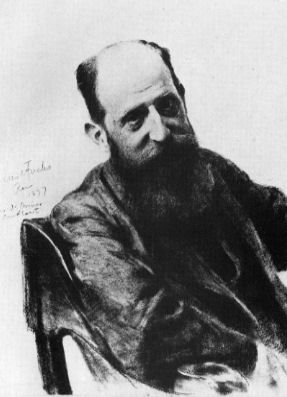

Anna O.’s real name was Bertha Pappenheim. Born in Vienna in 1859, the daughter of a wealthy Jewish family, she had developed severe symptoms in 1880 while nursing her father in his fatal illness: paralyses, disturbances of vision, fits of coughing, a period in which she could not speak German and could speak only English. Breuer visited her almost every day for a year and a half. In the evenings the patient would fall into a kind of self-absorbed hypnotic state and tell scenes from that day and from the past, and as she told them some of her symptoms passed. She herself gave the method two names in English: the talking cure and, half in jest, chimney sweeping.2 The name of psychoanalysis would be given later by Freud; but the first name of its method was an expression a patient, a young woman, found in another language during the days when she had lost her own.
The other protagonist of the story, Josef Breuer, was one of the most respected physicians in Vienna. As a physiologist he had made pioneering contributions to the nervous regulation of breathing, still known today as the Hering–Breuer reflex, and to the function of the semicircular canals of the inner ear in the sense of balance. He was fourteen years older than Freud; for years he had been a friend to the young Freud, supported him financially and shared cases with him. It was he who first told Freud about the treatment of Anna O., in November 1882, in the years before Freud met Charcot.3 But the two men’s paths parted soon after the publication of Studies on Hysteria. As Freud placed sexuality ever more centrally at the origin of the neuroses, Breuer refused to follow him. In later years Freud spoke of Breuer with increasing coldness, while Breuer never made much of his share in the birth of psychoanalysis. The first scene of transference, from this angle, had ended twice in a rupture: between physician and patient, and between physician and his young colleague. The history of psychoanalysis begins, in a sense, with writing that tries to understand what these two ruptures meant.
Freud first confronts these feelings openly in the last chapter of Studies on Hysteria, written with Breuer in 1895, which is devoted to psychotherapy. He notices that his patients sometimes develop wishes and feelings towards the physician that originate in other figures of their lives, and gives this phenomenon the name “false connection”: a feeling has been detached from the person to whom it belongs and attached to the physician’s person.4 In this first period transference is seen as an obstacle that complicates the treatment and has to be overcome.
Freud himself, in the same years, was inside a transference he had not named. In the hundreds of letters he wrote to the Berlin ear, nose and throat physician Wilhelm Fliess between 1887 and 1904 he told him the first drafts of his theory, his own dreams, his anxieties, the work of self-analysis he undertook after his father’s death. Fliess in these years was for Freud at once a friend, a reader, and an addressee supposed to know something he did not. In his major study of Freud’s self-analysis Didier Anzieu shows that this relationship served the function of an analytic relationship, and that Freud could found psychoanalysis only within this bond, and by finally breaking it.5 Even a self-analysis needed an addressee, someone who listened and was supposed to know something.
II
The experience that really drove Freud to take the concept seriously was the analysis, in the autumn of 1900, of the eighteen-year-old young woman he calls “Dora” in his case study. Dora complains of the sexual advances made to her by Herr K., a close friend of the family, of her father’s affair with Herr K.’s wife, Frau K., and of her father’s virtually handing her over to Herr K. so that he could carry on that affair. Freud analyses Dora’s two dreams in detail; but in the eleventh week of the analysis, on the last day of the year, the young woman abruptly ends the treatment.
At the centre of the case is a slap. When Dora was fourteen Herr K. had tried to kiss her, and two years later, on a walk beside a lake, he made her an open proposal. Dora slaps him precisely after a sentence Herr K. adds to his proposal: he says that he gets nothing from his wife, that his wife means nothing to him.6 In Lacan’s reading the cause of the slap is this sentence. Dora’s real interest was directed to Frau K., the woman she thought held the secret of femininity; Herr K. was for Dora a road to this woman, a go-between. The moment Herr K. says his wife is nothing to him, the structure holding Dora’s whole world together collapses: if Frau K. is nothing, then Dora is nothing for Herr K. either. Freud did not hear the weight of this sentence at the time; Dora’s leaving the treatment was perhaps a flight from hearing the same sentence from Freud’s mouth too.
In the postscript to the case study he published in 1905, Freud looks for the cause of this rupture in his own error: he failed to notice and interpret in time the feelings Dora had for him as a repetition of her feelings for Herr K., even for her father. Dora, as if to take revenge on Herr K., took revenge on Freud by leaving the treatment.7 In a talk on this case in 1951 Lacan takes Freud’s self-criticism a step further. He shows that Freud failed to see that the real object of Dora’s desire was not Herr K. but Frau K., that is, that Dora was asking her question about femininity in this woman’s body, and that this blindness arose from Freud’s own prejudices and his own transference.8 In this talk Lacan reads the case as a series of “dialectical reversals”: each of the analysand’s complaints, when reinterpreted, becomes a moment of truth that leads her to question her own share; and transference appears at the moment this dialectic stops, when the analysis is blocked.
III
The German word Freud chose for the concept, Übertragung, has in everyday language a very wide field of meaning: the transfer of a property to another, the remittance of money from one account to another, the translation of a text from one language to another, the transmission of a disease, the broadcast of a concert on the radio. The English word “transference” keeps much of this field. The concept’s power too comes from this polysemy: in transference a feeling is transferred from one person to another, the past is remitted to the present, the language of an old love is translated into the language of a new relationship. After the Dora experience Freud, in The Dynamics of Transference of 1912, defines the concept systematically. Every human being acquires in the first years of life a kind of template, a stereotype plate, which determines the conditions of love and the drives satisfied by those conditions; this template is printed over and over again with new people throughout life. The analyst too is a new surface on which the template is printed. Transference may appear both in a positive, tender form and in a negative, hostile one; and the strongest weapon of the analysand’s resistance is precisely transference.9 Two years later, in “Remembering, Repeating and Working-Through” (1914), Freud defines transference as a “playground” for repetition: what repeats in the analysand’s life appears in the analytic relationship too; but this time in almost complete freedom, in a form that can be observed and spoken.
Freud’s “Observations on Transference-Love” of 1915 takes up transference in its most striking and delicate form: the analysand’s falling in love with the analyst. Freud stresses that this love is real love, but that it is provoked by the analytic situation itself and repeats the patterns of love in the analysand’s past. He adds that the analyst must not attribute this love to his own personal attractiveness, which would be a kind of vanity. Both responding to this love and trying to suppress it destroy the treatment; the analyst must neither reject it nor gratify it, and must treat it as material to be analysed.10 Freud relates this attitude to the rule of abstinence, one of the basic principles of analytic technique: the treatment must be carried out in a state of privation, in which the analysand’s desire is not satisfied and is thus forced to turn into words.
In technical papers written in the same years Freud also touches on a less romantic scene of transference: money. In the text of 1913 on beginning the treatment he says that the analyst should treat money matters with the same frankness and the same shamelessness as sexual matters, reminding us that society approaches both with the same hypocrisy.11 For Freud free treatment, though at first sight generous, often increases the analysand’s resistance: in a relationship in which he pays nothing the analysand finds himself in a debt of gratitude, and this debt makes it harder for the transference to be spoken. The session’s fee reminds us that the analytic relationship is not a relationship of love or favour but work conducted within a frame. Money can also become an indicator of the analysand’s relation to the transference: forgetting to pay, delaying, overpaying, haggling over the fee are behaviours that enter the material of the analysis.
Freud also saw the dark face of transference. In The Ego and the Id in 1923 he writes that some patients get worse every time progress is made in the treatment, an interpretation proves right or a symptom eases, and behave as if resisting recovery; he calls this phenomenon the negative therapeutic reaction.12 For these patients remaining ill is a price exacted by an unconscious sense of guilt; each of the analyst’s successes is lived by them as a threat that prevents the payment of this debt. Transference here becomes less a scene of love or hostility than of a punishment, a debt. The more the analyst wants the analysand to recover, the more he comes into conflict with the analysand’s need to keep up this punishment.
IV
Freud’s pupils carried the concept in different directions. Sándor Ferenczi of Budapest, in his paper “Introjection and Transference” as early as 1909, showed that transference is not peculiar to analysis, that it is at work in hypnosis, between physician and patient, between teacher and pupil, in every corner of daily life.13 Ferenczi’s later years were spent in bold but risky experiments questioning the analyst’s cold and distant attitude; in the clinical diary he kept in 1932 he describes trying a method in which analyst and analysand analysed each other mutually. In the same year, in his address “Confusion of Tongues between Adults and the Child” at the Wiesbaden congress, he described the trauma opened up by answering a child’s language of tenderness with an adult’s language of passion, and warned that the analyst too could repeat this trauma by answering the analysand’s demand for tenderness in his own language.14
In London Melanie Klein widened transference still further. In a paper of 1952 she argued that transference is the carrying over from the past to the present not of single feelings or figures but of “total situations”: everything the analysand tells, an argument with a friend, a dream, a film, can be heard as an expression of the relationship he is living with the analyst at that very moment.15 This view deeply shaped the technique of the Kleinian tradition; the continual, moment-by-moment interpretation of transference became its distinctive feature. Lacan would criticise this approach on the grounds that it reduces the analysand’s speech to the relation with the analyst and turns the analysis into a game of mirrors between two persons.
V
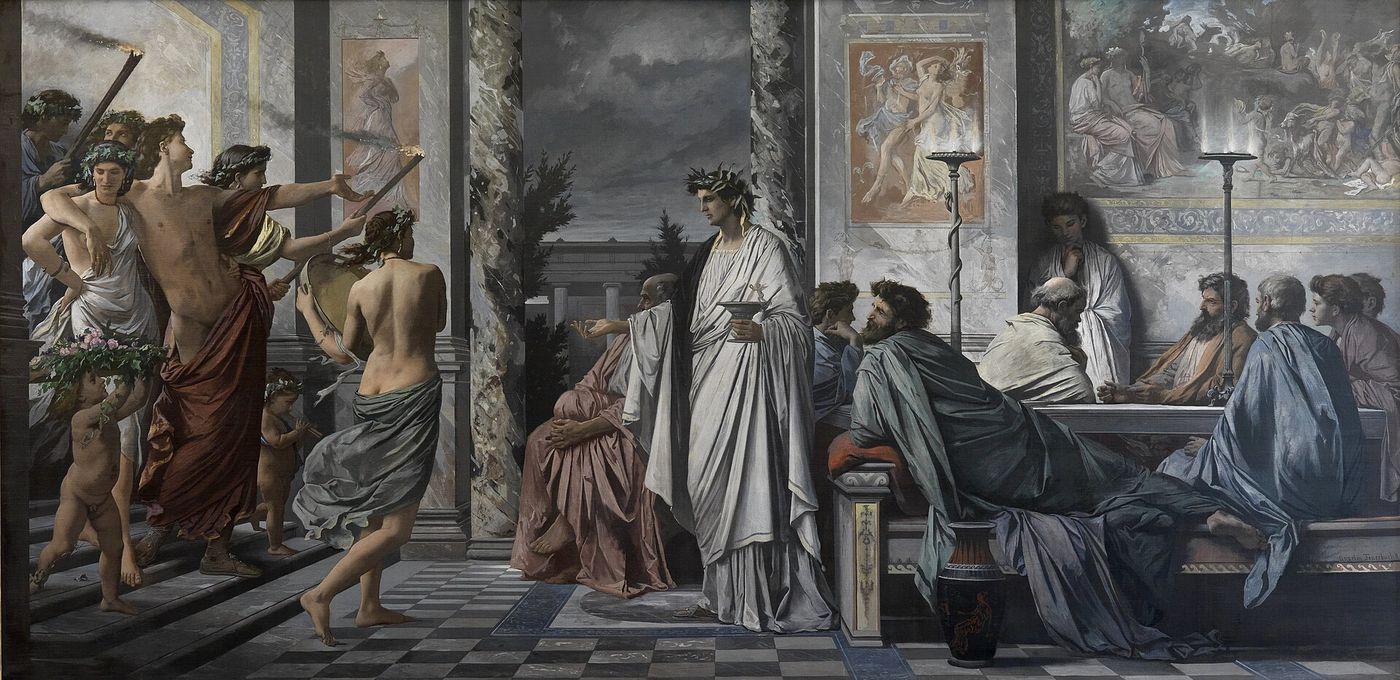
In his eighth seminar of 1960–1961, devoted entirely to transference, Lacan reads the concept through an unexpected text: Plato’s Symposium. The dialogue takes place at a banquet given by the tragic poet Agathon at his house to celebrate his first victory; the guests deliver in turn their praises of Eros. Socrates, recounting what he learned from the prophetess Diotima of Mantinea, shows that love is a lack, a desire for what one does not have. At that moment there is a knock at the door, and the drunken Alcibiades enters with a band of revellers. He has come to crown Agathon; but as soon as he sees Socrates he proclaims his love for him before everyone.
At the centre of Alcibiades’ speech is an image. Socrates, he says, is like the Silenus figurines sold in sculptors’ workshops: ugly and coarse on the outside, but when opened they contain small and precious images of the gods, agalmata.16 Alcibiades loves Socrates because he sees this precious object inside him; and to obtain it he is ready to offer his own youth and beauty. Socrates refuses. He says that what Alcibiades takes to be in him is not there, and redirects Alcibiades’ love to someone it truly concerns, Agathon.
Describing Socrates, Alcibiades keeps coming back to one word: atopia. Socrates’ strangeness, his placelessness, the fact that he fits nowhere and that no one, in the past or the present, resembles him.17 Lacan takes this word as the key to the analyst’s position. The analyst too stands in a place that fully resembles no figure in the analysand’s life, who is not a friend, a parent, a teacher or a lover, yet who can stand in for all of them. This placelessness is the condition for transference to open: to the extent that the analyst is not fixed in any one place, the analysand can load onto him all the figures of his life.
Socrates’ answer to Alcibiades is in Lacan’s eyes an interpretation too, and an analytic one. After listening to Alcibiades’ long confession of love, Socrates says that he has made this whole speech in fact for Agathon, that he wants to come between Socrates and Agathon and make Agathon love him rather than Socrates.18 Alcibiades’ speech is directed not at the one he thinks he is speaking to, but at a third. Analytic interpretation often works like this: it lets the analysand hear that something he says to the analyst is in fact addressed to someone else, another figure in his life, another scene. Socrates does not reject the love, he redirects it. The analyst too does not reject transference-love; he opens it towards the place from which the analysand’s desire comes and to which it goes.
For Lacan Socrates’ attitude is a prototype of the analyst’s. The analysand believes there is something precious in the analyst, a knowledge of his own truth, an agalma, and loves him for it. The analyst neither accepts nor refuses this love; like Socrates, by not satisfying the analysand’s desire he turns it back towards the truth of his own desire. In this seminar Lacan also defines love as a metaphor: love is the name of the change, the substitution, by which one in the position of the loved becomes one in the position of the lover. One of Lacan’s most quoted formulas is born in this context: l’amour, c’est donner ce qu’on n’a pas, to love is to give what one does not have.19
VI
Lacan’s best-known formula on transference appears in the eleventh seminar of 1964, The Four Fundamental Concepts of Psychoanalysis: the subject supposed to know, in French sujet supposé savoir. For Lacan transference begins with the analysand’s supposing that the analyst has a knowledge about his symptom, his desire and his truth.20 This supposition is not an error but the condition that makes the analytic process possible to begin: the analysand speaks because he believes the analyst has this knowledge. What emerges in the course of the analysis, however, is that the knowledge sought is not in the analyst but in the analysand’s own unconscious, in his own discourse. In the proposition he wrote in 1967 on the structure of his school Lacan defines the subject supposed to know as the pivot on which transference as a whole turns.21
The structure of the same seminar says something too. Lacan takes up the four fundamental concepts of psychoanalysis, the unconscious, repetition, transference and the drive, one by one, and insists in particular on distinguishing repetition from transference. Since Freud’s paper of 1914 transference had been thought of as the form repetition takes in analysis; Lacan says that this equation reduces transference to a mechanical reproduction of the past. In transference it is not only the past that repeats: in the present, before the analyst, something new is born, a love, a supposition of knowledge, a question. In Lacan’s phrase transference is the enactment of the reality of the unconscious; and what is played on this stage is as much a game being played for the first time as the repetition of an old one.
In the same seminar Lacan draws attention to the two faces of transference. On the one hand transference allows the unconscious to open; on the other it can be a moment of closure. The moment the analysand wants to love the analyst and be loved by him he may move away from the question of his own desire; love, in this sense, can also be an invitation not to know. The analyst’s task is to be able to recognise both faces of transference and to use it in such a way that the analysand is brought back to his own question.
Where does this process end? In the psychoanalytic tradition people long spoke of the “dissolution” of the transference: at the end of the analysis the analysand would be cleansed of the feelings he had loaded onto the analyst and see him as a real person. Lacan did not like the expression. For him, at the end of the analysis transference is not dissolved; the subject supposed to know falls. The analysand realises that the analyst never knew his truth, that the knowledge lies in his own speech; and the analyst falls from the place of the agalma, the precious object that set the analysand’s desire in motion, and becomes a remainder, a residue. In his proposition of 1967 Lacan describes this fall as a kind of de-being of the analyst: the one who was once all-knowing in the analysand’s eyes becomes, in the end, an object the analysis has passed through, something left behind.22 This is what Socrates did to Alcibiades: when the Silenus figurine supposed to hold a treasure is opened, to show that it is empty.
Transference also has a limit, and this limit is seen most clearly in the clinic of psychosis. In a psychotic subject transference may turn not into a love or a supposition of knowledge but into an erotomania or a feeling of persecution: the analyst may be perceived as someone who is in love with him or who wishes to harm him. In his seminar on psychosis Lacan therefore recommends that analysts, when working with a psychotic subject, avoid interpreting, giving meaning, taking up the position of the one who knows, and think of themselves as the secretaries of his speech.23 The subject supposed to know is in neurosis the motor of analysis; in psychosis it can become a knower who invades the subject’s world and leaves him no distance. The form of transference varies with the subject’s structure, and the analyst must each time read anew the place in which he has been put.
VII
In the psychoanalytic tradition after Freud the analyst’s emotional reactions to the analysand, counter-transference, became an important subject of debate. Freud at first saw counter-transference as an obstacle the analyst had to overcome through his own analysis. In 1950, in a short but extremely influential paper, Paula Heimann argued that the analyst’s feelings can be a valuable instrument for understanding the analysand’s unconscious; many analysts, Heinrich Racker foremost, developed this line.24 Lacan is critical of this approach. For him the analyst’s interpreting his own feelings as a reflection of the analysand’s unconscious runs the risk of reducing the analytic relationship to an Imaginary relation between two egos. In place of counter-transference Lacan proposes the concept of the desire of the analyst. This desire is not the analyst’s personal wishes but a specific desire directed at sustaining the analytic process itself: the desire to allow the analysand to meet his own desire.
In his autobiographical study of 1925 Freud says that transference is not created by analysis, that analysis merely brings it out and isolates it: transference is a universal phenomenon of the human mind and decides the success of every medical influence, and indeed governs every human being’s relations with his surroundings.25 The trust felt in a physician, the admiration for a teacher, the anger at a manager, the inexplicable closeness felt for someone met for the first time, are everyday appearances of the same mechanism. What makes analysis different is that it is not content with using the phenomenon but makes it speakable. In day-to-day clinical work transference may appear in very different forms: loading an analyst’s remark with excessive meaning, or hearing everything he says as approval or criticism; constantly wondering what the analyst thinks, trying to please him or to draw a reaction from him; arriving late for sessions, forgetting them, or on the contrary thinking too much about the analyst between sessions; having unexpectedly strong feelings when the analyst goes on holiday or cancels a session. None of these reactions is wrong or shameful; on the contrary, they are among the most fruitful material of analytic work. The moment what repeats in the analysand’s relationships appears in the analytic relationship, it becomes for the first time speakable and open to question. Freud’s rule of abstinence and the clinician’s professional ethics guarantee that this relationship is under no circumstances carried outside the analytic frame; that is also the condition for transference to remain material for speech.
Transference is at once psychoanalysis’s most powerful instrument and its greatest test. Freud described the analyst in 1915 as someone who works with extremely explosive forces and who, because of this, must be as careful and as conscientious as a chemist; to be afraid of these explosive forces and try to neutralise them would be to neutralise the treatment itself. The analyst must take on the knowledge and the love the analysand loads onto him, but must not use them for himself. The ultimate aim of this attitude is what Socrates showed Alcibiades: to discover that the precious object first sought in the other is in fact hidden in one’s own desire, in the texture of one’s own speech.
Notes
- E. Jones, The Life and Work of Sigmund Freud, vol. I (1953). The historical accuracy of Jones’s account has since been seriously questioned; see M. Borch-Jacobsen, Remembering Anna O. (1996). ↩︎
- Breuer and Freud, Studies on Hysteria (1895), the case “Fräulein Anna O.”, SE II. For the history of the case and the gaps in Breuer’s published account see A. Hirschmüller, Physiologie und Psychoanalyse in Leben und Werk Josef Breuers, Bern: Huber, 1978. ↩︎
- The most detailed source for Breuer’s life, scientific work and relationship with Freud is Hirschmüller’s book mentioned above. The reflex Breuer described with Ewald Hering in 1868 shows that the inflation of the lungs creates a nervous feedback that inhibits inspiration. ↩︎
- J. Breuer and S. Freud, Studies on Hysteria (1895), the chapter “The Psychotherapy of Hysteria”, SE II. ↩︎
- D. Anzieu, L’auto-analyse de Freud et la découverte de la psychanalyse, Paris: PUF, 1959; expanded edition 1975; English: Freud’s Self-Analysis, trans. P. Graham (1986). The complete text of Freud’s letters to Fliess is in J. M. Masson (Ed.), The Complete Letters of Sigmund Freud to Wilhelm Fliess, 1887–1904 (Cambridge, MA: Harvard University Press, 1985). ↩︎
- Freud, “Fragment of an Analysis of a Case of Hysteria” (1905), SE VII. Herr K.’s words are in the German text Sie wissen, ich habe nichts an meiner Frau. Freud later reports that Dora learned that Herr K. had said the same sentence earlier to the family’s governess, and had seduced and abandoned her too. ↩︎
- S. Freud, “Fragment of an Analysis of a Case of Hysteria” (1905 [1901]), Postscript, SE VII. ↩︎
- J. Lacan, “Intervention sur le transfert” (1951), Écrits (1966), pp. 215–226; English in Écrits, trans. B. Fink (2006). ↩︎
- S. Freud, “The Dynamics of Transference” (1912), SE XII. ↩︎
- S. Freud, “Observations on Transference-Love” (1915), SE XII. ↩︎
- S. Freud, “On Beginning the Treatment” (1913), SE XII (German: “Zur Einleitung der Behandlung”, Gesammelte Werke VIII). In the same place Freud writes that in his experience free treatments increase rather than reduce resistances, that the patient in a free treatment falls into a debt of gratitude to the physician, and that this complicates the transference. ↩︎
- S. Freud, The Ego and the Id (1923), SE XIX (German: Das Ich und das Es, Gesammelte Werke XIII), chapter V. Freud explains the phenomenon through an unconscious sense of guilt which requires that the patient remain ill, recovery being felt as a punishment. ↩︎
- S. Ferenczi, “Introjektion und Übertragung”, Jahrbuch für psychoanalytische und psychopathologische Forschungen 1 (1909). In this paper Ferenczi explains the power of hypnosis through the hypnotised person’s transferring a mother or father onto the hypnotist. ↩︎
- S. Ferenczi, “Sprachverwirrung zwischen den Erwachsenen und dem Kind” (1932; published 1933), Internationale Zeitschrift für Psychoanalyse 19; Journal clinique (1932), Paris: Payot, 1985; English: The Clinical Diary of Sándor Ferenczi (1988). Freud had asked Ferenczi not to give this talk; Ernest Jones did not publish the English translation of the text until 1949. ↩︎
- M. Klein, “The origins of transference”, International Journal of Psycho-Analysis 33 (1952). Klein’s view forms the basis of the technique of the analysts who followed her, of interpreting the transference at every moment of the session. ↩︎
- Plato, Symposium 215a–b. Agalma in ancient Greek means a precious, shining object or ornament dedicated to the gods. ↩︎
- Plato, Symposium 221c–d. Greek atopos literally means “without a place”; in everyday language it is used to mean odd, extraordinary, unclassifiable. ↩︎
- Plato, Symposium 222c–d. Lacan devotes a large part of the seminar to this scene and reads Socrates’ reply as the model of an interpretation that displaces the object towards which transference-love is directed. ↩︎
- J. Lacan, Le Séminaire, Livre VIII: Le transfert (1960–1961), Paris: Seuil, 1991; English: Transference, trans. B. Fink (2015). ↩︎
- J. Lacan, Le Séminaire, Livre XI: Les quatre concepts fondamentaux de la psychanalyse (1964), Paris: Seuil, 1973; English: The Four Fundamental Concepts of Psychoanalysis, trans. A. Sheridan (1977). ↩︎
- J. Lacan, “Proposition du 9 octobre 1967 sur le psychanalyste de l’École”, Autres écrits (2001). ↩︎
- Lacan, “Proposition du 9 octobre 1967”, Autres écrits. In the same proposition Lacan proposes a device of testimony, la passe, by which an analysand who has reached the end of his analysis can pass on this experience to other members of the school. ↩︎
- J. Lacan, Le Séminaire, Livre III: Les psychoses (1955–1956), Paris: Seuil, 1981. In Lacan’s phrase the analyst should be content to be, apparently, the “secretary” of the madman; this attitude aims to respect the structure of meaning the psychotic subject has built for himself and not to demolish it with knowledge from outside. ↩︎
- P. Heimann, “On counter-transference”, International Journal of Psycho-Analysis 31 (1950), pp. 81–84. ↩︎
- S. Freud, “An Autobiographical Study” (1925), SE XX (German: Selbstdarstellung, Gesammelte Werke XIV). In the same place Freud stresses that the power of hypnosis and suggestion too rests on transference, and that analysis does not content itself with using transference but analyses it. ↩︎
References
- Anzieu, D. (1959). L’auto-analyse de Freud et la découverte de la psychanalyse. PUF.
- Borch-Jacobsen, M. (1996). Remembering Anna O.: A century of mystification. Routledge.
- Breuer, J., & Freud, S. (1895). Studies on hysteria. SE II.
- Ferenczi, S. (1909). Introjektion und Übertragung. Jahrbuch für psychoanalytische und psychopathologische Forschungen, 1.
- Ferenczi, S. (1933). Sprachverwirrung zwischen den Erwachsenen und dem Kind. Internationale Zeitschrift für Psychoanalyse, 19.
- Freud, S. (1905 [1901]). Fragment of an analysis of a case of hysteria. SE VII.
- Freud, S. (1912). The dynamics of transference. SE XII.
- Freud, S. (1913). On beginning the treatment. SE XII.
- Freud, S. (1914). Remembering, repeating and working-through. SE XII.
- Freud, S. (1915). Observations on transference-love. SE XII.
- Freud, S. (1923). The ego and the id. SE XIX.
- Freud, S. (1925). An autobiographical study. SE XX.
- Heimann, P. (1950). On counter-transference. International Journal of Psycho-Analysis, 31, 81–84.
- Hirschmüller, A. (1978). Physiologie und Psychoanalyse in Leben und Werk Josef Breuers. Huber.
- Jones, E. (1953). The life and work of Sigmund Freud (Vol. I). Basic Books.
- Klein, M. (1952). The origins of transference. International Journal of Psycho-Analysis, 33.
- Lacan, J. (1966). Intervention sur le transfert (1951). In Écrits (pp. 215–226). Seuil.
- Lacan, J. (1973). Le Séminaire, Livre XI: Les quatre concepts fondamentaux de la psychanalyse (1964). Seuil.
- Lacan, J. (1981). Le Séminaire, Livre III: Les psychoses (1955–1956). Seuil.
- Lacan, J. (1991). Le Séminaire, Livre VIII: Le transfert (1960–1961). Seuil.
- Lacan, J. (2001). Proposition du 9 octobre 1967 sur le psychanalyste de l’École. In Autres écrits. Seuil.
- Plato. Symposium.