This essay first appeared in Turkish. The English version is my own. Lacan’s texts are cited in the French originals, with English translations given where one exists. Freud’s works are cited by their titles in the Standard Edition (SE), with volume numbers. The original discusses a difficulty of rendering Lacan’s definite article into Turkish, which has none; I have replaced that passage with the corresponding point for English.
Was will das Weib?
Sigmund Freud, to Marie Bonaparte; as reported by Ernest Jones
What does a woman want?
I
In the second volume of his biography of Freud, Ernest Jones reports a confession Freud once made to Marie Bonaparte. Despite thirty years of research into the feminine soul, Freud said, the great question he had not been able to answer was this: What does a woman want?1 The sentence is often quoted as a disdain, as an admission of the arrogance in a man’s view of women. But the same admission recurs in other forms in Freud’s writings, and each time reads less as arrogance than as the acceptance of a limit. In 1926, in the book in which he defended the practice of psychoanalysis by non-physicians, he writes that the sexual life of the adult woman is for psychology, in an English phrase, a dark continent.2 At the end of his lecture on femininity in 1933 he suggests to his listeners that if they want to learn more on the subject they should turn to their own experience of life, turn to the poets, or wait until science can give them deeper and more coherent information.3
Freud’s careful uncertainty on this matter can be seen in an earlier footnote too. In a note added in 1915 to the new edition of the Three Essays on the Theory of Sexuality he writes that the concepts “masculine” and “feminine”, though they seem perfectly clear to ordinary people, are among the most confused in science, and he distinguishes at least three different senses in which they are used: activity and passivity, the biological and the sociological.4 The famous sentence Freud uttered in altering a saying of Napoleon, “anatomy is destiny”, therefore stands in a more complicated place than it seems. Anatomy is a destiny; but how this destiny will be lived, with what fantasies, what identifications, what desires the subject will meet it, is not determined by anatomy itself.
II
Freud’s uncertainty on this question led, in the 1920s and early 1930s, to one of the sharpest debates inside psychoanalysis. In his paper of 1925 on the psychical consequences of the anatomical distinction between the sexes Freud had built the little girl’s development around a phallic phase, the discovery of the anatomical difference and the disappointment it brings. Karen Horney, Ernest Jones, Melanie Klein and other analysts in the London circle argued that this account defines femininity as a lack, and that the girl might have a development of her own, feminine from the start.5
In the paper on female sexuality he wrote in 1931 Freud answered these criticisms in part and changed his own theory at an important point. He wrote that he had only now realised how important the girl’s first attachment to her mother was, a long and intense period preceding the Oedipus complex. He described this discovery with an analogy from archaeology: the discovery of this phase was like the discovery, behind the Greek civilisation, of the older Minoan–Mycenaean civilisation.6 The debate did not close with Freud’s death; but it is plain that Freud himself never closed this question, that he reopened it in each new paper.
This early attachment to the mother that Freud discovered in 1931 would hold an important place in Lacan’s theory too. In “L’étourdit”, written in 1972, Lacan writes that Freud’s construction of the Oedipus complex makes woman appear at ease like a fish in water, whereas for most women the relation with the mother is a devastation, in French ravage; the girl, as a woman, expects from her mother, more than from her father, a substance.7 This expectation cannot be met, since the mother too has no essence of femininity to give her daughter. The question of what it is to be a woman is passed down from generation to generation as a demand without an answer. Anyone who knows in the clinic how scorching, how interminable a settling of accounts the relation between mother and daughter can sometimes become understands why Lacan chose this word.
III
Lacan entered this debate in two stages. In the first, in the lecture “The Signification of the Phallus” he gave in German in Munich in 1958, he defined the phallus not as an organ but as a signifier. The phallus is a signifier in relation to which both sexes take their position; the man is defined by having it, the woman by being it, that is, by being the signifying object of the other’s desire. This definition freed sexual difference from anatomy, but still revolved around a single signifier, the phallus. The feminine side, in this definition too, remained a kind of reverse of the masculine definition.
The second stage began at the end of the 1960s and found its expression in what is perhaps the most quoted sentence of Lacan’s whole teaching: Il n’y a pas de rapport sexuel, there is no sexual relationship. The sentence is heard as a provocation and is designed so; but what it says is not that people do not enter into sexual relations with one another. French rapport, like Latin ratio, also names a proportion, a mathematical relation, a relation that can be written in a formula. What Lacan says is that it is impossible to write the relation between the two sexes in a formula. The two sexes are not bound to each other as two halves completing one another, as in the instincts of animals. Between them there is no harmony, no reciprocity, no proportion. Each reaches the other by another road, through the mediation of his own fantasy, his own pleasure.
Lacan also writes this impossibility with the modal categories he used in the same years. The necessary is what does not cease to be written; the contingent is what ceases not to be written; the impossible is what does not cease not to be written. The sexual relationship belongs to this last category: it does not cease not to be written.8 This does not mean that a relation, an encounter, a love is impossible. On the contrary, in Lacan’s theory love is what appears in the very place of this unwritable, to take its place.
IV
Lacan built the formulas of sexuation step by step between 1971 and 1973, over several seminars; the full table of the formulas took its final form in the lesson of 13 March 1973 of the Encore seminar, together with the long text “L’étourdit” written in the same period.9 The formulas are written with the quantifiers of mathematical logic. ∀ is “all”, ∃ “there exists at least one”, ¬ negation. Φx is what Lacan calls the phallic function: the subject’s being determined by language, that is by castration, by lack, by the law of the signifier.
The lower line of the left side, ∀x Φx, says “all x are subject to the phallic function”. Everyone on the masculine side is, without exception, subject to the law of language, to castration, to lack. But this universal proposition rests on an exception in the upper line: ∃x ¬Φx, “there exists at least one x not subject to the phallic function”. Lacan finds the model of this exception in Freud’s Totem and Taboo. In the myth Freud builds, the father of the primal horde is the one who has all the women, who is subject to no law, who is killed by his sons and after being killed becomes the source of the law.10 The totality of the masculine side forms as a set bounded by this exception. Because there is a limit, there is a whole.
The right side looks paradoxical at first sight. The upper line, ¬∃x ¬Φx, says “there is no x not subject to the phallic function”. On the feminine side there is no exception, no primal father, no figure standing outside the law. But the lower line, ¬∀x Φx, says “not all x are subject to the phallic function”. Together these two propositions describe a situation that seems contradictory at first sight: there is no woman outside the phallic function, but no woman is wholly subject to the phallic function either. Lacan calls this situation pas-tout, the not-all.
The table in Encore also has a lower half, which perhaps shows most plainly what the formulas tell. On the masculine side of the table stand the divided subject, $, and the phallus, Φ; on the feminine side stand Woman with her article barred, the signifier of the lack in the Other, S(Ⱥ), and the object-cause of desire, a. Lacan joins these terms by arrows. The arrow leaving the divided subject on the masculine side goes to the a on the other side: the man reaches the woman not as a woman but through the object of his own fantasy. It is not the woman before him he desires, but a detail in her body that sets his desire in motion, a look, a voice, a part. From the woman on the feminine side two arrows leave. One goes to the phallus on the masculine side; the woman too takes part in the phallic function, in the game of having and being, of being the object of a man’s desire. The other goes to the S(Ⱥ) on her own side, to the signifier saying that the Other too is lacking, that language has no last word, no guarantee.11 Because of this second arrow the woman does not close wholly upon the phallic order; she remains open to the limit of language, to the edge of the unsayable. The two sides are linked, but not by symmetrical arrows. Instead of two halves completing one another there are two roads missing one another.
V
The strangeness of this “not-all” is better understood when compared with Aristotelian logic. In Aristotle’s square of opposition the proposition “not all x are P” means “some x are not P”, that is, it requires the existence of at least one x that is not P. Lacan’s not-all carries no such claim of existence. On the feminine side no x that is not P can be pointed out, yet it cannot be said that all x are P. The not-all is not a missing part of a set but the set’s own inability to close.12
Lacan’s sentence “Woman does not exist” comes from here. In French La femme, with the definite article, means woman as a universal category, as a concept naming the common essence of all women. Lacan crosses out this article. There is no common essence of women, no exception that would gather them as a set. There are women, but Woman, as a whole, does not exist. This sentence too is heard as a provocation; but what it says is that femininity cannot be determined by an essence, a nature, a definition. Each woman exists in her singularity, not as a member of a set, but as someone met one by one. English translators generally write the phrase as “Woman does not exist” or “The woman does not exist”, with the article struck through, and the point is the same: it is the universal that is struck out, not women.
One of the most ironic expressions of this one-by-oneness in literature is the catalogue aria in Mozart’s Don Giovanni. Leporello reads Donna Elvira, whom his master has abandoned, the long list of Don Giovanni’s lovers: so many in Italy, so many in Germany, and in Spain mille e tre, a thousand and three.13 Don Giovanni desires women not as a set but as a count; each adds one more name to the list, but the list is never completed. After the thousand and third, the next will come.
VI
The most important consequence of Lacan’s formulas is his distinguishing two different forms of jouissance. The masculine side is defined by phallic jouissance, that is, by a pleasure bounded by language, the signifier, lack. This pleasure is tied to an organ, an object, a fantasy; it can be measured, counted, compared. The feminine side too has access to phallic jouissance, since there is no woman outside the phallic function. But because the feminine side is not-all, this side also has the possibility of another jouissance, a pleasure Lacan calls the jouissance of the Other, or supplementary jouissance.
Lacan insists that this pleasure is not complementary but supplementary. A complementary jouissance would complete the missing part of phallic jouissance, bringing the two pleasures together to form a whole; this would take us back to the logic of the whole, to the idea of a sexual relationship in which two halves complete one another. Supplementary jouissance does not complete a whole; it is something added to the whole, from outside it, beyond its limit. According to Lacan the most distinctive feature of this pleasure is that the one who lives it does not know it. The woman lives it, but can say nothing about it.
The way to describe this pleasure passes through an old myth. In the third book of Ovid’s Metamorphoses, Jupiter and Juno, one evening made merry with nectar, argue about which sex takes the greater pleasure in love. Jupiter says women’s pleasure is greater, Juno objects. To settle the argument they appeal to one who has lived as both man and woman, Tiresias. In his youth Tiresias had struck with his staff two snakes coupling in the forest and had been changed into a woman; after living seven years as a woman, in the eighth year he had seen the same snakes again, struck them once more, and become a man again.14
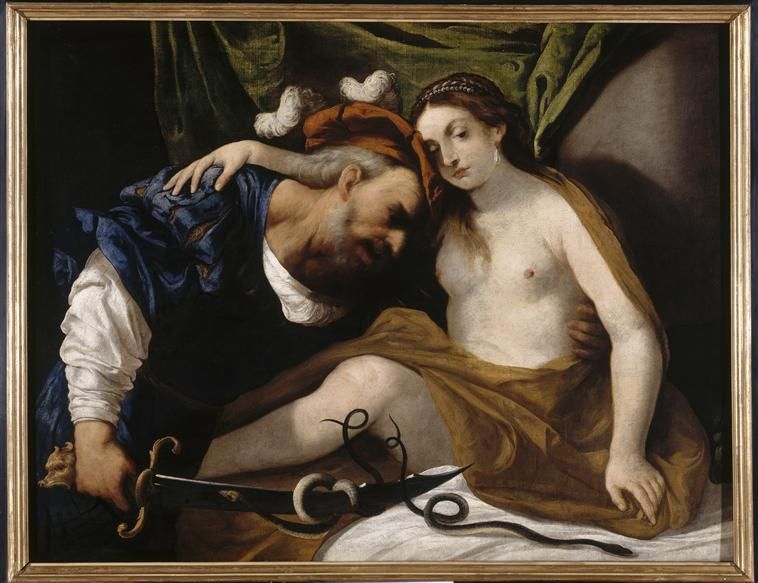

Tiresias sides with Jupiter: women’s pleasure is greater. Juno is angered and condemns the arbiter’s eyes to eternal night. Since no god can undo what another god has done, Jupiter gives Tiresias, in place of his eyes, the gift of knowing the future. The structure of the myth is striking. The only person who knows woman’s pleasure is the one who has lived both sides; and the moment he tells this knowledge he loses his eyes. Knowledge of woman’s pleasure is a knowledge for which the one who tells it is punished. Juno’s anger perhaps reminds us that this pleasure is something even a woman does not wish to tell, that it becomes something else the moment it is told.
Tiresias’s other great scene in Greek mythology adds a further depth to this reading. In Sophocles’ Oedipus the King he is the blind seer Oedipus summons while searching for the cause of the plague ravaging Thebes. At first Tiresias does not wish to speak; then he tells Oedipus that the murderer he seeks is himself. The two founding questions of psychoanalysis, the killing of the father and desire for the mother, and the question of woman’s pleasure, thus meet in the same blind figure. The one who knows both questions is one who has lost his eyes; his knowledge rests not on sight but on the loss of sight. In the twentieth century T. S. Eliot summons this figure again in The Waste Land and lets him speak in his own voice: “I Tiresias, though blind, throbbing between two lives, / Old man with wrinkled female breasts”.15 A blind old man throbbing between two lives, with wrinkled female breasts: a witness who has lived both sides of sexual difference and for this reason belongs wholly to neither.
VII
Lacan looks for witnesses of this pleasure in the mystics. In the lesson of Encore of 20 February 1973 he suggests to his listeners that they go to Rome and look at Bernini’s statue of Saint Teresa; they will understand at once that Teresa is enjoying. But why she enjoys remains an open question. For Lacan the mystics’ fundamental testimony is precisely that they say they live it but know nothing about it.16
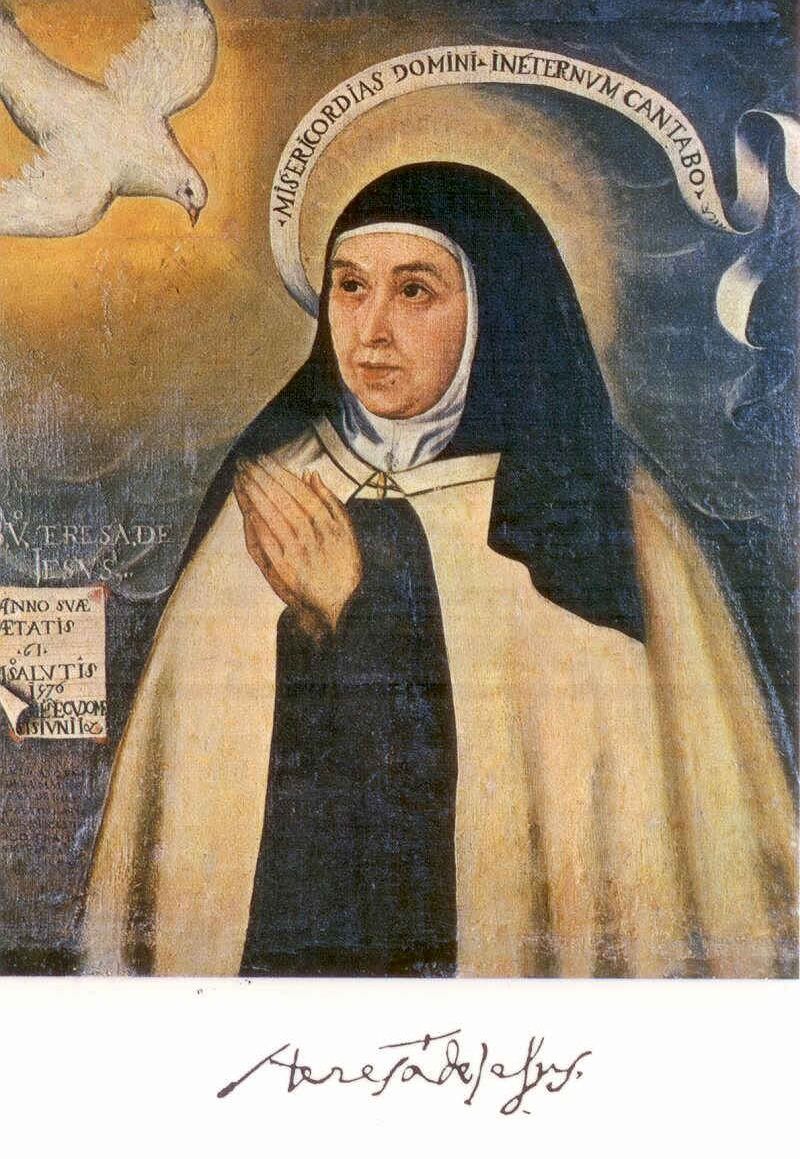

Bernini’s statue brings to life a scene Teresa tells in her own life story. In chapter twenty-nine of her book she describes seeing beside her a small and beautiful angel with a golden spear in his hand with a little fire at its tip; the angel several times plunged this spear into her heart, down to her entrails, and when he drew it out left her all on fire with the great love of God. The pain is so great that it makes her moan; but the sweetness of this pain is so excessive that she does not wish it to cease.17 This narrative, in which pain and pleasure, the body’s burning and the love of God, the sayable and the unsayable, are interwoven, is the best example Lacan could think of for supplementary jouissance: a pleasure, but not a pleasure bounded by the phallic function, an organ, an object; a testimony, but a testimony that does not know what it is.
Lacan also says that this pleasure belongs not only to women. The two sides of the formulas are not divided according to anatomy; a man too can pass to the side of the not-all. The example Lacan gives is John of the Cross, in Spanish San Juan de la Cruz, a contemporary of Teresa and fellow traveller in her reform movement. The poet of the Dark Night of the Soul is, in Lacan’s eyes, a mystic who, as a man, stands on the feminine side and lives the pleasure of that side. This small detail shows plainly that the formulas are a logic, not a biology. The names “masculine side” and “feminine side” bear the mark of the language Lacan had to hand, that is, the words history and culture left him; but what they describe are not bodies but two different logics of the subject’s relation to language and to pleasure. The anatomy of a body does not determine in advance in which of these two logics the subject will live.
VIII
If there is no sexual relationship, how do the two sexes reach one another? Lacan’s answer is love. In Encore he says that what takes the place of the sexual relationship is precisely love. Love is what comes to the place of the unwritable, trying to build a bridge where two subjects cannot reach one another through their own fantasies and their own pleasures. A sentence Lacan had said much earlier, in the seminar on transference of 1960–1961, is the first form of this thought: to love is to give what one does not have.18 The lover gives his own lack; not a thing, but the absence of a thing.
Lacan’s modal categories come in useful again here. An encounter of love is contingent: two people meet, with no necessity, by chance, and for a moment the impression arises that something unwritable has begun to be written. That was the definition of the contingent: what ceases not to be written. Love’s own tendency is to turn this contingency into a necessity: to believe that the encounter is inevitable, that two persons are made for each other, that this relation will go on being written without ceasing. For Lacan the drama of love is played out in this passage, where the contingent is wished to be turned into the necessary. Love is the momentary appearance of the impossible as possible, and it wants this appearance to last.
The seminar’s title too is tied to this thought. French encore means “more”, “again”, “once more”; it names the endless demand of a lover, a child, a pleasure, the call of what is never enough. The same word is heard in French with the same sound as en corps, “in the body”. The whole thought of Lacan’s seminar moves back and forth between these two readings: the speaking being lives a pleasure in his body, but this pleasure is never enough; he always wants more, once more. To give an answer to this unending demand is the work neither of phallic nor of supplementary jouissance. Love tries not to answer this demand but to direct it towards another subject’s lack. This is why love is a matter of courage: it is not easy for two lacking beings to approach one another through their own lacks, to consent to an encounter that carries no promise of completion. In love the subject turns towards the other knowing that he will not find in him what will complete himself.
IX
Since the day they were published the formulas of sexuation have been the object of both great admiration and sharp criticism. The earliest and sharpest criticism came from Lacan’s own circle. Luce Irigaray, in Speculum de l’autre femme, published in 1974, argued that Western thought from Plato to Freud has always thought of woman as man’s mirror, as a defective version of him; after the publication of the book she was removed from her post in the department of psychoanalysis at Vincennes. A few years later, in Ce sexe qui n’en est pas un, in a paper dealing directly with Encore, she wrote that Lacan speaks of women’s pleasure without giving women the word, in their name.19
The formulas entered the English-speaking world with the collection Feminine Sexuality published by Juliet Mitchell and Jacqueline Rose in 1982. Mitchell and Rose defended Lacan’s theory as a means of thinking femininity not as a nature but as a structure, as a position established within language. In 1994 Joan Copjec showed that the formulas bear a structural kinship with Kant’s antinomies: the masculine side corresponds to Kant’s dynamical antinomies, the feminine side to his mathematical antinomies.20 Judith Butler, in Gender Trouble, published in 1990, argued that Lacan’s Symbolic order fixes sexual difference as an ahistorical law and fails to see that gender is a changeable structure established by repeated acts.
This debate continues today and this essay has no pretension to settle it. But the formulas have a clinically important side that may escape both their defenders and their critics. The formulas do not say on which side subjects should stand; they describe no norm, no goal, no correct sexuation. In 1974 Lacan would say that the sexed being authorises itself only from itself and from some others.21 A subject, whatever his anatomy, finds himself on the masculine side, on the feminine side, or between the two sides, in a place his own history, his own desire and his own pleasure allow.
This is an important principle for an analyst working with people who live gender identity in different ways. Analysis does not tell a person which gender he should be, does not call him back into a norm. The analyst’s work is to listen to the subject’s own way of being sexuated, to the pain, pleasure and question he lives within it. What Freud said until the end of his life is the principle of this listening: it is not we who know here. Whoever wants to know must turn to the poets, to his own experience, or, within analysis, to the speech of the subject before him.
Notes
- E. Jones, The Life and Work of Sigmund Freud, vol. 2, London: Hogarth Press, 1955. In the English sentence Jones reports, Freud says the great unanswered question, which he himself had not been able to answer despite thirty years of research, is “What does a woman want?” The German form Was will das Weib? became current from this report. ↩︎
- S. Freud, The Question of Lay Analysis (1926), SE XX (German: Die Frage der Laienanalyse, Gesammelte Werke XIV). Freud leaves the phrase in English within the German text; this choice shows plainly that the phrase is taken from an expression nineteenth-century English explorers used of Africa. ↩︎
- S. Freud, “Femininity”, New Introductory Lectures on Psycho-Analysis (1933), lecture 33, SE XXII (German: “Die Weiblichkeit”, Gesammelte Werke XV). In the same lecture Freud adds that what he has said holds only so far as woman is determined by her sexual function, and that this determination, though very far-reaching, does not cover the whole of a woman. ↩︎
- S. Freud, Three Essays on the Theory of Sexuality (1905), note added to the edition of 1915, SE VII. In the same note Freud stresses that there is neither in the psychological nor in the biological sense a pure masculinity or femininity, that every individual carries a mixture of the characteristics of both sexes. ↩︎
- K. Horney, “Flucht aus der Weiblichkeit”, Internationale Zeitschrift für Psychoanalyse 12 (1926); E. Jones, “The Early Development of Female Sexuality”, International Journal of Psycho-Analysis 8 (1927). Horney had argued that Freud’s picture of the little girl bears a surprising likeness to the ideas of a little boy about girls. ↩︎
- S. Freud, “Female Sexuality” (1931), SE XXI (German: “Über die weibliche Sexualität”, Gesammelte Werke XIV). In the same place Freud adds that he finds this early period very hard to grasp in analysis, that perhaps as a male analyst in the transference it is difficult to take the place of this attachment; he acknowledges that women analysts, Jeanne Lampl-de Groot and Helene Deutsch, had gone further on this point. ↩︎
- J. Lacan, “L’étourdit” (1972), Autres écrits, Paris: Seuil, 2001. French ravage describes the destruction a storm or a war leaves behind. In Lacanian clinical work the concept is used to name the way the relation between mother and daughter sometimes turns into a limitless demand, an unending settling of accounts. ↩︎
- J. Lacan, Le Séminaire, Livre XX: Encore (1972–1973), ed. J.-A. Miller, Paris: Seuil, 1975; English: On Feminine Sexuality, the Limits of Love and Knowledge, trans. B. Fink (1998). Lacan’s French formulas are: the necessary, ce qui ne cesse pas de s’écrire; the contingent, ce qui cesse de ne pas s’écrire; the impossible, ce qui ne cesse pas de ne pas s’écrire. ↩︎
- J. Lacan, “L’étourdit” (1972), Scilicet 4 (1973); Autres écrits, Paris: Seuil, 2001. The first drafts of the formulas can be seen in the seminars D’un discours qui ne serait pas du semblant (1971) and ...ou pire (1971–1972). ↩︎
- S. Freud, Totem and Taboo (1913), SE XIII (German: Totem und Tabu, Gesammelte Werke IX). In Lacan’s reading the primal father is not a historical fact but a logical necessity: the universality of the masculine side is established by supposing an exception that is not part of it. ↩︎
- Lacan, Encore, lesson of 13 March 1973. S(Ⱥ) is a writing Lacan has used since 1960: the signifier showing that the place of the Other, of language and law, is itself lacking, that no last signifier can close meaning. ↩︎
- For a detailed study of the logical consistency of the way Lacan separates the pas-tout from Aristotle’s particular proposition see G. Le Gaufey, Le pastout de Lacan : consistance logique, conséquences cliniques, Paris: EPEL, 2006. ↩︎
- W. A. Mozart and L. Da Ponte, Don Giovanni (1787), act I, Leporello’s aria “Madamina, il catalogo è questo”. The aria also enumerates in detail the women’s ages, bodies and social classes and announces that the count never arrives at a whole, that it begins again with each new name. ↩︎
- Ovid, Metamorphoses III, 316–338. In another version, taken from the lost Melampodia attributed to Hesiod and found in Apollodorus’s Library (III, 6, 7), Tiresias speaks even more definitely: if the pleasure of love were divided into ten parts, the man would have one and the woman nine. ↩︎
- T. S. Eliot, The Waste Land (1922), III, “The Fire Sermon”. In the notes he added to the poem Eliot writes that Tiresias is not a character in the poem but only a spectator, and yet the most important personage, uniting all the rest; he quotes at length in Latin from Ovid’s account. ↩︎
- Lacan, Encore, lesson of 20 February 1973. In the same lesson Lacan says that the mystics’ ecstatic words are not idle talk, that they are among the best things one can read, and slips in, like a note at the foot of the page, his own Écrits among texts belonging to the same order. ↩︎
- Teresa of Ávila, Libro de la vida (ca. 1565), chapter 29; English: The Life of Saint Teresa of Ávila by Herself. This scene is known in the Catholic tradition as the “transverberation”, the piercing of the heart. Teresa was canonised in 1622; Bernini made the statue for Cardinal Federico Cornaro about a quarter of a century after the canonisation. ↩︎
- J. Lacan, Le Séminaire, Livre VIII: Le transfert (1960–1961), Paris: Seuil, 1991; English: Transference, trans. B. Fink (2015). Lacan builds this formula within a long reading of Plato’s Symposium; the beloved is the one who sets the lover’s desire in motion but does not know what he has in himself. ↩︎
- L. Irigaray, Speculum de l’autre femme, Paris: Minuit, 1974; Ce sexe qui n’en est pas un, Paris: Minuit, 1977; English: Speculum of the Other Woman, trans. G. C. Gill (1985); This Sex Which Is Not One, trans. C. Porter (1985). The paper “Così fan tutti” in the second book is a direct critique of Encore; the title alludes to Mozart’s opera, “Thus do all women”. ↩︎
- J. Copjec, “Sex and the Euthanasia of Reason”, in Read My Desire: Lacan against the Historicists, Cambridge, MA: MIT Press, 1994. For Copjec sexual difference can be explained neither as the product of social construction nor as a biological datum; it is two different forms of failure in which reason runs up against its own limit. ↩︎
- J. Lacan, Le Séminaire, Livre XXI: Les non-dupes errent (1973–1974), lesson of 9 April 1974. The sentence is an echo of what Lacan had earlier said of the analyst’s authority, that the analyst authorises himself only from himself. ↩︎
References
- Butler, J. (1990). Gender trouble: Feminism and the subversion of identity. Routledge.
- Copjec, J. (1994). Read my desire: Lacan against the historicists. MIT Press.
- Freud, S. (1905/1915). Three essays on the theory of sexuality. SE VII.
- Freud, S. (1913). Totem and taboo. SE XIII.
- Freud, S. (1926). The question of lay analysis. SE XX.
- Freud, S. (1931). Female sexuality. SE XXI.
- Freud, S. (1933). Femininity. In New introductory lectures on psycho-analysis. SE XXII.
- Horney, K. (1926). Flucht aus der Weiblichkeit. Internationale Zeitschrift für Psychoanalyse, 12.
- Irigaray, L. (1974). Speculum de l’autre femme. Minuit.
- Irigaray, L. (1977). Ce sexe qui n’en est pas un. Minuit.
- Jones, E. (1955). The life and work of Sigmund Freud (Vol. 2). Hogarth Press.
- Lacan, J. (1966). La signification du phallus (1958). In Écrits. Seuil.
- Lacan, J. (1973). L’étourdit. Scilicet, 4.
- Lacan, J. (1975). Le Séminaire, Livre XX: Encore (1972–1973). Seuil.
- Le Gaufey, G. (2006). Le pastout de Lacan : consistance logique, conséquences cliniques. EPEL.
- Mitchell, J., & Rose, J. (Eds.). (1982). Feminine sexuality: Jacques Lacan and the école freudienne. Macmillan.
- Ovid. Metamorphoses, III.
- Teresa de Jesús (ca. 1565). Libro de la vida.