This essay first appeared in Turkish. The English version is my own. Lacan’s texts are cited in the French originals, with English translations given where one exists. Freud’s works are cited by their titles in the Standard Edition (SE), with volume numbers.

Der Hysterische leide größtenteils an Reminiszenzen.
Josef Breuer and Sigmund Freud, “Preliminary Communication” (1893)
Hysterics suffer mainly from reminiscences.
I
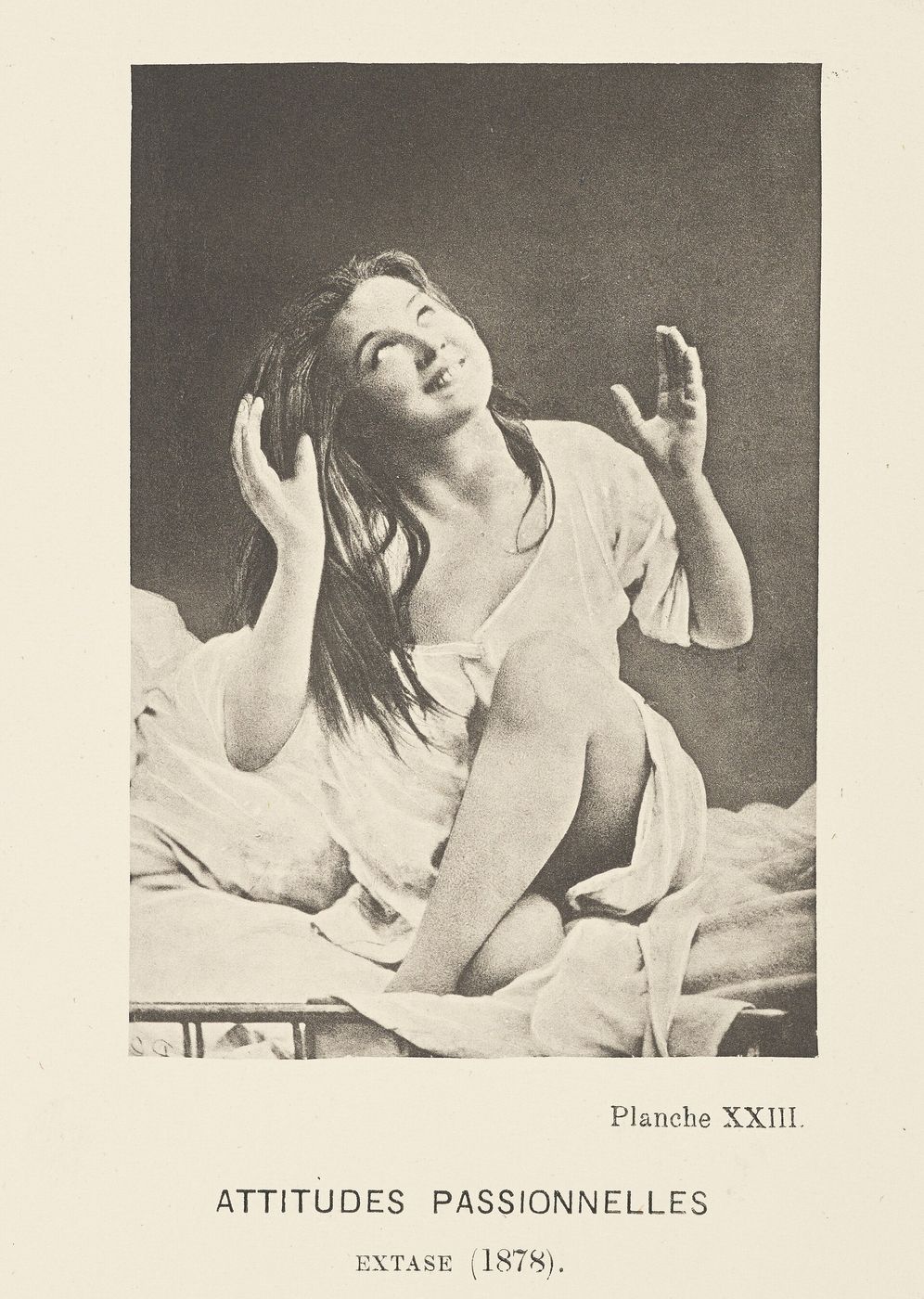
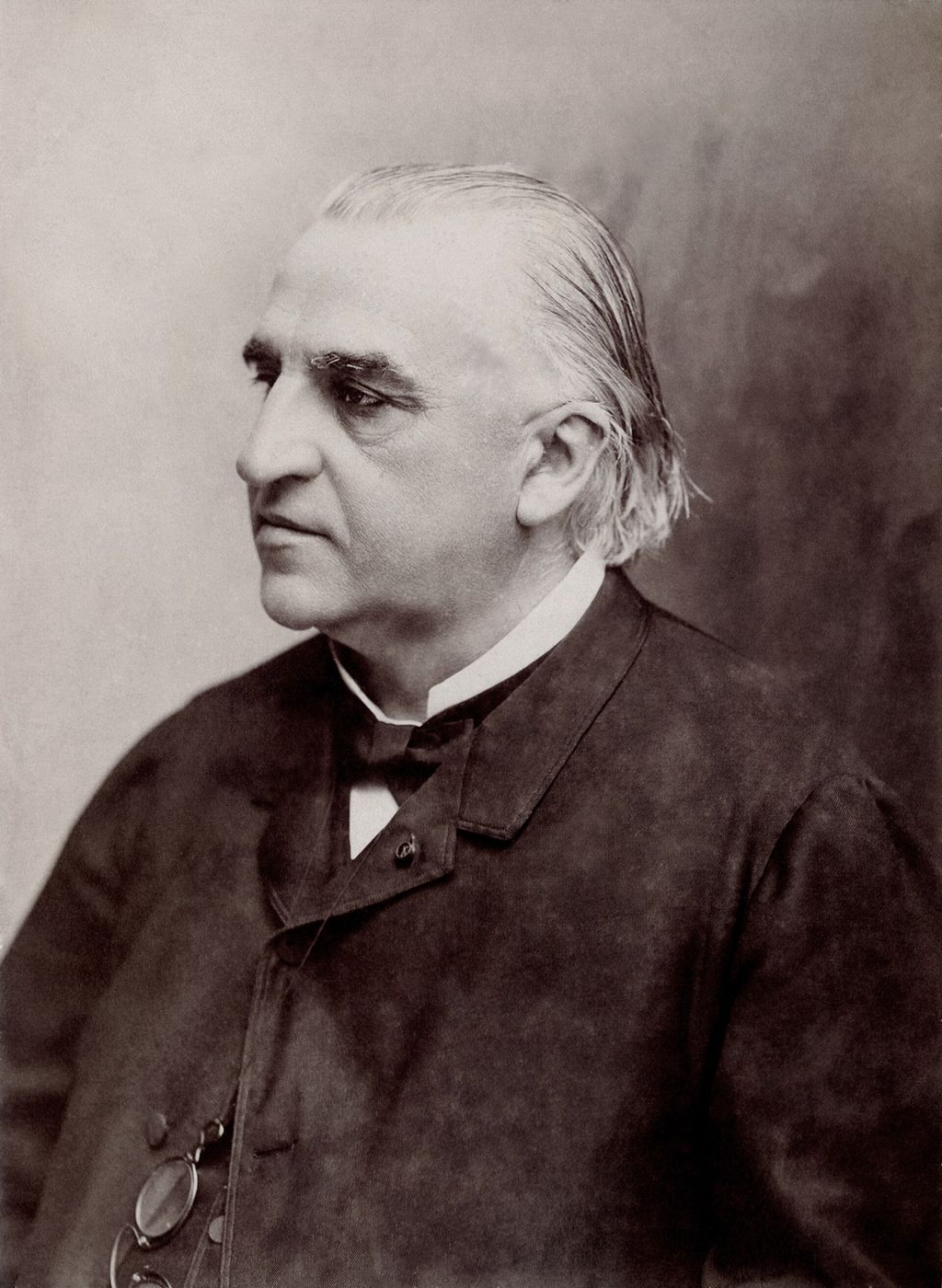
Psychoanalysis’s relation to the symptom begins in an old hospital in Paris, the Salpêtrière. In the second half of the nineteenth century the neurologist Jean-Martin Charcot, who worked there, took hysteria, a condition until then regarded as a disorder of the womb or as outright imposture, as a serious neurological disease, and became one of the most famous physicians in Europe. Charcot’s public lectures on Tuesdays had become spectacles to which medical students, physicians, writers and the curious flocked. The images taken in the hospital’s photographic studio and published in volumes entitled Iconographie photographique de la Salpêtrière made hysterical women’s fits, seizures and contractions into a kind of clinical atlas.1
The star of these volumes was a girl admitted to the hospital in 1875 while still a child: Augustine. Charcot’s team divided her fits into phases, photographed each phase and gave the photographs names: Appeal, Threat, Mockery, Eroticism, Ecstasy, Crucifixion. In the photographs Augustine sits in her bed, clasps her hands, turns her eyes to heaven, opens her arms, as if addressing an invisible lover, a god, an assailant. While the physicians recorded these poses as clinical phases, the photographs themselves documented a scene, a theatre, a spectacle; it has even been said that before the camera Augustine’s fits became ever more regular, more “beautiful”, more suited to the photograph. The French art historian Georges Didi-Huberman called the book he devoted to these photographs The Invention of Hysteria: hysteria, for him, was not simply observed at the Salpêtrière but produced jointly between the physician’s gaze, the camera and the patient’s desire.2 The end of the story is a scene too. In 1880 Augustine escaped from the hospital dressed as a man and was never traced again.
The young Freud came to Paris on a grant in October 1885 and worked with Charcot until February 1886. Those few months changed his whole intellectual direction. Seeing that Charcot could both produce and remove hysterical paralyses under hypnosis led Freud to the idea that these symptoms might have a mental rather than an organic origin. After returning to Vienna Freud translated Charcot’s lectures into German; and he acquired a lithograph of the famous painting André Brouillet made in 1887, showing Charcot presenting his patient Blanche Wittmann to physicians, and kept it hanging above his couch to the end of his life.3 All the scenes of psychoanalysis have, in a sense, been played out under the watch of this painting.

II
In the Preliminary Communication they published in 1893, Freud and Breuer formulate, on the mechanism of hysteria, the sentence that would become the core of all psychoanalysis: hysterics suffer mainly from reminiscences.4 The symptom is the trace in the body of a memory that has not been put into words, whose emotional charge has not been discharged; when the memory is recalled in all its intensity and put into words, the symptom resolves. Studies on Hysteria, published two years later, tests this thesis in a series of case studies.
Among these the shortest is the story of Katharina, an eighteen-year-old girl Freud met on a holiday in a mountain hut in the Alps. In the summer of 1893 Freud had climbed a peak in the Hohe Tauern and, resting in a refuge on the descent, was approached by a girl who said she was the niece of the hut’s mistress and, having learned that he was a doctor, asked him for help: she had attacks of breathlessness; during an attack she felt dizzy, her chest tightened, and she saw a face behind her looking at her in a terrible way. In an hour’s conversation in front of the hut Freud brings out that these attacks are connected with scenes of two years earlier: the girl tells how her uncle approached her one night and how she later saw him with her cousin. The terrible face is the angry face of that night.5 Thirty years later, in 1924, Freud added a short footnote to the case and revealed something he had kept for years: Katharina was not the niece of the hut’s mistress but her daughter; and the man who had approached her was not her uncle but her own father. Freud had made this change in order to hide the case’s identity. But the footnote also shows how a symptom is woven around a secret, and how a displacement in which one name is put in place of another can be repeated even in the physician’s own writing.
The subtlest of these cases is perhaps that of the young woman Freud calls “Elisabeth von R.”, whose treatment he began in the autumn of 1892. For two years Elisabeth had complained of pains in her legs and difficulty in walking; no organic cause had been found. Freud’s patient work brings out that the pains are connected with the years in which she nursed her father through his long illness, with her sister’s death, and with a love she hid even from herself, her feeling for her brother-in-law. One of the most striking details Freud records in the case is the expressions Elisabeth uses in describing her condition: speaking of the pain of being alone, of being unable to take a single step forward in her life, she is in fact describing what her legs suffer.6 Freud sees here that the symptom writes a figure of speech literally onto the body: being unable to go forward becomes being unable to walk. This is the first and perhaps the most beautiful example of what Lacan would define sixty years later as the symptom’s being a metaphor.
Freud himself was aware of something strange in writing this case. In the middle of the section in which he tells Elisabeth von R.’s story he admits that it still strikes him as odd, for one trained as a neurologist, that the case histories he writes should read like short stories and lack the serious stamp of science; but he adds that this comes not from his own preference but from the nature of the subject. Understanding hysteria requires, he says, a detailed account of the patient’s life story, a description of mental processes of the kind the poets give.7 The physician who discovered that the symptom has a meaning had discovered at the same time a literary genre: the symptom could be read only when it was placed in a story.
In this period Freud also gave a name to the transformation of a mental conflict into a bodily symptom: conversion, in German Konversion.8 The emotional charge of an intolerable thought is detached from the thought and transferred to the body, to an organ, to a function. But which organ? In the Dora case Freud answers this question with the concept of “somatic compliance”: the symptom settles where the body already has a predisposition, a weakness, a past. Dora’s cough and loss of voice trace the throat illnesses she had had since childhood; but they are also tied to her losing her voice when Herr K. was away from home, to speech becoming meaningless in the absence of the man she loved.9 The body is not a blank page on which the mind can write; it is a surface with its own history, its own predispositions, its own fragile places.
This idea is coming back today from an unexpected quarter, neurology. The word “hysteria”, long pushed to the margins of psychiatry, has been removed from diagnostic manuals; DSM-5, published in 2013, uses Freud’s name conversion disorder together with the expression “functional neurological symptom disorder”. In neurology functional neurological disorders, that is paralyses, seizures and gait disturbances that cannot be explained by structural damage, make up a considerable share of the patients attending neurology clinics and have become in the last twenty years an intensive field of research. The question that began in Charcot’s Salpêtrière, how brain and body can produce such real symptoms without damage, is still open a hundred and fifty years later. Psychoanalysis’s contribution to this question is to remind us that a symptom may have not only a mechanism but a meaning, a history and an addressee.
III
Freud sets out his most compact thoughts on the meaning of symptoms in the Introductory Lectures on Psycho-Analysis given at the University of Vienna in 1916–1917. The title of the seventeenth lecture is plain: “The Sense of Symptoms.” In this lecture Freud gives an unforgettable example from obsessional neurosis. A woman of about thirty runs many times a day from her room into the next, stops at a certain place beside the table in the middle of the room, calls her maid and gives her some trivial task, or sends her away without saying anything, and then goes back to her own room. The meaning of this seemingly senseless ritual is traced in the analysis to the woman’s wedding night ten years earlier. Her husband, who proved impotent on the wedding night, had run repeatedly through the night from his room to hers, and in the morning, so that the maid should not feel shame in making the bed, poured red ink over the sheet, but poured it in the wrong place. The ritual in which the woman now positions a stain on the tablecloth so that the maid will see it is a way of repairing her husband’s shame that night, of exonerating him.10
This example holds all the elements of Freud’s theory of the symptom. The symptom has a meaning, and this meaning is tied to a particular scene of the patient’s life. The symptom is a repetition: it replays a scene of the past in altered form. And the symptom is a wish-fulfilment: it stages the wish to exonerate her husband, to save him from shame. In the twenty-third of the same lectures Freud defines the symptom as a compromise formation between two opposed forces: on one side an unconscious wish, on the other the repression that forbids it. The symptom is neither the direct satisfaction of the wish nor its complete suppression; it is a formation lying between the two and carrying both. This is why the symptom at once expresses the forbidden wish and punishes it.
Freud had explained this structure of obsessional symptoms as early as 1907 with an unexpected comparison. In his short paper “Obsessive Actions and Religious Practices” he draws attention to the similarities between the ceremonials of obsessional neurosis and religious rituals: in both, certain acts must be performed in a certain order, scrupulously, down to the smallest detail; in both, a disturbance of this order produces unbearable anxiety; in both, the meaning of the ceremony escapes the consciousness of the one who performs it. At the end of the paper Freud says, in a famous formula, that obsessional neurosis may be seen as a private religion and religion as a universal obsessional neurosis.11 The comparison is made not to belittle religion but to show how orderly, how meaningful, how like a social structure a symptom can be. The obsessional subject is, in his own symptom, both the priest and the only believer of a religion that nobody shares.
IV
This double-sidedness explains why the symptom is so resistant, and at this point Freud develops the concept of the gain from illness. Primary gain is the symptom’s protecting the person from a greater inner conflict, from a pain harder to bear; Freud relates this to the idea that neurosis is a kind of “flight into illness”. Secondary gain is the advantages that the symptom, once formed, brings the person in the outside world: being given attention, being loved, avoiding certain responsibilities, maintaining or punishing certain relationships. In the Dora case Freud examines in detail how the young woman’s illness also worked as a way of holding her father’s and her surroundings’ attention, of forcing them to behave in a certain way.12 These gains are indispensable for understanding why a person finds it hard to give up a symptom of which he complains; but, as Freud himself would later see, they do not give the whole explanation.
A symptom also has an addressee, and this addressee is sometimes another symptom. In the book on the psychology of crowds he wrote in 1921, describing the kinds of identification, Freud recounts a scene from a boarding school for girls. One of the girls receives from someone she secretly loves a letter that arouses her jealousy and responds with a hysterical fit. Some of her friends, after learning of it, begin to have the same fit; in Freud’s phrase, through a mental contagion they too “catch” it.13 For Freud this contagion is not sympathy or pity; in their friend’s place, who has the fit, the girls appropriate the possibility of living a secret love and the pain born of that love, that is, her desire. The symptom is here a way in which one desire is taken from another and replayed. Lacan would read hysterical identification in just this way: the hysterical subject stages on herself another’s desire, another’s lack, another’s symptom, and in this staging asks the question of her own desire. A symptom is sometimes the shortest way of asking someone what he wants.
V
Lacan approaches the symptom in the 1950s by rereading Freud’s discovery with the tools of linguistics. In the text he presented in Rome in 1953, known as the “Rome Discourse”, he argues that the symptom is structured like a language and can be wholly resolved by an analysis of language.14 Four years later, in the text of 1957 The Instance of the Letter in the Unconscious, he gives the thesis a sharper formula and defines the symptom as a metaphor.15
Starting from Roman Jakobson’s work on aphasia, Lacan pairs the two mechanisms Freud described in the dream-work, condensation and displacement, with the two basic operations of language, metaphor and metonymy. In metaphor one signifier takes the place of another, and the displaced signifier continues to exist implicitly under the new one. The symptom works in exactly this way: a repressed signifier lies beneath a bodily symptom or a behaviour and gives it its meaning. Elisabeth von R.’s leg pains are a metaphor that has taken the place of the signifier “being unable to go forward”; the stain on the tablecloth has taken the place of the stain on the wedding-night sheet. The clinical consequence of this thesis is clear: if the symptom is a metaphor it can be resolved through speech; when the repressed signifier is brought out in the course of speaking, the symptom loses its function. This is the theoretical foundation of psychoanalysis being a “talking cure”.
Lacan develops this idea in his fifth seminar, of 1957–1958, through the series he calls the formations of the unconscious: dream, slip, joke and symptom. The first lessons of the seminar examine a play on words that Freud analyses in his book on jokes. In a story by Heinrich Heine, a poor lottery-ticket seller, describing how the wealthy Baron Rothschild treated him, says that the baron treated him quite “famillionairely”, famillionär.16 The word is born from the fusion of familiär, “familiar”, and Millionär, “millionaire”. What the poor man wants to say and cannot is that the baron’s familiarity is a millionaire’s familiarity, that is, a patronising, condescending one. In this single word Lacan sees how condensation, that is metaphor, works: two signifiers fuse, and from the fusion is born a meaning neither could carry alone. The symptom too is such a fusion; but instead of making one smile it hurts. A joke is told to another and is completed by the other’s laughter; a symptom, until someone hears it, repeats silently in the body.
VI
Clinical experience, however, complicates this optimistic picture. Some symptoms persist even after their meaning has been brought to light; the analysand knows what his symptom means but cannot give it up. Freud came face to face with this phenomenon in the 1920s. In Inhibitions, Symptoms and Anxiety, written in 1926, he gives the symptom one more function: the symptom is a way of avoiding anxiety. Someone who cannot go out alone ties a vague and pervasive anxiety to a single situation, being alone outside; he is now afraid no longer of everything but only of this, and by avoiding it can live. In the same book Freud interprets agoraphobia as the ego restricting its own range of movement in order to protect itself from a danger from a drive: the person forbids himself not the street but the confrontation with a wish he might meet there.17 In this sense the symptom draws a boundary: it confines the unbearable to a particular place, a particular object, a particular ceremony. The disappearance of the symptom therefore sometimes means the release of the anxiety that had been bound until then. In The Ego and the Id in 1923 Freud observes that some analysands, after each advance in the treatment, suffer an unexpected deterioration, reacting to recovery as to a threat, and calls this the negative therapeutic reaction; behind this reaction he finds an unconscious sense of guilt, a need to be punished.18
Lacan explains this persistence through the concept of jouissance. The symptom is not only a message but also a form of satisfaction. The reason the subject clings so tightly to his symptom is that it gives him a paradoxical pleasure intertwined with pain. In his late seminar of 1974–1975, R.S.I., Lacan redefines the symptom as the name of the way each subject enjoys the unconscious, the way he obtains jouissance to the extent that the unconscious determines him.19 This definition turns the symptom from a carrier of meaning into a letter, a writing inscribed on the subject’s body that is lived more than read.
In a lecture on the symptom given in Geneva in October 1975, the same year, Lacan states the clinical consequence of this idea plainly: for many people the symptom is the most real thing they have.20 A person’s identity, roles, the stories he tells about himself may change; but his symptom stays with him in the hardest conditions, repeating as what is most singularly his own. At first sight the sentence may seem pessimistic. But in the clinic it carries another meaning: the symptom is where the subject’s most genuine knowledge of himself is hidden. To regard it only as a breakdown and try to silence it would be to silence that knowledge too.
VII
The last phase of Lacan’s thinking on the symptom appears in the seminar Le Sinthome of 1975–1976. Here Lacan uses sinthome, an old French spelling of the word “symptom”, and loads the concept with a new meaning. The sinthome is no longer a message to be resolved but a knot that holds the subject’s existence together: the fourth ring that holds the Real, the Symbolic and the Imaginary together in the Borromean knot. Lacan develops the concept through the writing of James Joyce, drawing also on the talk he gave at the opening of an international Joyce symposium held in Paris the same year: Joyce’s writing is the way in which a subject whose father failed in his symbolic function holds together his threatened world by making a name for himself.21
This view also transforms the aim of analysis. The aim is not to eliminate the symptom but to enable the subject to establish a different relation with it. Lacan calls this, in French, savoir-y-faire, knowing what to do with it: recognising the symptom, learning to live with it and being able to make something of it. That in the following year’s seminar Lacan defines the end of analysis as the subject’s identification with his symptom is where this thought arrives: at the end of the analysis the subject can take on what makes him most singular, his own symptom, no longer as a burden but as a signature.
To make the idea concrete, let us think of a journey often met in the clinic. An analysand comes to analysis exhausted by the compulsion to control everything, to leave no detail to chance, to calculate every possibility in advance. The compulsion is wearing him out: he cannot sleep, cannot decide, overwhelms those he loves. Over the long road of the analysis it slowly opens up around what fear this meticulousness was woven, to whose gaze, whose expectation it was answering. In the end the symptom often does not disappear; but it settles elsewhere. The same meticulousness is no longer in the service of a fear but of a craft, a profession, a creative work. The person is still someone who attends to details; but this attention no longer suffocates him, it lets him make something. What Lacan calls knowing what to do with the symptom is this small but decisive shift: changing the fate of the symptom without erasing it.
VIII
The diagnostic systems used in current psychiatry classify symptoms as signs that can be defined and measured; this approach has an important function in clinical practice and research, and psychoanalysis need not come into conflict with it. The psychoanalytic view adds another question to this classification: what does this symptom mean for this subject, what function does it serve in his life, what pain and what satisfaction does it give him together? The symptoms of two people given the same diagnosis may carry quite different meanings within their own life stories. This is why psychoanalytic work listens to the symptom not as part of a diagnosis but as a product of the subject’s singular history.
In today’s culture this question takes a new form. Diagnostic categories have left the language of experts and entered the language of everyday talk, social media, personal profiles. People increasingly define themselves by the name of a diagnosis: someone with attention deficit, someone obsessive, someone anxious, someone traumatised. This naming has a benefit; it is a relief to know that a pain is shared, has a name, that one is not alone. But the psychoanalytic view recalls that this name can be a closure as much as an answer. Identifying with a diagnosis can make it unnecessary to ask why the symptom took this form, whom it addresses, what story it carries. What Lacan calls identification with the symptom is exactly the opposite: not taking shelter under a label but recognising and taking on what is most singular in the symptom itself, a form shared with no one. Two people carrying the same diagnosis do not live the same symptom.
Brouillet’s painting, in the years it hung above Freud’s couch, must have silently reminded him where psychoanalysis came from and where it should not go. Charcot showed the symptom; Freud chose to listen to it. In the amphitheatre of the Salpêtrière the symptom was a spectacle displayed under the gaze of a gathering of physicians. In Freud’s room it became a meaning an analysand opened up, in his own words and in his own time. The adventures of psychoanalysis with the symptom can perhaps be told most concisely through the difference between these two scenes. In one the symptom is something looked at, exhibited, photographed; in the other, a speech patiently listened to. In one the physician knows, shows and names; in the other the analysand speaks and hears in his own speech something he did not know. The distance between Augustine’s silent poses in the photographs and the words in which Elisabeth von R. told Freud, in her own words, that she could not take a single step forward in her life is the whole distance psychoanalysis has travelled.
Notes
- D.-M. Bourneville and P. Régnard, Iconographie photographique de la Salpêtrière (1876–1880). ↩︎
- G. Didi-Huberman, Invention de l’hystérie: Charcot et l’iconographie photographique de la Salpêtrière, Paris: Macula, 1982; English: Invention of Hysteria, trans. A. Hartz (2003). Augustine’s real name has been established by later research as Louise Augustine Gleizes. ↩︎
- Freud Museum, London; it is recorded that the print hung above the couch in Freud’s consulting rooms in Vienna and in London. ↩︎
- J. Breuer and S. Freud, “On the Psychical Mechanism of Hysterical Phenomena: Preliminary Communication” (1893), in Studies on Hysteria, SE II. ↩︎
- Breuer and Freud, Studies on Hysteria (1895), the case “Katharina”, SE II. In a footnote added in 1924 Freud explains: Katharina was not the niece of the hut’s mistress but her daughter, and the sexual advances that caused her illness came not from her uncle but from her own father. ↩︎
- Breuer and Freud, Studies on Hysteria, the case “Fräulein Elisabeth von R.”, SE II. ↩︎
- Breuer and Freud, Studies on Hysteria (1895), “Fräulein Elisabeth v. R.”, epicrisis. Freud’s wording is roughly: that the case histories he writes read like novellas and lack, so to speak, the serious stamp of scientific character still strikes him as strange. ↩︎
- S. Freud, “The Neuro-Psychoses of Defence” (1894), SE III (German: “Die Abwehr-Neuropsychosen”, Gesammelte Werke I). Freud defines conversion as the transfer of the emotional charge of an intolerable idea onto a bodily innervation. ↩︎
- S. Freud, “Fragment of an Analysis of a Case of Hysteria” (1905), SE VII (German: “Bruchstück einer Hysterie-Analyse”, Gesammelte Werke V). The expression Freud uses is somatisches Entgegenkommen: the body’s “coming to meet” a psychical meaning, making a place for it. ↩︎
- S. Freud, Introductory Lectures on Psycho-Analysis (1916–1917), lecture XVII, SE XVI. ↩︎
- S. Freud, “Obsessive Actions and Religious Practices” (1907), SE IX (German: “Zwangshandlungen und Religionsübungen”, Gesammelte Werke VII). The paper was published in the first volume of the Zeitschrift für Religionspsychologie, which began publication the same year. ↩︎
- S. Freud, “Fragment of an Analysis of a Case of Hysteria” (1905 [1901]), SE VII; also Introductory Lectures on Psycho-Analysis, lecture XXIV. ↩︎
- S. Freud, Group Psychology and the Analysis of the Ego (1921), SE XVIII (German: Massenpsychologie und Ich-Analyse, Gesammelte Werke XIII), chapter VII. Freud stresses that this identification rests on a common element in which one may find, or wish to find, oneself in the same situation as the other: these girls too would like to have a secret love affair. ↩︎
- J. Lacan, “Fonction et champ de la parole et du langage en psychanalyse” (1953), Écrits (1966), pp. 237–322; English in Écrits, trans. B. Fink (2006). ↩︎
- J. Lacan, “L’instance de la lettre dans l’inconscient ou la raison depuis Freud” (1957), Écrits, pp. 493–528. ↩︎
- S. Freud, Jokes and Their Relation to the Unconscious (1905), SE VIII (German: Der Witz und seine Beziehung zum Unbewußten, Gesammelte Werke VI); J. Lacan, Le Séminaire, Livre V: Les formations de l’inconscient (1957–1958), Paris: Seuil, 1998. Heine’s story is in the “Die Bäder von Lucca” section of the Reisebilder; the speaker is a lottery-ticket seller named Hirsch-Hyacinth. ↩︎
- S. Freud, Inhibitions, Symptoms and Anxiety (1926), SE XX (German: Hemmung, Symptom und Angst, Gesammelte Werke XIV). In this book Freud reverses his old view that anxiety is a consequence of repression: anxiety is now what sets repression going, and the symptom a way of binding anxiety. ↩︎
- S. Freud, The Ego and the Id (1923), chapter V, SE XIX. ↩︎
- J. Lacan, Le Séminaire, Livre XXII: R.S.I. (1974–1975), Ornicar? 2–5 (1975). ↩︎
- J. Lacan, “Conférence à Genève sur le symptôme” (4 October 1975), Le Bloc-notes de la psychanalyse 5 (1985). In the same talk Lacan stresses that the symptom constitutes the subject’s tightest bond with his unconscious and that analysis cannot aim simply to eliminate it. ↩︎
- J. Lacan, Le Séminaire, Livre XXIII: Le sinthome (1975–1976), Paris: Seuil, 2005; English: The Sinthome, trans. A. R. Price (2016); “Joyce le Symptôme” (1975), Autres écrits (2001). ↩︎
References
- Bourneville, D.-M., & Régnard, P. (1876–1880). Iconographie photographique de la Salpêtrière.
- Breuer, J., & Freud, S. (1895). Studies on hysteria. SE II.
- Didi-Huberman, G. (1982). Invention de l’hystérie: Charcot et l’iconographie photographique de la Salpêtrière. Macula.
- Freud, S. (1894). The neuro-psychoses of defence. SE III.
- Freud, S. (1905). Jokes and their relation to the unconscious. SE VIII.
- Freud, S. (1905 [1901]). Fragment of an analysis of a case of hysteria. SE VII.
- Freud, S. (1907). Obsessive actions and religious practices. SE IX.
- Freud, S. (1916–1917). Introductory lectures on psycho-analysis. SE XV–XVI.
- Freud, S. (1921). Group psychology and the analysis of the ego. SE XVIII.
- Freud, S. (1923). The ego and the id. SE XIX.
- Freud, S. (1926). Inhibitions, symptoms and anxiety. SE XX.
- Lacan, J. (1966). Fonction et champ de la parole et du langage en psychanalyse (1953); L’instance de la lettre dans l’inconscient ou la raison depuis Freud (1957). In Écrits. Seuil.
- Lacan, J. (1975). Le Séminaire, Livre XXII: R.S.I. (1974–1975). Ornicar?, 2–5.
- Lacan, J. (1985). Conférence à Genève sur le symptôme (1975). Le Bloc-notes de la psychanalyse, 5.
- Lacan, J. (1998). Le Séminaire, Livre V: Les formations de l’inconscient (1957–1958). Seuil.
- Lacan, J. (2001). Joyce le Symptôme (1975). In Autres écrits. Seuil.
- Lacan, J. (2005). Le Séminaire, Livre XXIII: Le sinthome (1975–1976). Seuil.