- Language
- Turkish · English · French
- Time difference
- 3 hours in winter, 2 in summer
- First session
- Free
- Emergency
- 999 · Samaritans 116 123
Freud’s last stop
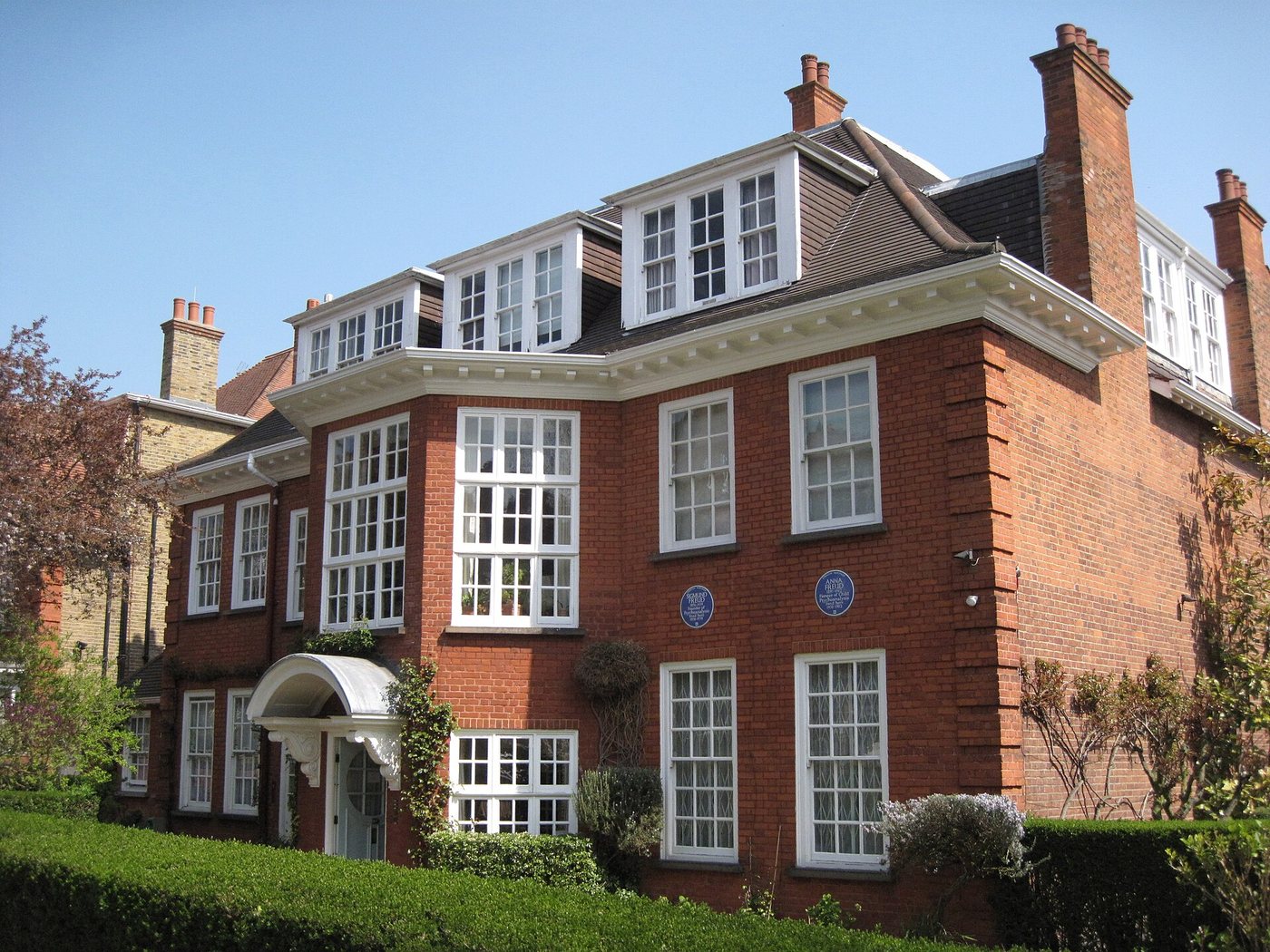
Freud arrived in London with his family on 6 June 1938. After a few months in a temporary house he moved to 20 Maresfield Gardens in Hampstead; his study, with the couch, the books and the collection of antiquities brought from Vienna, was rebuilt in this house almost as it had been. Freud went on seeing patients here even in the last stage of his cancer, and died on 23 September 1939, three weeks after the outbreak of the Second World War. His daughter Anna Freud spent the rest of her life in the same house; the house is today the Freud Museum.

After Freud, London remained one of the liveliest cities of psychoanalysis. The work of Melanie Klein, who came from Berlin, of Anna Freud, who came from Vienna, and of the Englishman Donald Winnicott shaped a large part of twentieth-century psychoanalysis in this city. Winnicott’s concepts of the “transitional object” and the “potential space” carry a special meaning for those living in exile: a person makes a new place liveable with objects, habits and rituals that belong neither wholly to the homeland left behind nor wholly to the new country. The essay Exile and the Mother Tongue on this site examines this idea in detail.
From North London to Manchester
The Turkish-speaking community in the United Kingdom has a different history from the rest of Europe. There was no labour agreement here; its first large community was formed by the Turkish Cypriots who came in the 1950s and 1960s. They were followed, from the 1970s, by Turkish and Kurdish families from Turkey, some of them for political reasons. The North London districts of Haringey, Enfield, Hackney and Islington, from the shops of Green Lanes to the streets of Dalston, became places where these three communities live interwoven. To them are now added the young professionals and students who come for universities, companies and hospitals.
This diversity means that life far from home is lived in the United Kingdom in many different forms. The third-generation grandchild of a family from Cyprus, a doctor newly arrived from Turkey and the child of a family that emigrated for political reasons in the 1980s live different forms of exile even if they speak the same language. What they often share is that English is the language of daily life and Turkish the language of something else: of childhood, of family, of what has not been said.
What is often talked about in the sessions
Among the questions analysands living in the United Kingdom often bring are loneliness and belonging, the anxiety and burnout created by an intense working life, relationships and mixed marriages, children growing up between two languages, guilt and mourning about family far away, plans for the future made uncertain after Brexit, and the decision to stay or return.
Practical information
Time difference. The United Kingdom uses Greenwich Mean Time (UTC+0) in winter and British Summer Time (UTC+1) in summer. Turkey is UTC+3 all year; it is three hours ahead in winter and two in summer. Seven in the evening in London is ten at night in Turkey in winter; session times are fixed together according to this difference.
Health system. Mental health services under the NHS are generally reached through the family doctor (GP); private health insurance mostly covers sessions with practitioners registered in the United Kingdom. These sessions are outside both systems.
Language. The sessions can be held in Turkish, English or French; it is possible to move between languages.
In an emergency
These sessions are not an emergency service. If there is danger to life, call 999 or 112 at once. For urgent but not life-threatening situations you can reach NHS 111. Samaritans can be reached on 116 123 at any hour of the day, free of charge; if you prefer to write rather than speak, Shout is a text line reached by texting “SHOUT” to 85258.
Frequently asked questions
Can we hold the sessions in English?
Yes. The sessions can be held in English, Turkish or French; you can stay in a single language or move between languages.
I come from a Turkish Cypriot family; my Turkish has a Cypriot accent. Will that be a problem?
No. Every accent, every dialect, is a part of a person’s own history and can have its place in the sessions as it is. That some words carry a meaning only in the form in which they were spoken in the family is itself the material of the work.
The first session is free. To arrange a day and time or to ask your questions, you can write to me in Turkish or English.
Contact form