- Language
- Turkish · English · French
- Time difference
- 2 hours in winter, 1 in summer
- First session
- Free
- Emergency
- 112 · 113 Zelfmoordpreventie
From the Atatürk hostel to today
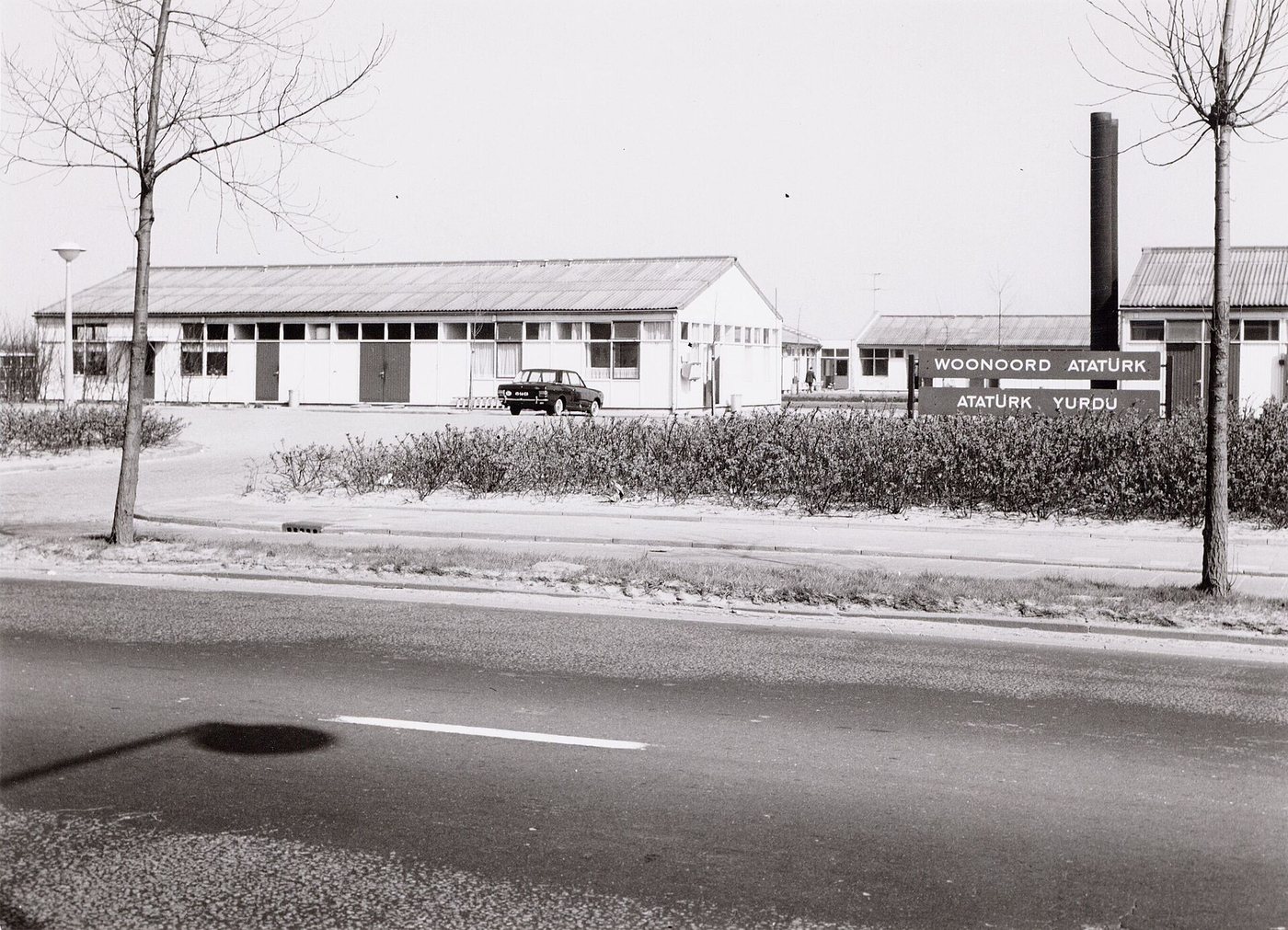
In the mid-1960s, in the north of Amsterdam, on the Klaprozenweg, a hostel of low barracks was set up for foreign workers. The hostel where Turkish workers stayed was called Atatürk. The photographs preserved in the archives show iron bedsteads covered with flowered spreads, the communal canteen, suitcases placed on top of the wardrobes: this was not a home but a waiting place. In the Netherlands too, as in Germany, it was assumed that the workers would work for a few years and return. With the family reunifications that began in the 1970s the hostels emptied, and a new life was built in the neighbourhoods of Amsterdam, Rotterdam, The Hague and Utrecht.

This story has today a literature written in Dutch. Murat Isik’s novel Wees onzichtbaar (“Be invisible”), about the son of a Turkish family growing up in Amsterdam’s Bijlmer district, won in 2018 the Libris Literatuur Prijs, one of the most important novel prizes in the Dutch language. The title of the novel is like a summary of a piece of advice that exile so often leaves to the second generation: do not stand out, do not draw attention, do not raise your voice. Such advice is a strategy of protection; but in a child’s life it can easily turn into a prohibition. Psychoanalytic work often begins precisely at this point: when someone who has learned to be invisible dares, for the first time, to speak in his own voice before another person.
The journey of Turkish literature in the Netherlands is interesting from another angle too. Halit Ziya’s Aşk-ı Memnu has been published in Dutch under the title Verboden liefde, in a translation by Hanneke van der Heijden and Margreet Dorleijn. The essay on Aşk-ı Memnu on this site reads the novel with a psychoanalytic eye.
What is often talked about in the sessions
Among the questions analysands living in the Netherlands often bring are the traces left by growing up bilingual, the feeling at school and at work of never being “Dutch enough”, the tension between the family’s expectations and an individual life, mixed marriages and the children’s choice of language, and anxiety and guilt about ageing parents far away. The difference between the open and direct style of communication often spoken of in the Netherlands and the indirect, respect-based way of speaking learned at home is also, for many people, an invisible tiredness of daily life.
Practical information
Time difference. The Netherlands uses UTC+1 in winter and UTC+2 in summer. Turkey is UTC+3 all year; it is two hours ahead in winter and one in summer.
Insurance. In the Netherlands access to mental health services (GGZ) generally runs through the family doctor (huisarts) and falls under compulsory health insurance. Sessions with a practitioner working outside the Netherlands are not covered by insurance.
Language. The sessions can be held in Turkish, English or French; it is possible to move between languages. I do not offer sessions in Dutch.
In an emergency
These sessions are not an emergency service. If there is a danger of harming yourself or someone else, call 112 at once. If you are having thoughts of suicide, you can reach 113 Zelfmoordpreventie at any hour of the day by telephone or through the chat on its website.
Frequently asked questions
Do I need a referral from my huisarts?
No. Since these sessions are conducted outside the Dutch insurance system, no referral is needed. For the same reason there is no reimbursement from the insurer.
I was born in the Netherlands; must I speak Turkish?
You choose the language in which you speak. You can speak Turkish, English or French, and move between languages.
The first session is free. To arrange a day and time or to ask your questions, you can write to me.
Contact form